Why a Pre-Trip Check Matters More Than You Think
Most crashes don't happen because of freak accidents - they happen because something small was overlooked. A tire slowly losing pressure. A mirror pointed at the sky. A phone notification that pulls your eyes off the road for two seconds too long. Building a quick, reliable pre-drive routine addresses all of this before you ever shift into drive.
This checklist is built for everyday driving - whether you're heading to work, running errands, or taking a longer trip. If you're new behind the wheel, also check out our guide for first solo drivers for broader confidence-building tips. For longer road trips, the same vehicle checks apply - but you'll want to layer on seasonal prep from our seasonal car maintenance guide.
Run through the groups below in order. With practice, the full routine takes two to five minutes.
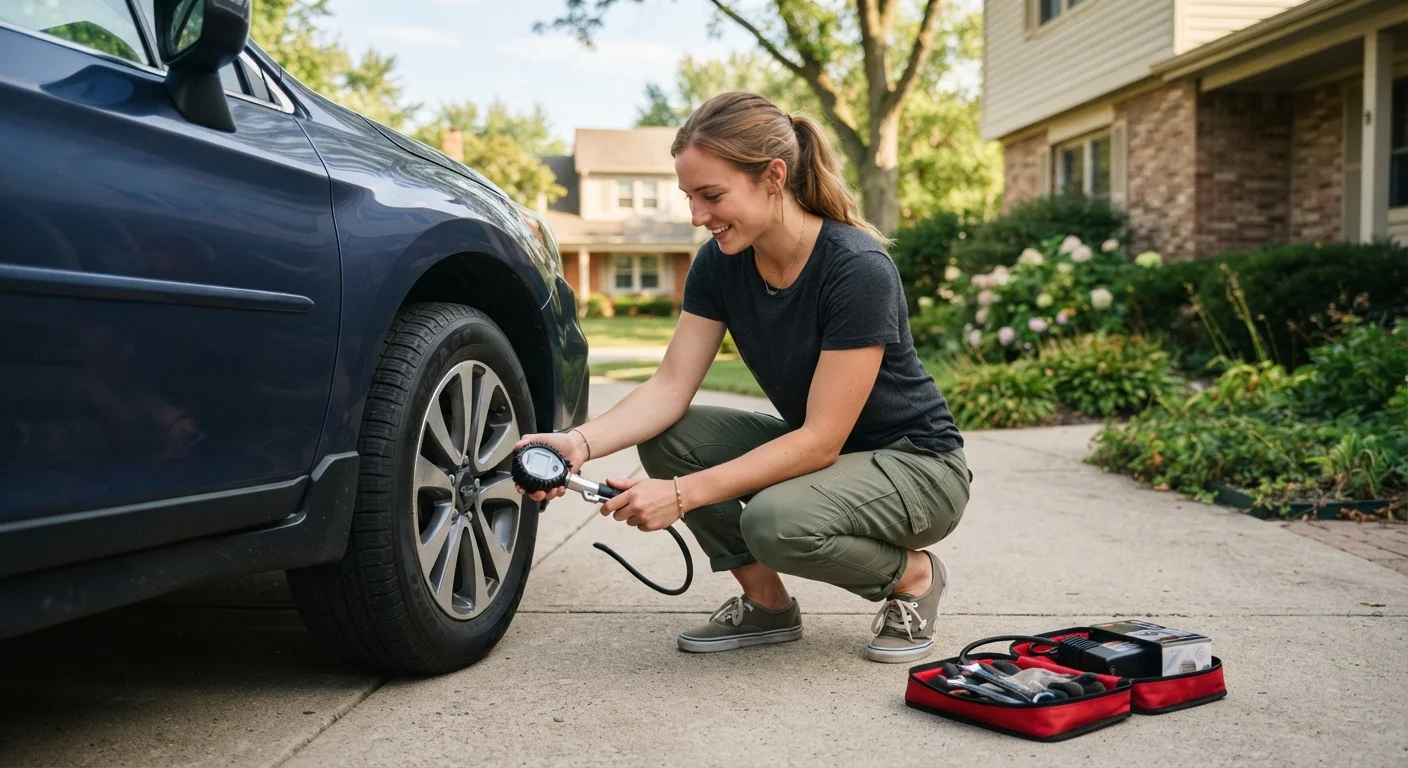
Tire Pressure Gauge
Used to check each tire's PSI against your vehicle's recommended pressure before driving.
Vehicle Owner's Manual
Contains manufacturer specs for tire pressure, fluid levels, and warning light meanings specific to your car.
Basic Emergency Kit
Includes jumper cables, a flashlight, a reflective warning triangle, and basic first-aid supplies for roadside situations.
Phone Mount
Keeps your device visible for navigation without requiring you to hold or handle it while driving.
The Complete Pre-Drive Safety Checklist
Work through each group before pulling out. Items marked must are non-negotiable for safe, legal operation. Should items significantly reduce risk. Nice-to-have items round out your preparation on longer or unfamiliar drives.
Your Vehicle's Exterior
Tire Pressure
Inside the Cabin
Documents and Essentials
Your Personal Readiness
Don't Skip the Walk-Around
One of the most common pre-drive oversights is failing to physically walk around the vehicle. Children, pets, curbs, and debris can be invisible from the driver's seat. A 30-second exterior loop before every drive takes almost no time and can prevent serious incidents that no mirror angle can catch.
A Few Things Worth Knowing
Tires: The correct tire pressure for your vehicle is printed on a sticker inside the driver's door jamb - not on the tire itself. Check cold pressure (before driving more than a mile) for the most accurate reading. For a deeper dive, see our complete tire guide.
Documents: Your license, registration, and proof of insurance should always be in your vehicle. Our glove compartment paperwork guide explains exactly what to keep on hand and why.
Visibility conditions: If you're driving at night or in poor weather, your pre-trip check becomes even more critical. Lights, mirrors, and wiper condition directly affect your ability to see and be seen. See our guides on night driving and driving in bad weather for condition-specific adjustments.
Never Drive Impaired - No Exceptions
Impairment includes alcohol, recreational drugs, certain prescription and over-the-counter medications, extreme fatigue, and significant emotional distress. If any of these apply, do not get behind the wheel. Arrange an alternative - a rideshare, a friend, or simply waiting. No destination is worth the risk to yourself or others on the road.
This checklist is for general informational purposes only. It does not substitute for vehicle manufacturer guidelines, professional mechanical inspection, or official driver safety training programs.