Why Each Condition Deserves Its Own Playbook
Most drivers know bad weather calls for caution - but treating rain, snow, and fog as interchangeable hazards is itself a mistake. Each condition affects traction, visibility, and reaction time differently, and the adjustments that keep you safe in one may be inadequate or even counterproductive in another.
For new and experienced drivers alike, understanding the specific mechanics of each condition is what separates reactive driving from genuinely prepared driving. This breakdown compares all three so you know exactly what you're dealing with before you pull out of the driveway. For a solid foundation before any drive, check out our pre-trip safety checklist.
| Rain | Snow / Ice | Fog | |
|---|---|---|---|
| Primary hazard | Hydroplaning, reduced grip | Dramatically reduced traction | Severely compressed visibility |
| Stopping distance impact | Moderately longer than dry | Up to 10x longer on ice | Unchanged but reaction time shrinks |
| Recommended following distance | 4+ seconds | 8-10+ seconds | 4+ seconds, speed-dependent |
| Correct lighting | Headlights on | Headlights on | Low beams + fog lights only |
| Cruise control use | Avoid completely | Avoid completely | Avoid completely |
| Biggest driver mistake | Overconfidence with AWD | Braking too hard on ice | Using high beams in dense fog |
| Delay travel threshold | Heavy rain with flooding | Ice storms, blizzards | Near-zero visibility fog |
Driving in Rain: The Most Common and Most Underestimated
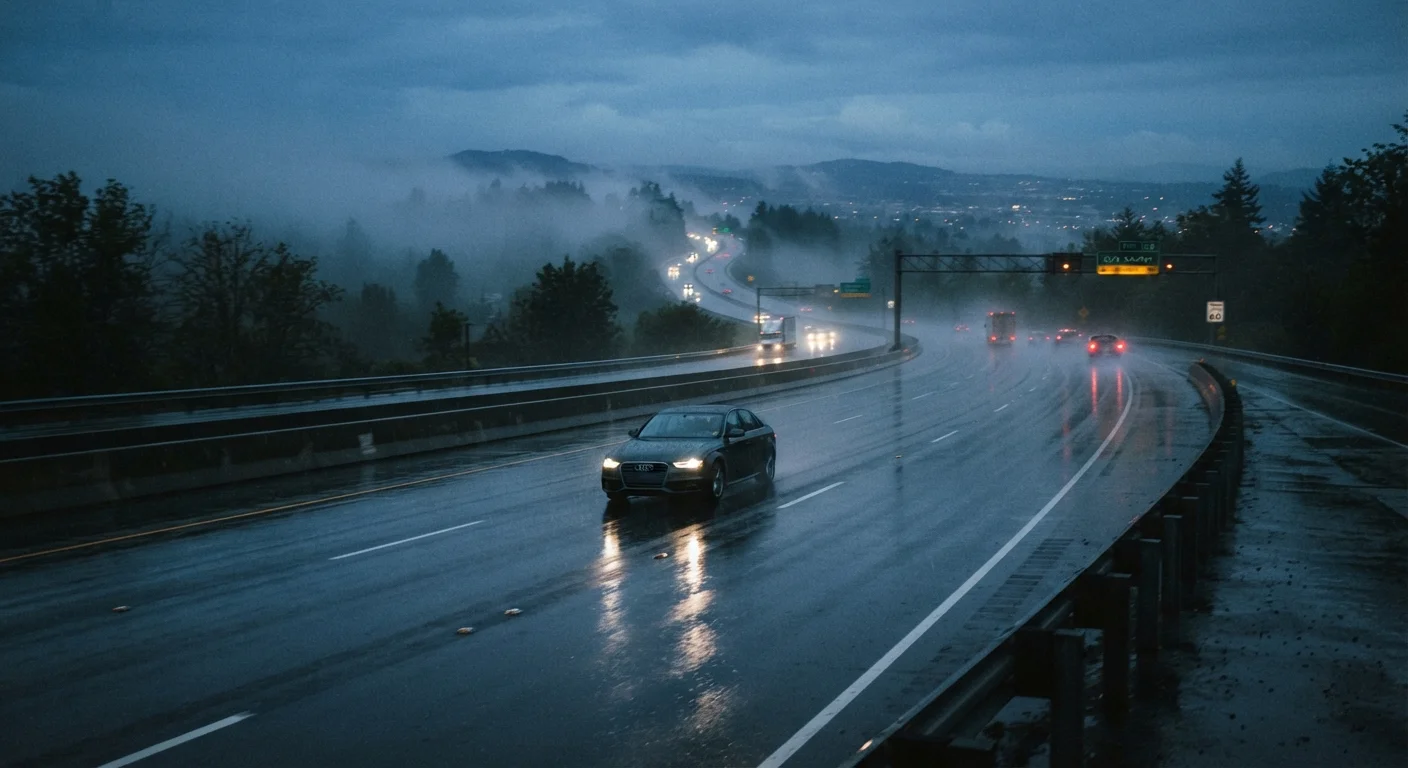
Rain is the condition most drivers encounter regularly, which can breed overconfidence. Wet pavement significantly reduces tire grip, and the risk of hydroplaning - where a layer of water lifts your tires off the road surface - rises sharply when speed is too high or tires are worn.
Key adjustments for rain:
- Reduce speed and increase your following distance to at least four seconds rather than the standard two.
- Turn off cruise control. If you hydroplane with cruise engaged, the system may accelerate to maintain speed, making a loss of control worse.
- Use headlights - many states require them when wipers are running, but it's smart regardless.
- Brake gently and progressively; hard braking on wet roads can cause skidding even with ABS.
Rain still allows for relatively normal visibility compared to fog, and stopping distances - while longer than dry conditions - are far shorter than in snow. That said, common myths about driving in rain (like assuming AWD prevents hydroplaning) lead to serious accidents every year.
Check Your Tires Before Wet Weather
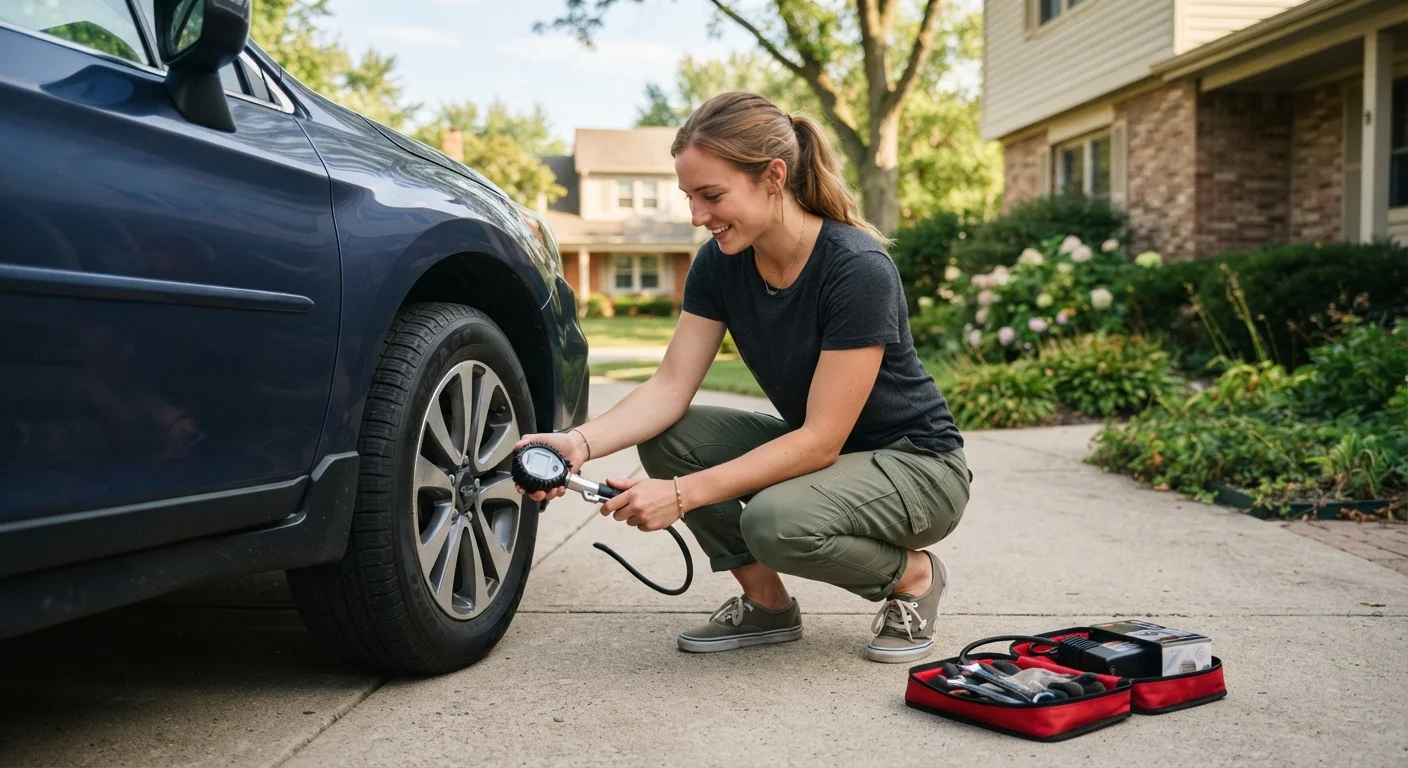
Tire tread depth is the single biggest factor in hydroplaning resistance. Worn tires lose the ability to channel water away from the contact patch, dramatically increasing risk in rain. A quick visual check and the coin test - inserting a quarter into the tread - take less than two minutes and can tell you whether your tires are roadworthy before conditions deteriorate.
Driving in Snow and Ice: When the Physics Change Completely
Snow and ice represent the most physically demanding conditions a driver can face. Stopping distances on ice can be up to ten times longer than on dry pavement, fundamentally changing the math behind safe following distances and speed selection.
Key adjustments for snow and ice:
- Leave dramatically more space - a following distance of eight to ten seconds is a reasonable starting point on packed snow.
- Accelerate and brake slowly. Sudden inputs break traction. Think of it as communicating with the road, not commanding it.
- On a skid, steer into the slide (for rear-wheel skids) and ease off the gas rather than braking hard.
- Know your vehicle's drivetrain - front-wheel drive, rear-wheel drive, and all-wheel drive each behave differently in snow.
Black ice - a nearly invisible glaze of ice on pavement - is especially hazardous because drivers don't see it coming. Bridges, overpasses, and shaded road sections freeze first. If conditions are severe, delaying travel is always a valid choice, not a failure of nerve.
AWD and 4WD Do Not Improve Braking on Ice
All-wheel drive and four-wheel drive systems improve a vehicle's ability to accelerate in slippery conditions, but they do nothing to shorten stopping distances. Drivers who overestimate their vehicle's winter capability and maintain highway speeds on icy roads account for a significant share of snow-season crashes. Traction control helps, but physics still applies.
Driving in Fog: Visibility That Tricks the Brain
Fog is the most psychologically deceptive of the three conditions. It compresses the visual field, making it hard to judge speed and depth accurately - drivers often feel slower than they actually are, leading to dangerously insufficient reaction time.
Key adjustments for fog:
- Use low-beam headlights, not high beams. High beams reflect off water droplets and create a blinding wall of glare, reducing visibility further.
- If your vehicle has dedicated fog lights, use them - they're positioned lower and angled to cut under the fog layer.
- Slow down significantly and do not rely on other vehicles' tail lights as your primary reference - they may be closer than they appear.
- If visibility drops to near zero, pull completely off the road, turn off your driving lights, and use hazard lights until conditions improve.
Reading traffic cues in fog is harder than in clear conditions. Developing skills for interpreting road behavior - covered in our guide to reading traffic patterns - can help you anticipate hazards earlier. Fog also pairs badly with other factors like fatigue, a point we explore in our piece on night driving hazards.
21%
US crashes linked to weather conditions
According to the FHWA, approximately 21% of all vehicle crashes in the US involve weather-related conditions annually.
10x
Longer stopping distance on ice vs. dry road
Traffic safety research consistently shows stopping distances on ice can be up to ten times greater than on dry pavement at the same speed.
75%
Weather crashes occur on wet pavement
Federal Highway Administration data indicates roughly 75% of weather-related crashes happen on wet roads rather than snow or ice.