Why Night Driving Is More Demanding Than It Feels
Most drivers approach nighttime driving as a minor variation on the daytime routine. It isn't. According to the National Highway Traffic Safety Administration (NHTSA), roughly half of all traffic fatalities occur at night, even though nighttime accounts for a significantly smaller share of total miles driven. The gap between perceived and actual risk is part of the problem.
Three forces work against you after dark: reduced visibility, glare from other vehicles' headlights, and fatigue. Each one degrades your ability to detect hazards, judge speed and distance, and react in time. They also compound each other - a tired driver handles glare worse, and poor visibility increases cognitive load, which accelerates fatigue.
Understanding this isn't about inducing anxiety behind the wheel. It's about calibrating your habits to match the actual conditions. Experienced drivers who perform well at night do so because they actively adjust their behavior - they don't simply rely on instinct honed in daylight.
Night Driving and Younger Drivers
Crash rates for teenage and young adult drivers are disproportionately higher during nighttime hours compared to older drivers. This is partly due to inexperience with low-visibility conditions and partly due to social schedules that skew toward late-night travel. Developing solid night driving habits early can have a significant long-term safety impact.
The Core Practices That Change After Dark
Adapting to night conditions requires deliberate changes to your speed, spacing, and visual habits. These aren't advanced techniques - they're foundational adjustments that apply to every driver, on every night drive.
Increase your following distance to at least four seconds after dark.
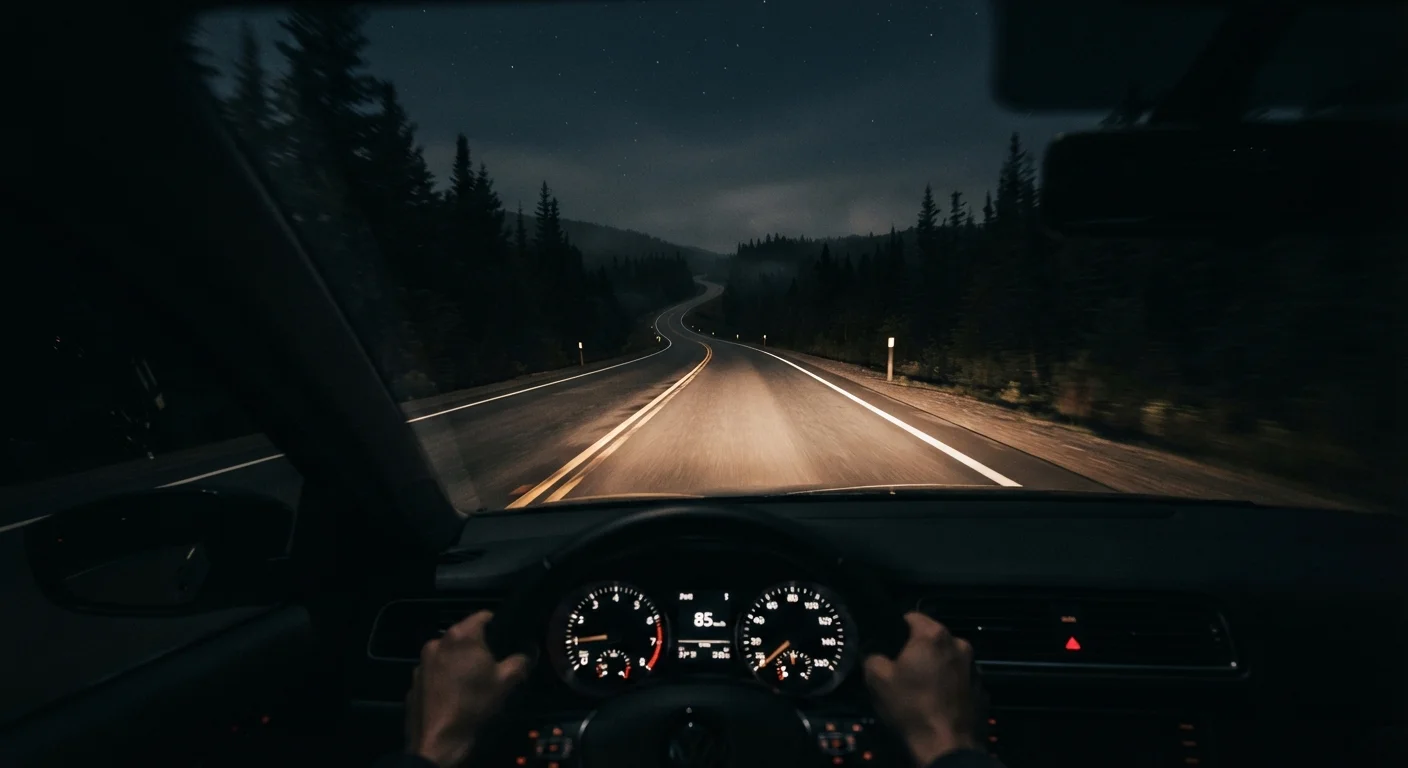
Your headlights typically illuminate 150-200 feet ahead, but at highway speeds you may need much more distance to stop safely. Night conditions reduce your perception of depth and speed, so the standard two-second gap leaves too little margin. Extending to four seconds gives your eyes and reflexes time to catch up with what your headlights reveal.
Use your high beams correctly - and switch them off promptly for oncoming traffic.
High beams can more than double your visible range on dark rural roads, dramatically improving hazard detection. But failing to dim them for oncoming drivers causes temporary blindness that can last several seconds - creating a risk for both vehicles. The habit of proactively dimming is as important as the habit of using high beams in the first place.
Manage glare by looking toward the right edge of the road when oncoming lights are intense.
Staring directly into bright headlights causes temporary flash blindness and throws off your lane tracking. Shifting your gaze to the white line or right shoulder keeps your lane reference intact while your peripheral vision monitors the approaching vehicle. This simple technique is one of the most underused night driving skills.
Recognize and respond to fatigue before it becomes dangerous.
Drowsy driving impairs reaction time, judgment, and lane-keeping in ways that resemble alcohol impairment. Drivers frequently underestimate how impaired they are because fatigue affects the very faculties used to assess it. Early warning signs - frequent yawning, drifting, difficulty keeping eyes focused - should be treated as a hard stop signal.
Keep your windshield and headlights clean before night trips.
Dirt and film on the inside of the windshield scatter oncoming light into a diffuse glare that severely limits visibility - a problem that's nearly invisible in daylight but can be blinding at night. Similarly, cloudy or yellowed headlight lenses dramatically reduce beam output. Regular cleaning and maintenance pay outsize dividends after dark.
For a broader look at how vehicle maintenance connects to safety, the Car Maintenance hub covers essential upkeep that directly affects your visibility and control at night.
Quick Actions You Can Take Tonight
Most night driving improvements don't require new equipment or training - they require small habit shifts made consistently. Start with these.
Following distance deserves special attention. Many new drivers already underestimate safe spacing in daylight; after dark, the problem worsens. Our piece on why new drivers underestimate following distance explains the psychology behind the habit and how to correct it.
Building a Complete Picture of Nighttime Hazards
“Fatigue is one of the most underestimated factors in nighttime crash risk. Drivers don't realize how impaired they are until it's too late, because the impairment affects the very judgment they'd use to recognize it.”
— National Highway Traffic Safety Administration, U.S. federal agency overseeing road safety research and policy
Fatigue aside, night driving also strips away many of the visual cues you rely on to read traffic - brake light patterns, pedestrian body language, the subtle signals that tell you a merge is coming. Developing stronger situational awareness after dark is a learned skill. If you want to sharpen how you read the road in any condition, Reading the Road: What Traffic Patterns Are Telling You breaks down how experienced drivers scan and interpret what's ahead.
Night driving doesn't exist in isolation from other challenging conditions either. Rain, fog, or construction zones at night multiply the hazards significantly. If you encounter those combinations, the strategies in Driving in Bad Weather: Rain, Snow, and Fog Compared apply directly and compound with the night-specific habits described here.
Before any drive - especially after dark - running through a consistent pre-departure check is one of the simplest ways to reduce preventable risk. The Before Every Drive checklist takes less than five minutes and covers the lights, mirrors, and tire condition that matter most at night.