Why Routine DIY Maintenance Makes Sense
Paying a shop for every minor service adds up fast. The good news is that a meaningful slice of routine car care doesn't require a lift, specialized training, or years of experience - just the right information, a few basic tools, and the willingness to read your owner's manual. Handling straightforward tasks yourself can reduce unnecessary service visits and give you a clearer picture of your vehicle's overall condition.
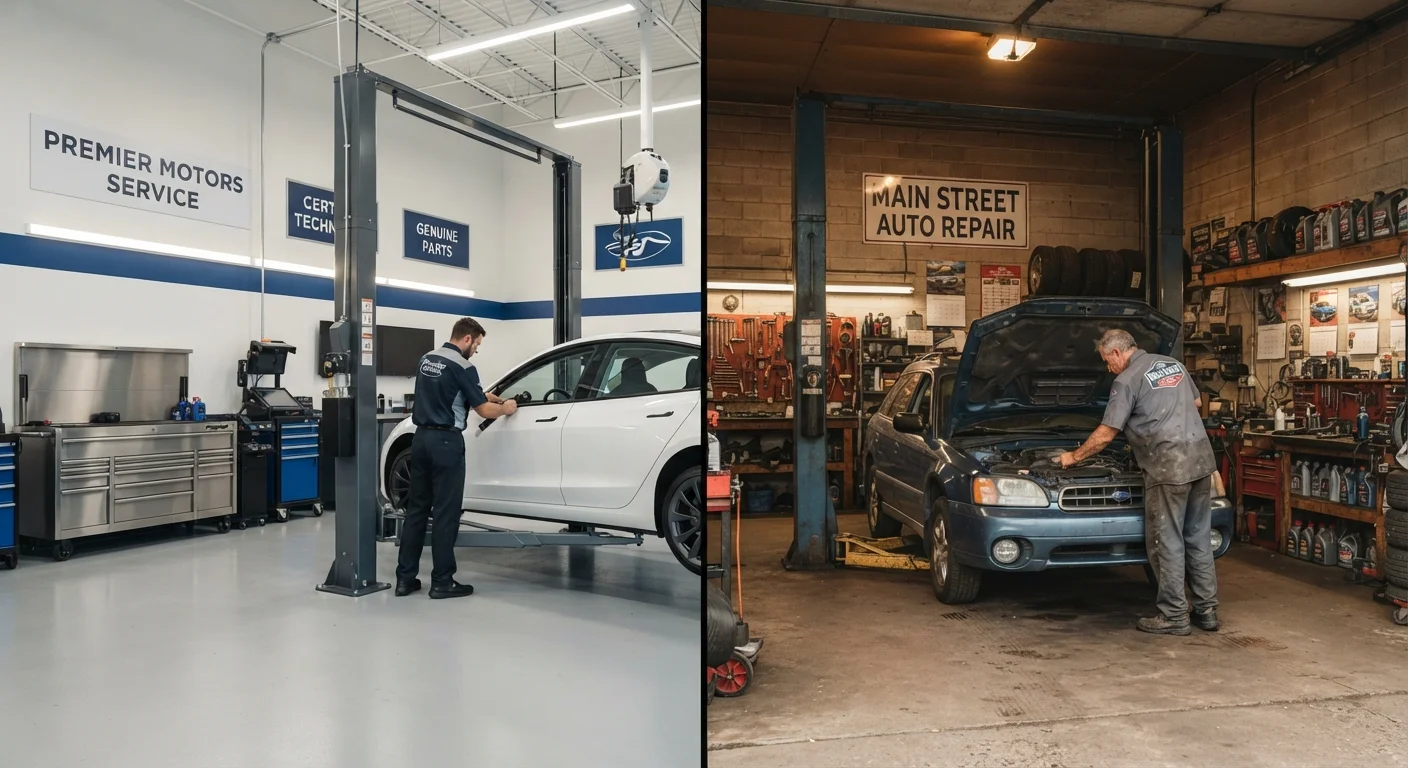
That said, knowing where the line is matters just as much as knowing what to tackle. Tasks involving brake hydraulics, high-voltage hybrid systems, airbag components, or structural parts of the vehicle should be left to a qualified mechanic. The list below focuses exclusively on tasks that are genuinely within reach for a careful, first-time DIYer. For anything that falls outside this scope, our guide on choosing between a dealer and independent mechanic can help you make an informed call.
Check and adjust tire pressure
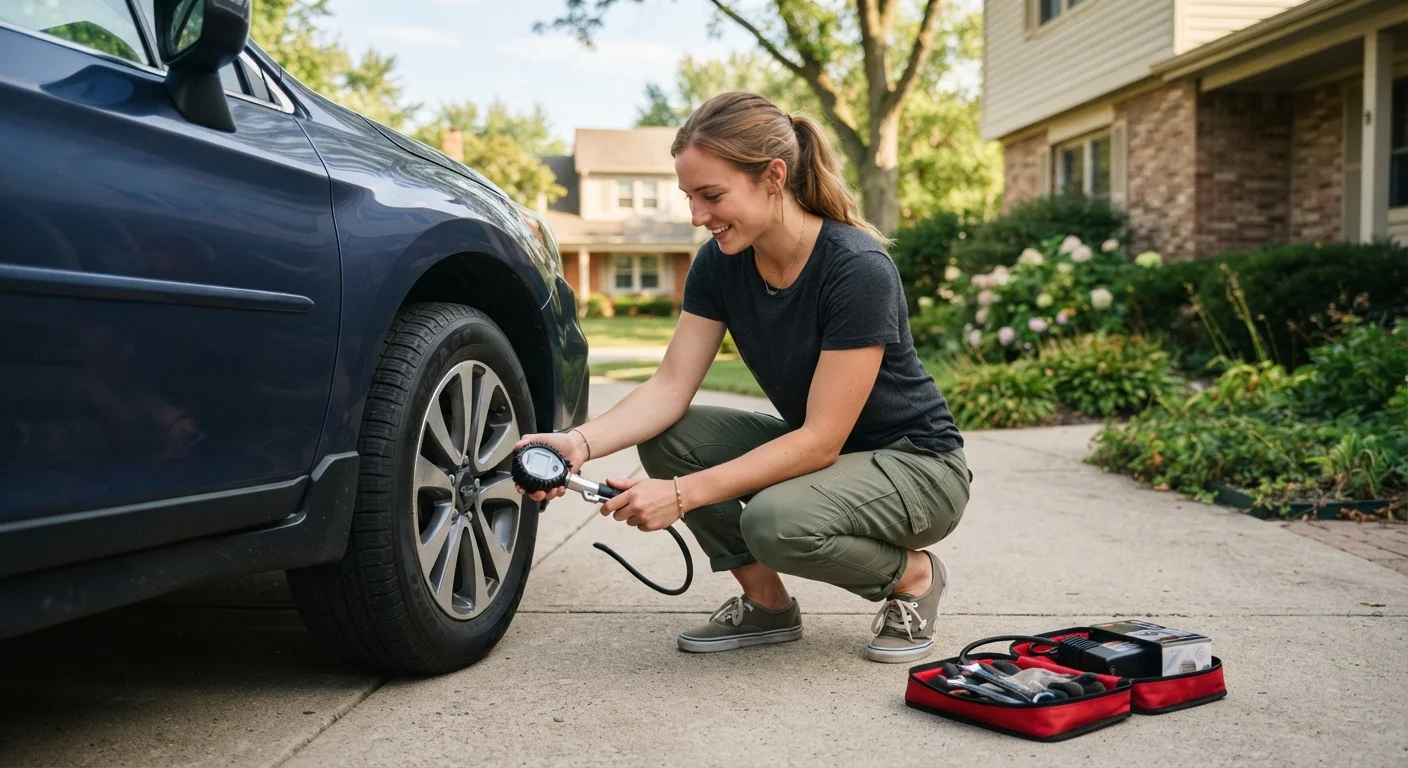
Underinflated tires reduce fuel efficiency, wear unevenly, and - in severe cases - increase the risk of a blowout. Checking pressure takes under five minutes and requires only a tire pressure gauge, which is inexpensive and widely available. Check pressure when tires are cold (before driving or after the car has sat for at least three hours), since heat from driving temporarily raises readings.
Find the correct pressure for your vehicle on the sticker inside the driver's door jamb or in your owner's manual - not on the tire sidewall, which shows the maximum pressure the tire can hold, not the recommended operating pressure. Our complete tire guide covers pressure, tread depth, and rotation in full detail.
Always check pressure when tires are cold - heat from driving gives a false reading.
Replace windshield wiper blades
Streaking, skipping, or squeaking wipers are a clear sign it's time for a replacement. Most wiper blades are designed to be swapped without tools - the attachment points use simple hook, pinch-tab, or pin systems that vary by vehicle. Consult your owner's manual or the fitment guide available at most auto parts stores to confirm the correct blade size for your specific make and model.
Lift the wiper arm away from the glass carefully and support it - letting it snap back onto bare glass can crack the windshield. Once the new blade clicks securely into place, lower the arm gently. Most manufacturers suggest replacing blades roughly every six to twelve months, though climate and usage affect that significantly.
Support the wiper arm when replacing blades - letting it snap back can crack the windshield.
Replace the cabin air filter
The cabin air filter cleans the air that comes through your heating, ventilation, and air conditioning (HVAC) system. A clogged filter reduces airflow noticeably and can cause musty odors inside the cabin. Replacement intervals vary by vehicle and driving environment - dusty or high-pollen areas shorten the life of a filter considerably.
On most vehicles, the cabin air filter is located behind the glove box or under the dashboard and can be accessed without tools in minutes. Your owner's manual will show the exact location and removal steps. This is one of the easiest maintenance tasks available, and seeing a visibly dirty filter for the first time is a good reminder of how much work it's quietly doing.
A clogged cabin air filter reduces HVAC airflow and can introduce musty odors into the cabin.
Top off windshield washer fluid
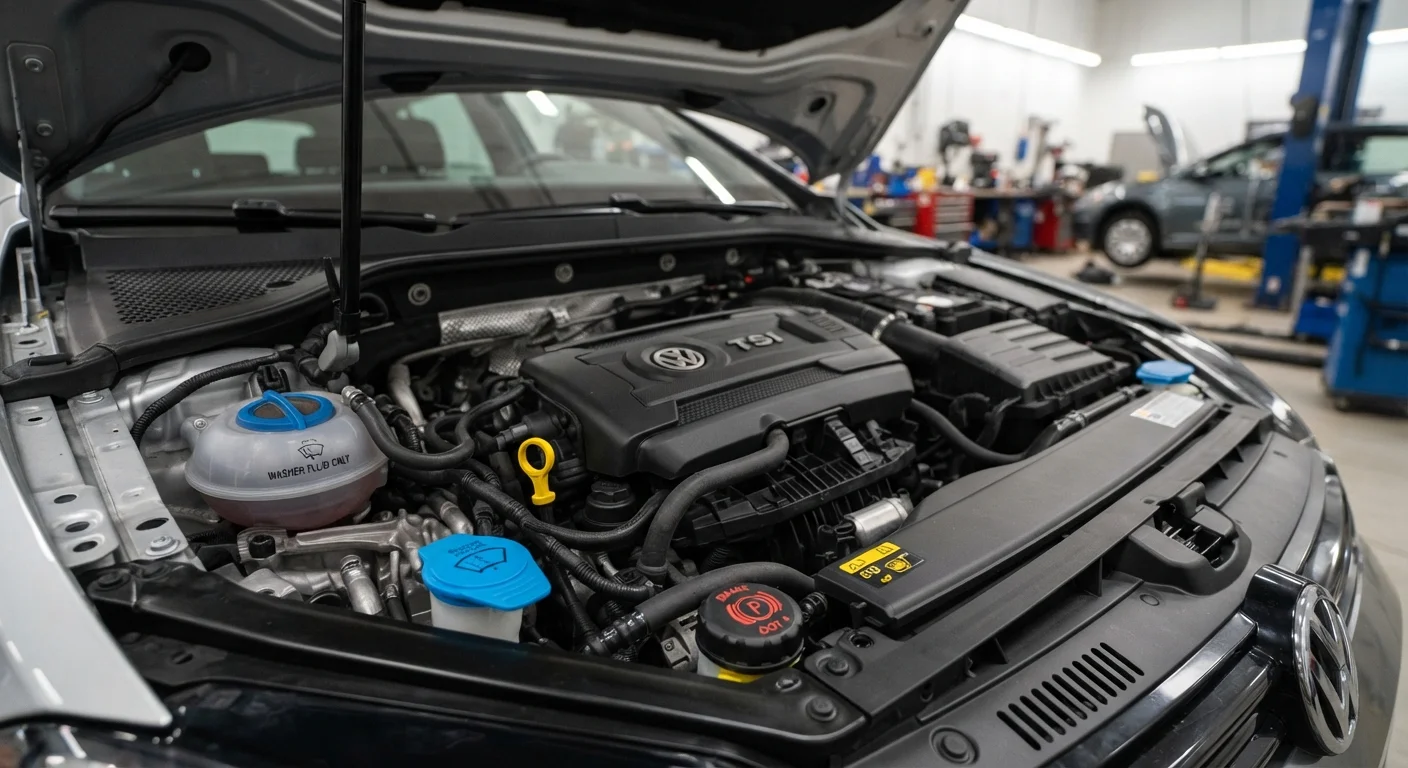
Running out of washer fluid at the wrong moment - behind a salt-spraying truck in winter, for example - is an easy problem to avoid. The reservoir is clearly labeled under the hood and accepts premixed washer fluid directly. Do not substitute plain water in climates where temperatures drop below freezing, as it will freeze in the lines and reservoir.
Use a fluid rated for the lowest temperature you expect to encounter. Some formulas also include a de-icer component useful in winter months. Our guide to car fluids and when to top them off explains the full range of fluids your vehicle relies on.
Never substitute plain water for washer fluid in freezing climates - it will freeze in the lines.
Replace a burnt-out exterior bulb
A dead turn signal, license plate light, or parking light is straightforward to replace on many vehicles and keeps you legal and visible on the road. Check your owner's manual first - it will identify the bulb type needed and show how to access the housing. Some modern vehicles require removing a panel or reaching through the trunk or wheel well, while others offer simple twist-out access.
Headlight and taillight assemblies on newer vehicles can be more complex, so evaluate your specific situation before committing. When handling halogen bulbs, avoid touching the glass with bare fingers - oils from skin can create hot spots and shorten bulb life. Wear gloves or use a clean cloth. Note that driving with a non-functioning light may be a traffic violation in your state, so address burnt-out bulbs promptly.
Never touch halogen bulbs with bare fingers - skin oils create hot spots that shorten bulb life.
Inspect and clean battery terminals
Corroded battery terminals are a common cause of hard starts and electrical gremlins. The white or bluish buildup you might see around the terminal posts is a mix of battery acid vapors and oxidation, and it's easy to address. Before you begin, make sure the engine is off and cool, and consult your owner's manual - some vehicles have electronics that require a specific procedure before disconnecting the battery to avoid resetting settings or triggering fault codes.
A mixture of baking soda and water neutralizes terminal corrosion effectively. Apply it with an old toothbrush, let it fizz, then rinse with a small amount of water and dry thoroughly. Terminal cleaning brushes, sold at most auto parts stores, make the job even easier. If the battery itself is swollen, leaking, or more than four to five years old, have it tested professionally before assuming cleaning will resolve the issue.
Check your owner's manual before disconnecting the battery - some vehicles reset critical electronics.
Build Good Habits Around What You Learn
Every task you complete at home is an opportunity to get more familiar with your vehicle. Once you're comfortable with the basics, you'll start noticing changes earlier - a wiper that's starting to streak, a tire that loses pressure faster than the others, a filter that's dirtier than expected. That kind of attentiveness is genuinely protective.
Start a Simple Maintenance Log
After each DIY task, jot down what you did, the date, and your current mileage. A basic notebook or a free spreadsheet works fine. Over time, this log helps you spot patterns - like a tire that keeps losing pressure - and gives you a service history that can be useful when selling the vehicle.
Pairing your DIY efforts with a vehicle maintenance log makes it easy to track what you've done and when. It's also worth reading up on habits that quietly shorten a car's lifespan so your efforts actually extend your vehicle's reliability rather than just keeping up appearances.