Why a Maintenance Log Is Worth the Two Minutes It Takes
Most drivers remember their last oil change only because a sticker on the windshield tells them to. That system works - until it doesn't. A maintenance log fills in everything a sticker can't: what was replaced, what was inspected, what a mechanic flagged for later, and the exact mileage at each visit.
Over time, that record becomes a timeline of your vehicle's health. You can see whether a part is wearing faster than expected, confirm a repair was actually done, and hand a potential buyer documented proof that the car was cared for. A well-kept log is also invaluable if a warranty dispute arises - it shows you followed the manufacturer's recommended intervals.
Think of it the way a homeowner might track HVAC filters and roof inspections. The same logic applies to cars: documented upkeep protects your investment and removes guesswork. If you've ever wondered what a consistent maintenance habit looks like for a major asset, our home maintenance log guide offers a useful parallel framework.
What to Record in Every Entry
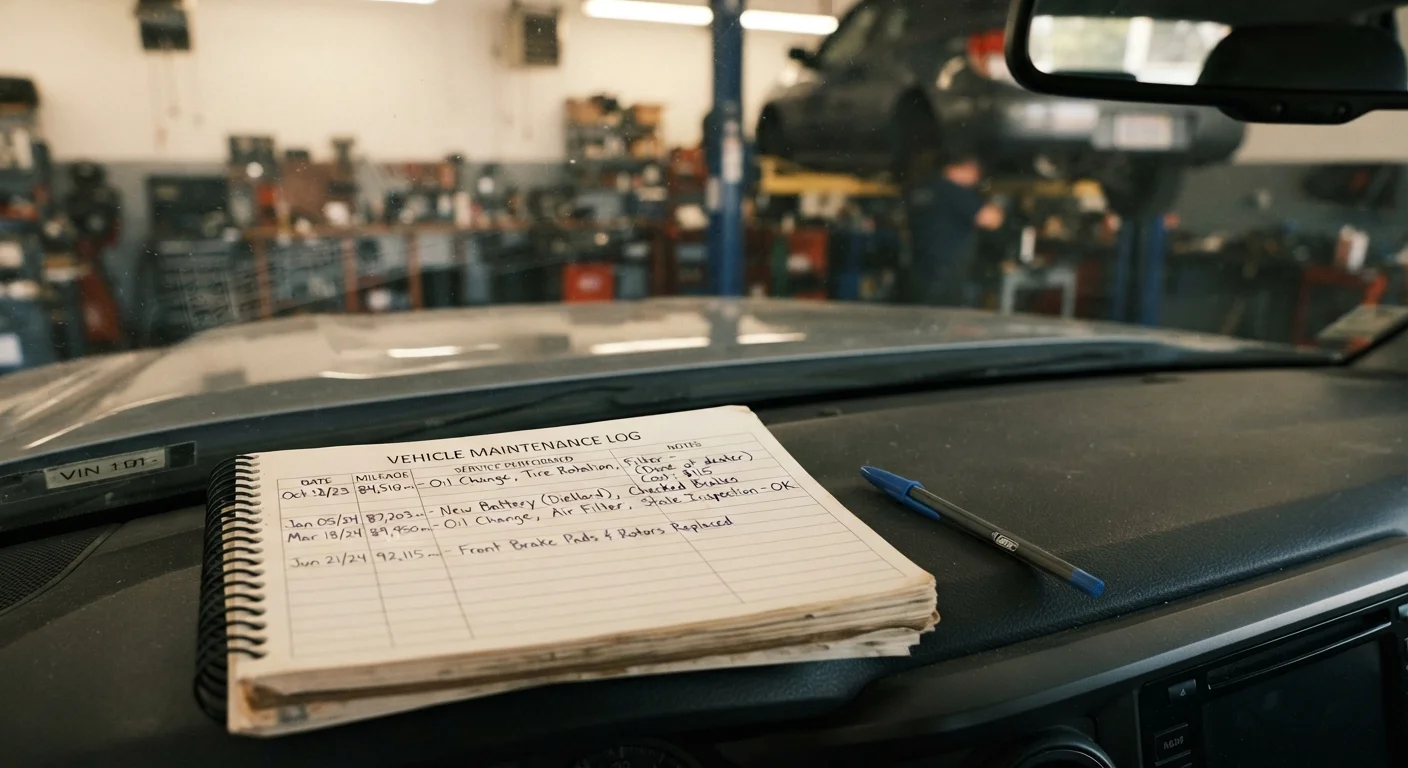
Each log entry doesn't need to be elaborate - but it should be consistent. At a minimum, record the following for every service or inspection:
- Date - when the work was done
- Odometer reading - mileage at the time of service
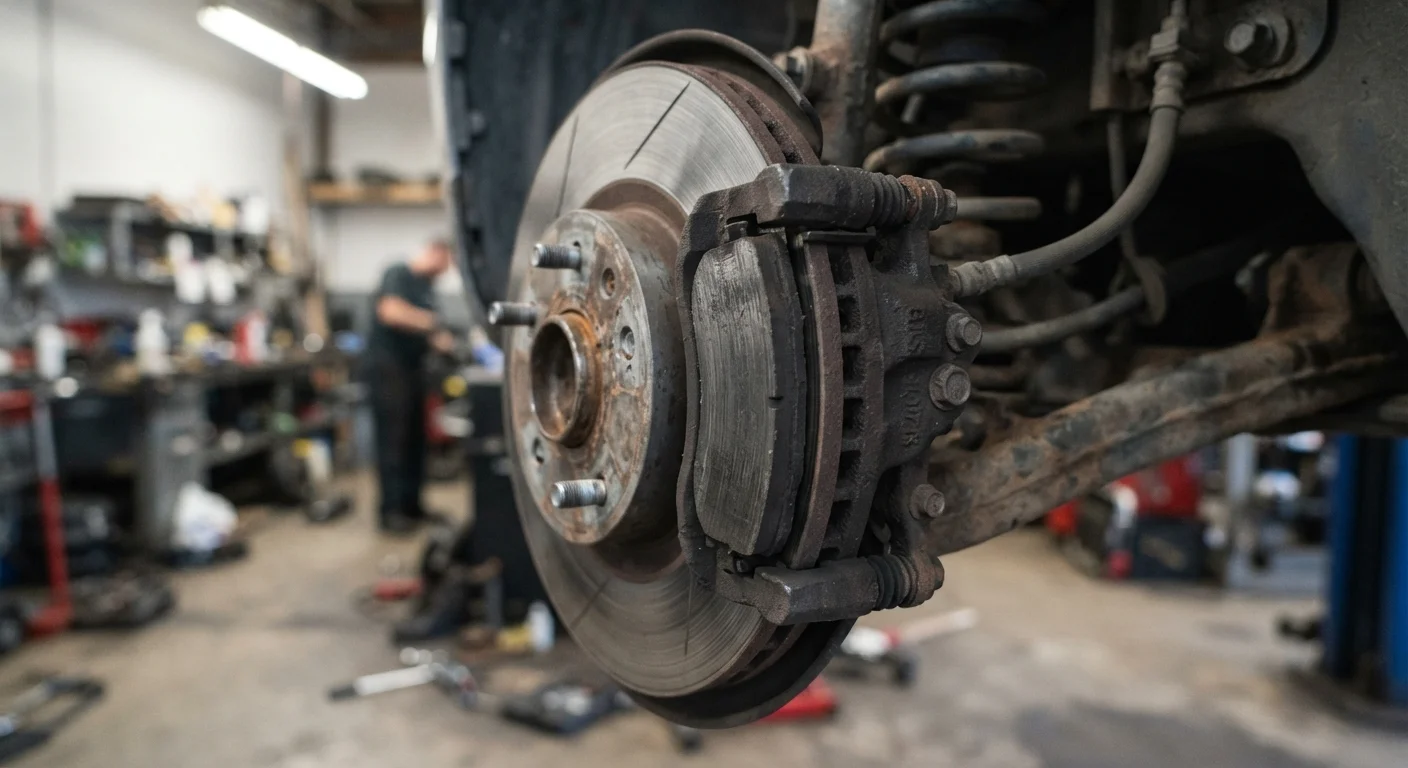
- Service performed - oil change, tire rotation, brake pad replacement, etc.
- Parts used - type, specification (e.g., 5W-30 synthetic), and quantity where relevant
- Who did the work - shop name or "self" for DIY tasks
- Cost - useful for budgeting and spotting price creep over time
- Notes - anything flagged but not yet addressed, unusual sounds, or upcoming needs
That last field - notes - is often the most useful. If a mechanic mentions your rear brakes are at 40% and should be watched, logging that observation lets you track how quickly they wear over the next several months.
Choosing a Format You'll Actually Stick With
Paper still works. A small spiral notebook kept in the glove compartment alongside your essential vehicle documents is simple and doesn't require a phone or internet connection. Write legibly, use consistent column headers, and don't skip entries.
If you prefer digital, a basic spreadsheet - Google Sheets, for example - can be shared with a co-owner and accessed from any device. Several dedicated apps also handle this automatically, prompting you with upcoming service reminders based on mileage intervals.
Start Simple, Stay Consistent
Don't let the perfect log be the enemy of a good one. A basic note on your phone is infinitely more useful than a sophisticated system you never actually fill in. Start with date, mileage, and service performed - that alone gives you a meaningful record within a year.
Whatever format you choose, pair it with your vehicle's owner's manual, which outlines the manufacturer's recommended service schedule. That schedule is your baseline - your log tracks whether you're meeting it.
Your vehicle's VIN is also worth recording at the top of your log. It links your records to the specific vehicle and is useful when looking up recall history or ordering parts.
Maintenance Intervals Worth Tracking Closely
Not every service requires the same frequency, which is exactly why a log earns its value. These are the intervals most drivers need to monitor:
~5,000-10,000 mi
Typical modern oil change interval
Synthetic oil and improved engine design have extended oil change intervals well beyond the old 3,000-mile rule of thumb, though your owner's manual remains the authoritative source.
60,000-100,000 mi
Common timing belt replacement window
Timing belt intervals vary significantly by manufacturer; a missed replacement can result in catastrophic engine damage, making it one of the most important items to track.
- Engine oil and filter - varies by vehicle and oil type; check your owner's manual rather than assuming a universal interval
- Tire rotation - typically every 5,000-7,500 miles; helps even out wear across all four tires
- Air filter - usually every 15,000-30,000 miles depending on driving conditions
- Brake inspection - at least once a year, or sooner if you notice changes in stopping distance or feel
- Coolant and transmission fluid - longer intervals, but easy to overlook without a log
- Timing belt or chain - a high-stakes item with serious consequences if missed; consult your manual for the exact interval
Our seasonal maintenance guide is a useful companion for knowing what to inspect as temperatures shift - log those checks too.
How a Log Pays Off at Resale Time
When it's time to sell or trade in a vehicle, a documented service history signals to buyers that the car was maintained consistently - not just whenever something broke. That transparency builds trust, and in private sales, it can strengthen your asking position.
A log won't guarantee a specific price outcome - resale value depends on many factors - but it removes a common buyer objection: uncertainty about whether the car was neglected. Paired with your vehicle title and other ownership paperwork, a maintenance record helps present a complete picture of the vehicle's history.
Maintenance Records and Warranty Claims
If your vehicle is under a manufacturer or extended warranty, keeping thorough service records is especially important. Warranty providers may ask for proof that required maintenance was performed on schedule. A detailed log - showing dates, mileage, and work completed - is the clearest way to demonstrate compliance. Keep receipts alongside your log whenever possible.
For drivers who want to handle more of their own routine work, our DIY car maintenance guide outlines tasks that most people can manage safely at home - all of which are worth logging once done.