Why Your Glove Compartment Is Your First Line of Defense
A police officer asks for your license, registration, and proof of insurance. A distracted driver clips your bumper in a parking lot. Your car won't start on a dark highway. In each of these moments, what's sitting in your glove compartment can determine how smoothly things resolve - or how badly they spiral.
For young drivers navigating the financial and legal realities of car ownership, having the right paperwork on hand isn't bureaucratic box-checking. It's practical self-protection. Most US states legally require drivers to carry certain documents at all times, and failing to produce them during a traffic stop can result in fines even when the underlying coverage or registration is perfectly valid.
Think of this checklist as a one-time setup that pays dividends every time you get behind the wheel. Pair it with the habits covered in our pre-trip safety checklist for a fuller picture of responsible driving preparation.
Legally Required Documents
Accident & Emergency Preparedness
Vehicle-Specific Records
Maintenance & Ownership Extras
What to Keep, Why It Matters, and How to Stay Current
Collecting the right documents is only half the job - keeping them current is the other half. Insurance cards expire, registrations renew annually, and contact details change. Build a habit of auditing your glove compartment every time you receive a renewal notice.
Expired Documents Can Still Cost You
Driving with an expired insurance card or registration - even if your policy or registration is technically active and current - can result in a citation in many states. Officers verify documents on the spot, and paperwork that appears lapsed may trigger a fine regardless of your actual status. Set a calendar reminder to swap out documents the day your renewal arrives.
A few additional tips for keeping your paperwork organized and useful:
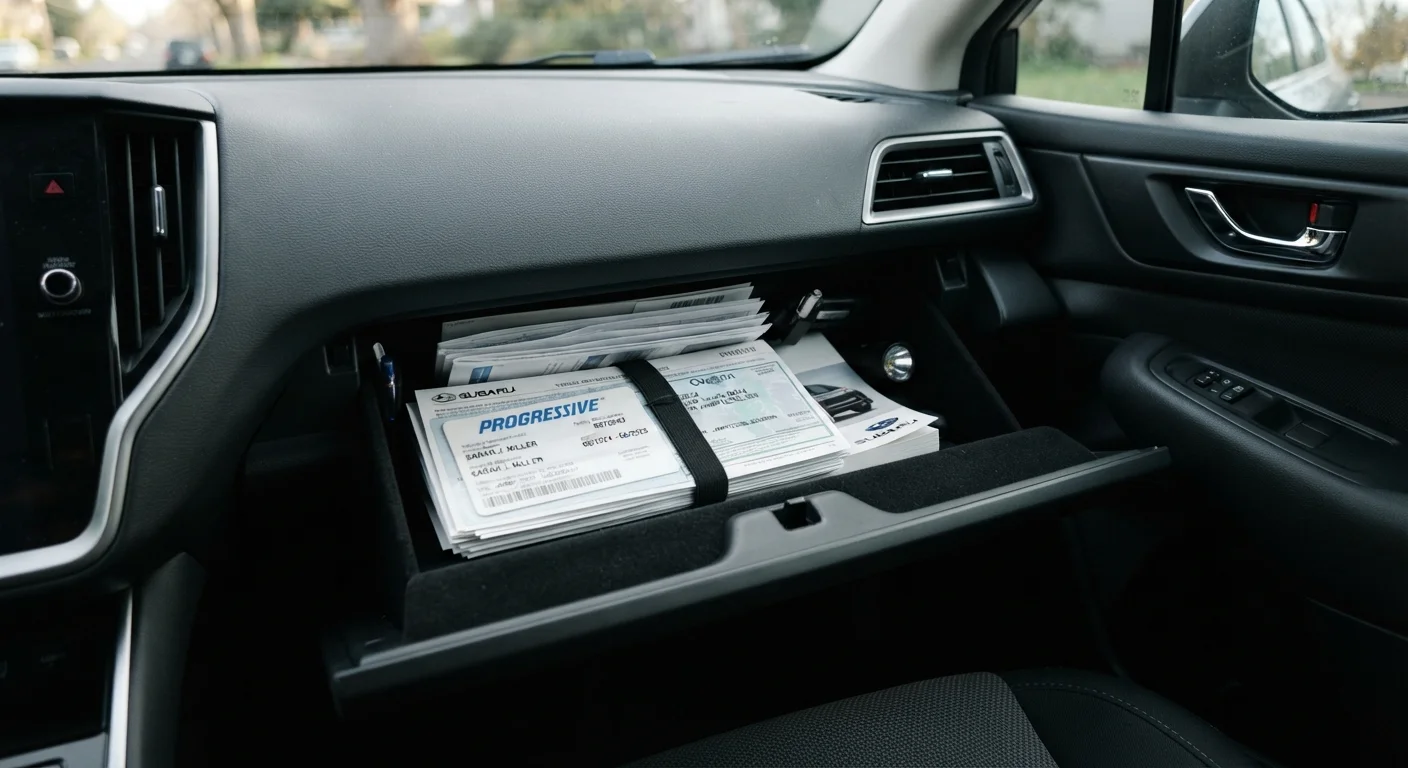
- Use a document sleeve or accordion folder - loose papers can go missing when you need them most.
- Don't store your Social Security number or passport in the glove compartment. A car break-in becomes identity theft risk if highly sensitive documents are inside.
- Keep digital backups where possible, but don't rely on phone access alone - battery and signal can both fail at the worst times.
- If you share the vehicle, make sure every regular driver knows where the documents are and what each one is for.
Staying on top of your vehicle's administrative side connects directly to overall car ownership literacy. Our vehicle maintenance log guide is a great companion resource - service records stored with your paperwork can also be valuable during a sale or dispute.
Document sleeve or accordion folder
Keeps all glove compartment paperwork organized, protected from moisture, and easy to hand over quickly.
Blank notepad and pen
Used at accident scenes to record the other driver's details, plate numbers, and witness contact information.
Smartphone with insurance app
Many insurers offer digital ID cards through their app - a useful backup where states accept electronic proof.
This article provides general information for educational purposes only and does not constitute legal or insurance advice. Requirements vary by state. Consult your insurer, a licensed attorney, or your state's DMV for guidance specific to your situation.