
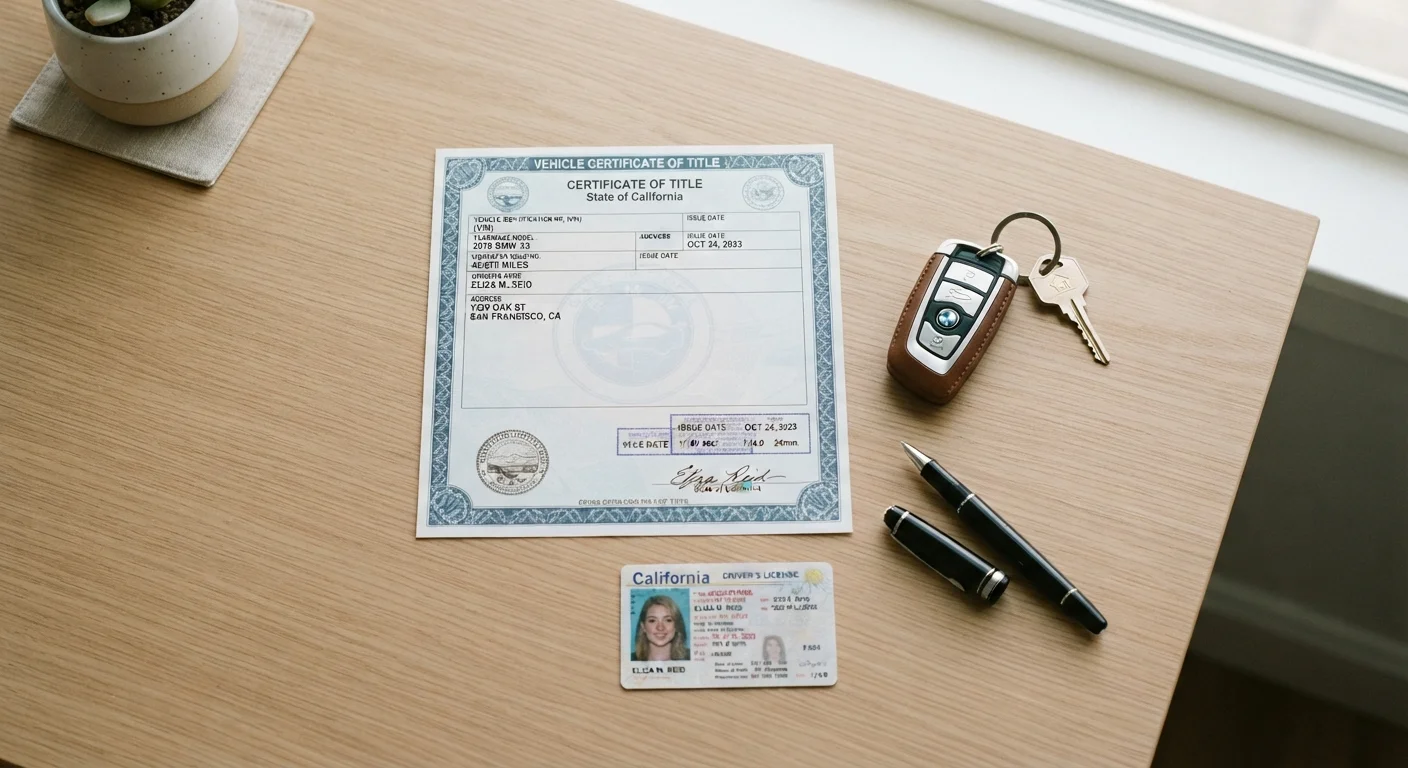
What's Actually on Your Car Title
Your vehicle title is a state-issued certificate that contains more information than most people realize. At a glance, it includes:
- Owner name and address - the legal registered owner of the vehicle
- Vehicle Identification Number (VIN) - the unique 17-character code that identifies your specific car (see our guide to understanding your VIN for more on what those characters mean)
- Make, model, year, and body style
- Odometer reading at the time of transfer
- Lienholder information, if the vehicle is financed
- Title brand, which flags the vehicle's history - such as salvage, rebuilt, or flood damage
The title brand is one of the most overlooked fields. A clean title means no major flags. A salvage or rebuilt title signals past significant damage and can affect how much the car is worth - something directly tied to the broader issue of how quickly cars lose value.
~43M
Used vehicle title transfers annually in the US
The American Association of Motor Vehicle Administrators estimates tens of millions of vehicle ownership transfers are processed through state DMVs each year.
$5-$25
Typical duplicate title fee range
Most state DMVs charge a modest fee for duplicate title requests, though the exact amount varies by jurisdiction.
10-30 days
Typical window to transfer a title after purchase
Most states require buyers to submit a completed title transfer to their DMV within 10 to 30 days of the sale date to avoid late penalties.
How Title Transfer Works - and Where People Go Wrong
Every time a vehicle changes hands, the title must be legally transferred. Skipping or mishandling this step is one of the more common - and costly - paperwork mistakes new car owners make, as outlined in our look at expensive car ownership errors.
Here's how a proper transfer works:
- The seller signs the title in the designated seller section, including the sale price and odometer reading.
- The buyer completes the buyer section with their name, address, and signature.
- Both parties keep copies for their records.
- The buyer submits the signed title to their state DMV - along with any required fees or taxes - within the state's deadline.
Always Record the Odometer Reading
Federal law (the Truth in Mileage Act) requires accurate odometer disclosure on a title transfer for most vehicles under 10 years old. Both buyer and seller should verify the reading matches the dashboard before signing anything. A discrepancy could indicate odometer fraud - a serious legal issue that voids any sale protections.
In a private sale, it's worth doing your homework before any money changes hands. Our article on buying from a private seller walks through the exact title and paperwork checks that protect you from fraud.
What to Do If Your Title Is Lost or Damaged
Titles are paper documents, which means they get lost, damaged, or simply misplaced. If yours goes missing, don't panic - every state DMV offers a duplicate title process.
To request a replacement, you'll generally need:
- Your vehicle's VIN
- Government-issued photo ID
- Completed duplicate title application form
- Payment for the duplicate title fee (typically between $5 and $25, though this varies by state)
If there's an active lien on the vehicle, the lienholder may need to be involved in the duplicate request. Once you receive a replacement, store it somewhere secure - a fireproof home safe or a safety deposit box at a bank are common choices.
Title Rules Vary by State
Every state has its own title transfer deadlines, fees, and procedures. What's true in Texas may differ significantly from what's required in California or New York. Always confirm the exact requirements with your state's DMV website before completing any transfer or requesting a duplicate.
One overlooked tip: keep a photo or scan of your title stored digitally in a secure location. It won't substitute for the real document legally, but it gives you the VIN and key details you'd need to request a duplicate quickly.
Protecting Yourself as a Buyer
Before purchasing any used vehicle, verifying the title is non-negotiable. Watch for these warning signs:
- The seller doesn't have the title in hand - this is a red flag, especially in a private sale.
- The name on the title doesn't match the seller's ID - could indicate the car was never properly transferred to them.
- Alterations or corrections on the title - legitimate changes require official state-issued replacement documents.
- A salvage or rebuilt brand - not automatically disqualifying, but demands a thorough independent inspection.
Running a vehicle history report using the car's VIN can reveal title brands, lien history, and previous states of registration. Pair that with a careful review of the physical title and you significantly reduce your risk of buying into someone else's problem.
This article is for general informational purposes only and does not constitute legal or financial advice. Title rules and DMV procedures vary by state - always verify requirements with your state's DMV or a qualified professional.