The Hidden Cost Driving Your Car's True Price
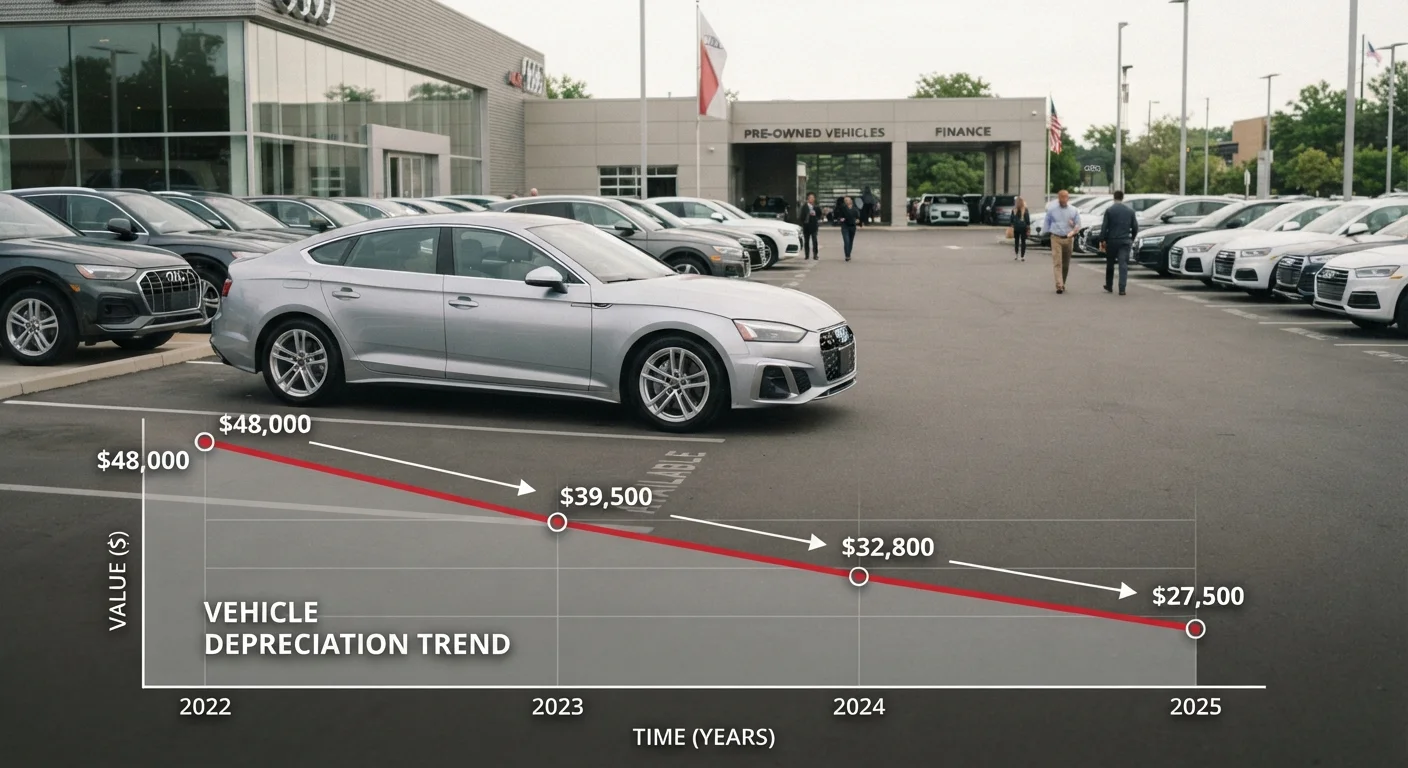
Most people focus on monthly payments when budgeting for a car. What often goes unexamined is depreciation - the steady erosion of your vehicle's market value from the moment you own it. Over a five-year ownership period, depreciation can represent tens of thousands of dollars in lost value, frequently outpacing what you spend on fuel, maintenance, and insurance combined.
For young adults entering car ownership, understanding this concept upfront changes the entire financial picture. See our full breakdown of car ownership costs to understand how depreciation fits alongside every other expense.
~20%
Average first-year value loss for new cars
Industry estimates from automotive valuation sources suggest new vehicles lose roughly 15-25% of their value within the first 12 months of ownership.
~50%
Value lost over five years on average
Many vehicles lose close to half their original value within five years, though this varies significantly by make, model, and market demand.
#1
Largest cost of car ownership
Consumer finance analysts frequently cite depreciation as the single biggest expense of owning a vehicle, often exceeding combined fuel and insurance costs.
Why Cars Lose Value So Quickly
Several forces drive depreciation, and they don't slow down for careful owners:
- Age and mileage: The more miles on the odometer and the older the vehicle, the lower its perceived reliability and remaining useful life - directly impacting resale value.
- Supply and demand: If a particular vehicle type floods the used market, prices drop. Fuel prices can also shift demand sharply, affecting the value of trucks, SUVs, or hybrids.
- Vehicle condition: Accidents, deferred maintenance, and cosmetic wear all reduce what a buyer will pay. Common maintenance mistakes can quietly reduce resale value over time.
- Technology and model updates: When a manufacturer releases a refreshed model, older versions often drop in perceived value even if nothing changed mechanically.
The steepest drop happens early. Industry data consistently shows that a new car loses a significant portion of its value in the first one to three years - which is why used vehicles purchased after this initial cliff can represent better financial value.
Buying Used Avoids the Steepest Drop
Purchasing a vehicle that is two to three years old allows someone else to absorb the sharpest early depreciation. You get a relatively modern car at a meaningfully lower price - and the remaining depreciation curve is considerably flatter. Look for vehicles with documented service records to ensure that value is real, not just on paper.
How Depreciation Affects Your Financial Decisions
Depreciation isn't just an abstract concept - it actively shapes several financial realities for car owners:
Loan Equity Risk
If you finance a car with a small down payment over a long loan term, depreciation can outpace your payoff schedule. You can end up 'upside down,' meaning the car's market value drops below your outstanding loan balance. This matters enormously if you need to sell, trade in, or if the car is totaled. Understanding this risk before signing paperwork is essential - see how leasing and financing compare financially for more context.
Insurance Payouts
Standard auto insurance policies pay out the actual cash value of a vehicle at the time of a claim - not what you paid for it. After significant depreciation, that gap can be substantial. Gap insurance exists specifically to cover the difference between what you owe on a loan and what the insurer pays out after a total loss.
Trade-In Timing
Many buyers trade in vehicles every few years without accounting for how much value they've surrendered. Trading in during the steepest depreciation window - typically the first two to three years - means absorbing the largest losses. Holding a well-maintained vehicle longer often makes stronger financial sense. Avoiding common car ownership mistakes can help you stay ahead of unnecessary losses.
Protecting What Your Car Is Worth
While depreciation is unavoidable, its pace is partly within your control. A vehicle with documented maintenance history, low accident reports, and reasonable mileage will consistently command a higher resale price than a neglected equivalent. Simple habits - regular oil changes, addressing mechanical issues early, keeping the interior and exterior in good condition - add up meaningfully when it's time to sell.
Checking your vehicle's history through its VIN (Vehicle Identification Number) is also useful when buying used, as it can reveal prior accidents or title issues that dramatically affect value. Our guide on reading and using your VIN walks through exactly what that number tells you.
Depreciation Varies Widely by Vehicle Type
Not all vehicles depreciate at the same rate. Trucks, certain SUVs, and vehicles in high demand may hold value better than economy sedans or luxury vehicles with high initial sticker prices. Market conditions - including fuel prices and inventory levels - can shift these patterns over time. Always research current resale values for any specific vehicle you're considering.
Thinking about depreciation at the start of ownership - not just at trade-in time - is what separates informed car owners from those who are perpetually surprised by how little their vehicle is worth when they're ready to move on.