Why the Sticker Price Is Only the Starting Point
When most people budget for a car, they focus on the monthly payment - but that number captures a surprisingly small slice of what car ownership actually costs. The American Automobile Association (AAA) estimates that the average annual cost of owning and operating a new vehicle runs well into the thousands of dollars once all expenses are tallied, well beyond what a dealership sticker ever shows you.
Understanding the full financial picture isn't about discouraging car ownership - it's about making a decision you won't regret six months later. Just like budget travel has hidden costs people routinely overlook, car ownership carries layers of expense that don't announce themselves upfront. Mapping them out before you sign gives you real negotiating power and helps you avoid the trap of buying more car than you can comfortably afford.
~$12,000
Average annual car ownership cost
AAA's annual 'Your Driving Costs' study consistently puts the total annual cost of owning and operating a new vehicle in this range when all expenses are included.
20-25%
Value lost in year one
Industry analysts commonly estimate a new vehicle loses this share of its purchase price within the first 12 months of ownership.
$4,700+
Interest paid on a typical car loan
A $25,000 loan at 7% APR over 60 months results in approximately this amount paid purely in interest charges.
Depreciation: The Invisible Cost That Hits Hardest
Depreciation - the loss of a vehicle's market value over time - is consistently the largest single cost of car ownership, yet it rarely appears in any monthly payment calculation. A new vehicle can lose roughly 15-25% of its value in its first year alone, according to industry data, and up to 60% over five years depending on the make and model.
This matters because depreciation is a real financial loss even if you never open the hood. If you buy a vehicle for $30,000 and sell it five years later for $14,000, that $16,000 difference is money you spent - it just didn't show up on a receipt. For a deeper look at how this works and what it means for decisions like resale timing and insurance coverage, see our guide on why cars lose value so fast.
When comparing vehicles, look up their 5-year depreciation estimates from industry sources before comparing purchase prices - the cheaper car upfront can easily become the more expensive one over time.
Depreciation affects not just resale value but also insurance payouts and the financial math of leasing versus buying. It's the variable most buyers ignore and most regret ignoring.
Set aside a dedicated monthly maintenance reserve - even $50-$75 per month - so that routine service and minor repairs never become a financial crisis.
Deferred maintenance consistently leads to larger repair bills. A small recurring reserve smooths out costs and prevents the temptation to skip service when money is tight.
Certified pre-owned vehicles purchased after the steepest depreciation curve can offer substantially better long-term value - though exact savings vary by vehicle history and market conditions.
Insurance, Registration, and Fees
Auto insurance is non-negotiable in virtually every U.S. state, and the cost varies enormously based on your age, driving record, location, credit history, and the vehicle itself. Young drivers in urban areas often pay the highest premiums. Beyond insurance, annual registration fees, emissions testing, and state-mandated inspections add recurring costs that many first-time owners overlook entirely.
Don't Underestimate Upfront Acquisition Costs
Sales tax, dealer documentation fees, title and registration fees can add 8-12% on top of the negotiated vehicle price in many states. Always ask for an out-the-door price in writing before agreeing to any deal. Budgeting only for the sticker price can leave you scrambling to cover thousands in closing costs you weren't expecting.
Title transfer fees, documentation fees at the dealership, and sales tax on the purchase price can add anywhere from a few hundred to several thousand dollars to your upfront costs. These are typically non-negotiable but worth knowing about before you walk in. Missing renewal deadlines on registration can also trigger fines - a small but avoidable drain covered in more detail in our article on costly car ownership mistakes.
Fuel and Maintenance: The Ongoing Drain
Fuel costs depend on how much you drive, local gas prices, and your vehicle's fuel economy rating - all variables that interact. A vehicle rated at 25 MPG versus one at 35 MPG can mean a difference of several hundred dollars per year in fuel alone, compounded over years of ownership.
Routine maintenance - oil changes, tire rotations, brake pads, filters, and fluid checks - is easy to defer but expensive to ignore. A missed oil change doesn't ruin an engine today; it erodes it quietly over months. The car maintenance hub covers the essential upkeep schedule you should follow regardless of what you drive. When repair bills do arrive, knowing how to read an estimate protects you: our guide on reading a mechanic's estimate explains what labor hours and parts markups actually mean.
Financing Costs and Opportunity Cost
If you finance your vehicle - as most buyers do - interest charges are a real, additive cost. A $25,000 loan at 7% over 60 months results in roughly $4,700 in interest paid over the life of the loan. That's money that goes to the lender, not toward building equity in any traditional sense.
There's also an opportunity cost worth acknowledging: money tied up in a depreciating asset or committed to monthly payments is money not going into savings or investments. This doesn't mean financing a car is wrong - transportation is a legitimate need - but it reinforces the value of choosing a vehicle priced within a realistic range. For a side-by-side look at how leasing and financing compare financially, see leasing vs. financing. The same principle applies more broadly: just as investment fees quietly erode returns, interest quietly inflates the real price of a car over time.
Building Your True Ownership Budget
A practical ownership budget accounts for every cost category: depreciation (estimated resale gap), insurance, registration and fees, fuel, routine maintenance, and a repair reserve. A commonly recommended approach is to budget roughly 15-20% of your take-home income for total transportation costs - though your situation may warrant a different threshold.
Use a 5-Year Total Cost Framework
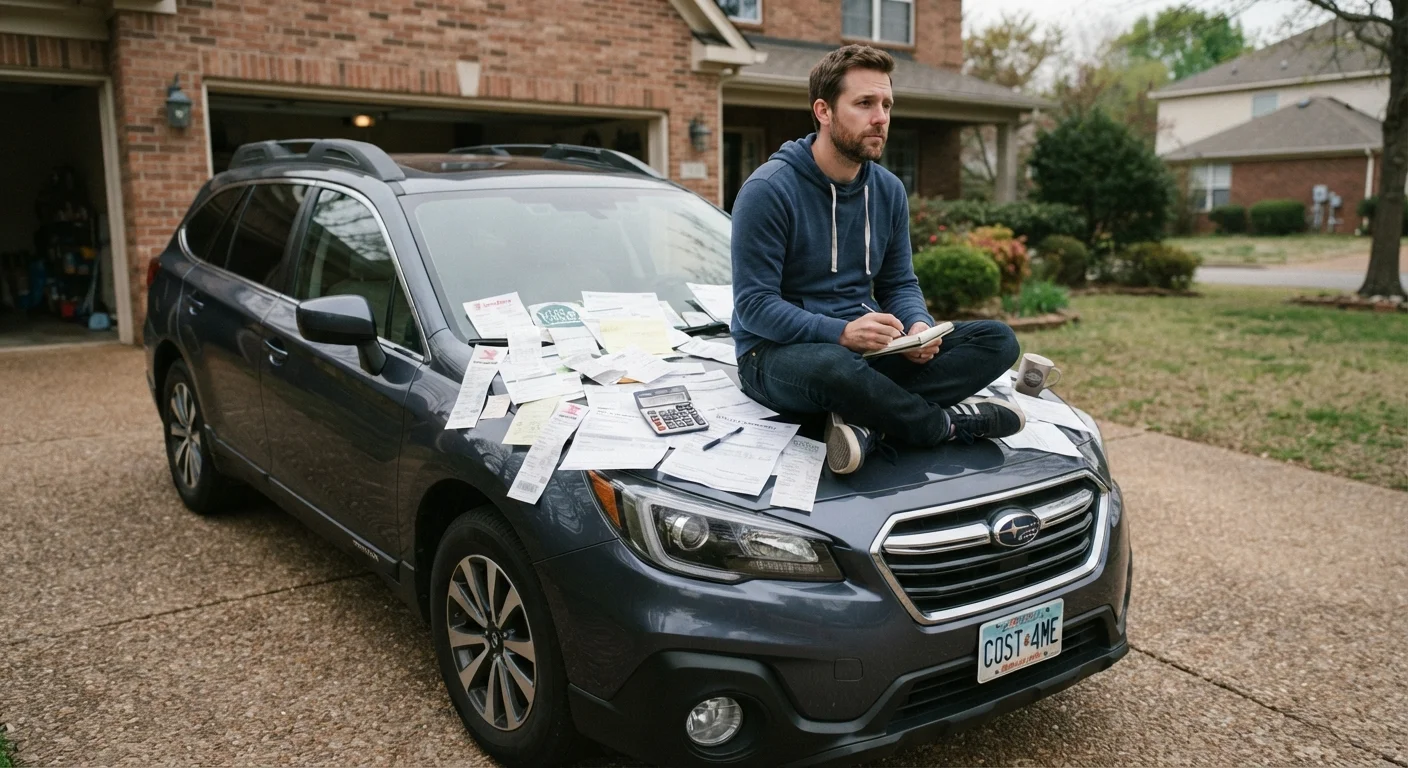
Rather than evaluating a car by its monthly payment, build a simple 5-year cost spreadsheet: purchase price minus estimated resale value, plus projected insurance, fuel, maintenance, and interest. This one habit separates financially confident car buyers from those who feel stretched every month.
Before finalizing any vehicle purchase, run a 5-year total cost estimate rather than just a monthly payment comparison. Include an annual maintenance reserve, an insurance quote specific to that vehicle, and expected fuel costs based on your actual driving habits. That number - not the sticker - is what you're committing to.
Car ownership can be a sound financial decision when approached with clear eyes. The goal isn't to avoid buying a car; it's to buy the right one for the right reasons, with a full understanding of what it will actually cost you over time.
This article is for general informational and educational purposes only and does not constitute financial or legal advice. Consult a qualified financial professional for guidance tailored to your individual circumstances.