
Why 'Budget Travel' Costs More Than People Expect
The phrase "budget travel" conjures images of rock-bottom fares and near-free accommodation. That framing isn't wrong exactly — it's just incomplete. The gap between what a trip looks like in a browser tab and what it costs in real life is where most budget travel plans unravel.
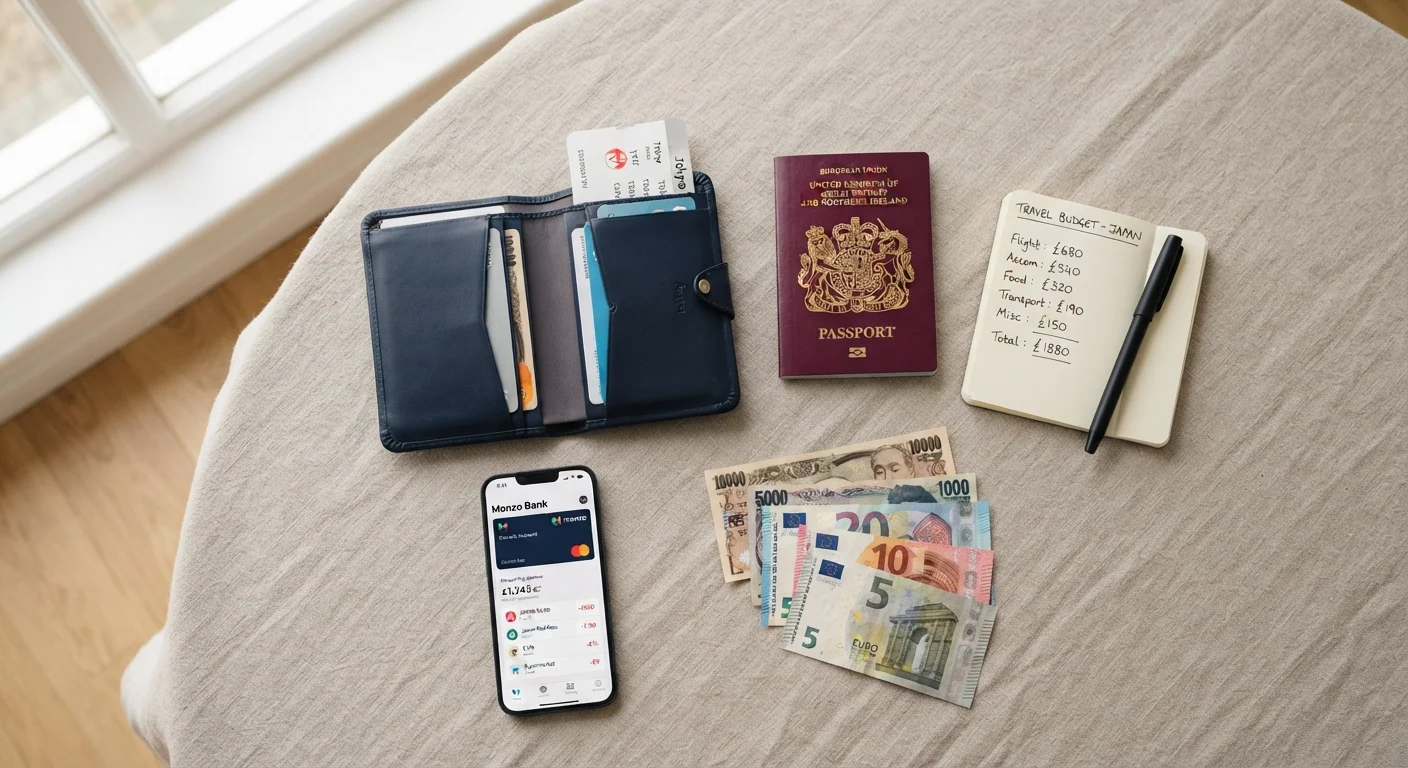
The core problem is that travelers tend to plan around booked costs — flights, accommodation, maybe a rail pass — while underestimating the daily operational costs of actually being somewhere. Food, local transit, entrance fees, SIM cards, and the inevitable "small" purchases accumulate in ways that a spreadsheet made at home rarely captures.
For a clearer picture of how to build a trip budget that holds up, see our guide on building a travel budget from scratch.
Myth
If I find a cheap flight, the trip is basically affordable.
Fact
Airfare is often the smallest share of total trip cost once accommodation, food, transport, and activities are included.
Low-cost carriers and fare sales make flights visible and easy to compare, which is why they dominate the planning conversation. But for a two-week international trip, flights may represent only 20–35% of total spending. Daily costs — where you sleep, what you eat, how you get around — determine whether the trip is genuinely affordable. A $300 flight to an expensive city can cost far more overall than a $600 flight to a destination with low daily expenses.
Myth
Traveling to a 'cheap' country means I'll spend very little.
Fact
A destination's affordability is relative to how you travel, not just where you go.
Travelers who eat at tourist restaurants, stay in Western-style hotels, and use private taxis in a supposedly cheap country can spend as much as they would at home. Local prices apply to locals. The traveler experience — especially in popular tourism corridors — often comes at a premium. Understanding how infrastructure and tourism density shape prices is essential; our article on destination cost tiers explains how to read affordability more accurately.
Myth
Travel insurance is an optional extra I can skip to save money.
Fact
Skipping travel insurance is a financial risk that can result in costs vastly exceeding the premium saved.
Emergency medical care abroad, trip cancellations, lost luggage, and evacuation costs can each run into thousands or tens of thousands of dollars. Travel insurance premiums typically range from 4–10% of total trip cost — a modest amount compared to the potential exposure. The U.S. State Department consistently recommends that Americans traveling internationally carry coverage that includes medical and evacuation benefits, since Medicare and most domestic health plans provide little or no coverage outside the U.S.
Myth
I can wing the details and sort out costs once I arrive.
Fact
Arriving without a plan typically costs more, not less, because last-minute decisions are rarely the economical ones.
Last-minute accommodation in high-demand areas, expensive airport taxis taken out of exhaustion, and admission fees for sold-out attractions that required advance booking — these are the predictable results of under-planning. Flexibility has real value, but it works best within a prepared framework, not as a substitute for one. The most common under-planning costs are laid out in why figuring it out when you get there usually backfires.
Myth
Budget travel means I don't need to think about a formal budget.
Fact
Without a daily spending target, most travelers consistently overspend relative to their actual resources.
"Budget travel" describes an intention, not a self-enforcing system. Without tracking daily spending against a realistic plan, even careful travelers lose track of cumulative costs. Simple strategies — a per-day allowance, a spending log, a contingency buffer — make the difference between a trip that lands within means and one that arrives home with credit card debt. The personal finance principles behind this apply equally to everyday life; see budgeting basics for foundational guidance on building spending plans that hold up.
The Costs That Quietly Derail Budget Trips
Beyond the myths, there are specific cost categories that reliably catch travelers off guard. Airport-to-city transport is one of the most consistent: budget airports are often located far outside the city center, and the taxi or shuttle ride can equal a fraction of your nightly accommodation rate. Factor it in both ways — arrival and departure.
Travel insurance is another line item that travelers either skip or underestimate. Skipping it to save money is a gamble: a single medical evacuation or trip cancellation can cost thousands. The U.S. State Department recommends all international travelers carry insurance that covers medical emergencies and evacuation.
Don't Skip the Fine Print on Low-Cost Flights
Budget airline fares frequently exclude checked luggage, carry-on bags above a small size, seat selection, and onboard meals. These add-ons can double or triple the advertised fare. Always calculate the total cost — including bags and any route-specific fees — before comparing against a full-service carrier. What looks cheaper at checkout often isn't.
Luggage fees on low-cost carriers deserve special attention. What looks like a $40 fare can become $100+ once a checked bag and a carry-on are added. Always read the airline's baggage policy before booking, not after. For a fuller breakdown of how airfare pricing actually works, see flight pricing explained.
Food is perhaps the sneakiest drain. Eating out every meal — even at cheap local spots — adds up over a two-week trip. Our companion piece on why budget travelers overspend on food breaks down the habits that inflate food costs and realistic alternatives.
Planning Smarter: What Actually Keeps Costs Down
Genuine budget travel isn't about finding loopholes — it's about honest planning. That means accounting for costs before you leave, not hoping for the best once you arrive. Travelers who under-plan consistently overspend; see why 'figuring it out when you get there' usually backfires for a detailed look at the cost of under-preparation.
4–10%
Typical travel insurance cost as share of trip
According to the U.S. Travel Insurance Association, premiums generally fall between 4% and 10% of total trip cost, depending on traveler age and coverage level.
~30%
Share of trip cost often attributed to food
Travel budgeting research consistently finds that food and drink account for roughly a quarter to a third of total trip spending for independent travelers.
Choosing destinations honestly matters too. A country's reputation for being affordable doesn't automatically make it cheap for you. Infrastructure, tourism density, and your own spending habits all shape actual costs. Explore how to read destination affordability more accurately in our piece on destination cost tiers.
Accommodation choices have a real impact beyond nightly rates. Hostels and short-term rentals offer very different trade-offs in cost, privacy, and location. Our overview of hostels vs. short-term rentals can help you choose based on your actual priorities rather than just the headline price. Finally, if you're comparing overland routes against flying, the true cost comparison is rarely obvious — read overland vs. flying trade-offs before assuming buses are always the budget move.
This article is for general informational and educational purposes only. Travel costs, visa requirements, and entry rules change frequently — verify all details with official government and provider sources before making travel decisions.