Why the Sticker Price Is Misleading
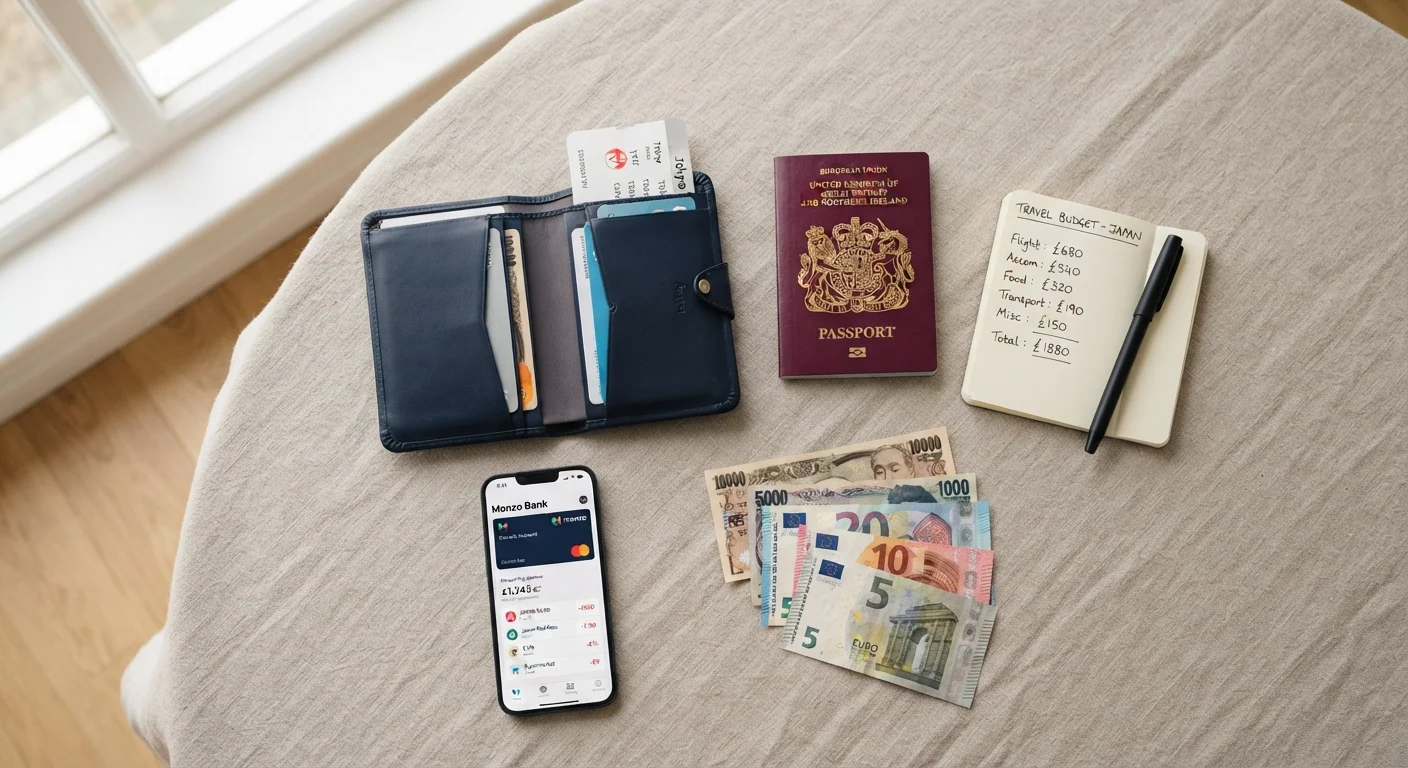
A $59 flight looks like a slam dunk until you add a $35 checked bag, a $25 Uber to the airport, two hours of security buffer, and a $15 sandwich past the gate. Meanwhile, an Amtrak or intercity bus ticket at $45 might deposit you directly into a city center with no extras attached. The full cost of getting from door to destination is the only number worth comparing.
This matters especially for young travelers navigating tight budgets. As covered in The Real Cost of Budget Travel, surface-level ticket prices routinely obscure the true expense of a trip. Before choosing your mode of transport, map out every dollar from home to hotel, not just the headline fare.
| Overland (Bus/Train) | Flying | |
|---|---|---|
| Typical ticket cost (short routes) | $20–$80 | $39–$150+ before fees |
| Hidden fees | Minimal; few baggage surcharges | Baggage, seat selection, changes |
| Door-to-door time (under 400 mi) | Often competitive | Faster in air, slower in total |
| Carbon emissions per km | Low (rail) to moderate (bus) | High, especially short-haul |
| Luggage flexibility | Generally more lenient | Strict; fees common |
| Ticket flexibility | Often refundable or low-fee changes | Typically rigid; fees apply |
| Scenic or productive travel time | High — work, sleep, or sightsee | Limited; restricted to cabin |
Time: The Hidden Currency of Travel
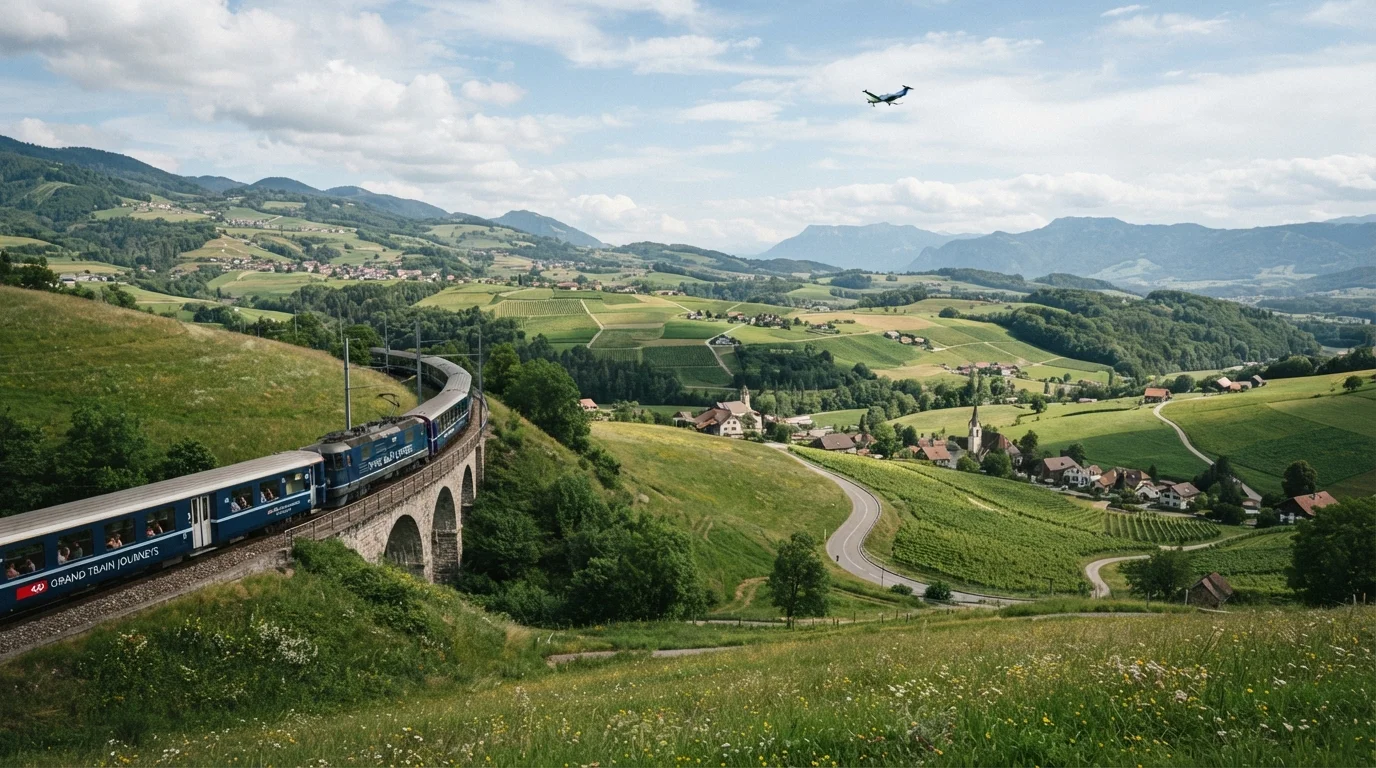
Time is rarely neutral. A 6-hour train ride can also be a productive work session, a scenic experience, or a good night's rest on an overnight sleeper — none of which apply to a middle seat on a 90-minute regional flight surrounded by TSA queues. Conversely, flying a 600-mile route in 75 minutes versus a 10-hour bus ride is a legitimate quality-of-life decision, not just a financial one.
A useful rule of thumb: for routes under roughly 300–400 miles with direct rail or express bus service, overland travel is often competitive on total door-to-door time once airport overhead is factored in. Beyond that threshold, flying typically pulls ahead on pure hours spent traveling. If you're building a multi-stop itinerary, slowing down and taking fewer transport legs can reduce both cost and decision fatigue.
Use Total Door-to-Door Time, Not Flight Duration
When comparing options, calculate the full journey: travel to departure point, check-in or boarding buffer, the trip itself, and transfer to your final destination. On many routes under 300 miles, overland options close the gap considerably once airport time is included. Build this into a simple spreadsheet before booking.
Carbon Footprint: What the Data Actually Shows
Aviation is one of the more carbon-intensive forms of passenger travel. According to data published by Our World in Data and sourced from studies on transport emissions, flying typically produces around 255 grams of CO₂ equivalent per passenger-kilometer, compared to roughly 41 grams for rail and 105 grams for a long-distance coach. These figures vary based on aircraft type, occupancy, and whether radiative forcing (the additional warming effect of contrails at altitude) is included.
~255g
CO₂e per passenger-kilometer by air
Based on transport emissions research compiled by Our World in Data, including radiative forcing estimates.
~41g
CO₂e per passenger-kilometer by rail
Rail, particularly electrified networks, consistently shows the lowest emissions of mainstream long-distance transport modes.
6x
Approximate emissions gap: flying vs. rail
Short-haul flights carry a disproportionately high per-km carbon cost relative to the time saved over equivalent train journeys.
For travelers factoring environmental impact into their decisions, trains — particularly in regions with electrified rail networks — represent a meaningful reduction. Buses occupy a middle ground. Flying short-haul routes is where the emissions penalty is most disproportionate relative to time saved.
Comfort, Flexibility, and the Luggage Factor
Overland travel generally offers more lenient luggage policies, which matters if you're not traveling carry-on only. Bus and rail carriers typically allow larger bags without per-bag fees, though policies vary. If you're still weighing your packing approach, the carry-on vs. checked bag trade-offs are worth understanding before you commit to a transport mode.
Flexibility is another dimension. Train and bus tickets are often refundable or changeable at lower cost than airfare, and departures are more frequent on popular corridors. Budget airlines, by contrast, can impose punishing change fees — a real risk if your plans are uncertain. For trip planning frameworks that account for these variables, see the Trip Planning hub.
Don't Assume the Cheap Fare Is the Final Price
Budget airline fares frequently exclude seat assignment, carry-on bags, and booking fees — costs that can add $40–$80 or more to a base fare. Always price out the complete ticket before comparing against an overland alternative. The same caution applies to bus and rail: some carriers charge for reservations or premium seating on top of the base ticket.
Making the Call for Your Specific Route
No formula works for every trip. A New York–Washington, D.C. Amtrak run competes directly with flying on both time and cost once airport logistics are included. A Chicago–Los Angeles overland trip, however, is a 2-day commitment — rewarding for those who want the experience, impractical for others. Route infrastructure matters enormously: Western Europe and Japan have high-speed rail that shifts the calculus dramatically compared to lower-frequency US corridors.
Start by pulling realistic total-cost estimates for both options, including transfers, fees, and any overnight accommodation costs that an overland journey might add. Then weigh time, comfort, and carbon against your budget ceiling. For destination-specific transport context, destination guides can surface what's practical in each region. And if airfare is part of your calculus, understanding how airline pricing actually works helps you assess whether a fare is genuinely competitive or artificially low before fees.