What a Repair Estimate Actually Contains
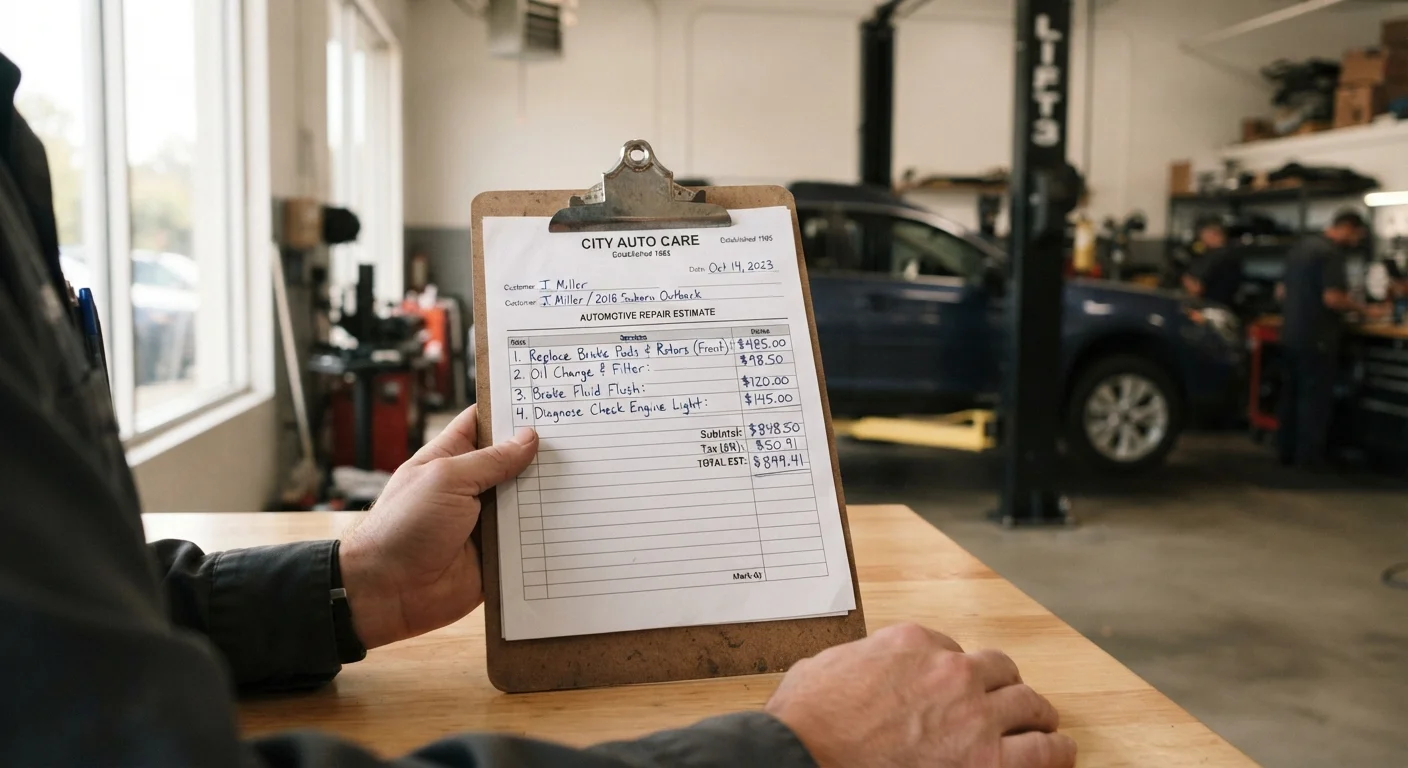
A mechanic's estimate is a written breakdown of what it will cost to diagnose and fix your vehicle. Before you can evaluate whether a quote is fair, you need to understand what you're looking at. Most estimates are divided into three distinct sections: labor, parts, and additional fees (such as shop supplies or environmental disposal charges).
Labor covers the time a technician spends working on your car. Parts lists the components that will be replaced or repaired. Fees catch everything else - fluids disposed of, shop rags used, or administrative costs. Knowing this structure means you can immediately spot if something is lumped together without explanation, which is your cue to ask for clarification.
Request a written, itemized estimate - not a verbal ballpark - before authorizing any work. This protects you and gives you something concrete to review or compare. Ignoring this step is one of the most common ways car ownership gets unnecessarily expensive.
Flat-rate hours
A standardized number of labor hours assigned to a specific repair job by industry guides, used to calculate labor costs regardless of actual time spent.
Labor rate
The dollar amount a shop charges per flat-rate labor hour. It varies by shop type and geographic location.
OEM parts
Parts made by or to the specifications of your vehicle's original manufacturer, designed to be a direct match for what came on your car.
Aftermarket parts
Replacement parts made by third-party companies rather than the vehicle manufacturer. Quality and warranty coverage vary widely.
Diagnostic fee
A charge for the technician's time and specialized tools used to identify the source of a vehicle problem before any repair work begins.
Parts markup
The difference between what a shop pays for a part and what it charges the customer - a standard practice in the repair industry.
Decoding Labor Hours and Shop Rates
The labor line is often the biggest number on an estimate, and it works differently than most people assume. Shops don't simply charge for the actual time your car sits on the lift. Instead, they use a flat-rate system - a standardized guide (published by sources such as Chilton or Mitchell1) that assigns a set number of hours to each type of repair, regardless of how long the job actually takes.
For example, replacing a water pump might be assigned 2.5 flat-rate hours. If the technician completes it in 2 hours, you still pay for 2.5. If it takes 3 hours, you still pay 2.5. The shop's labor rate - expressed as a dollar amount per hour - varies by region and shop type. Dealer service centers tend to have higher hourly rates than independent shops, though this doesn't automatically make them worse value. For a deeper look at that trade-off, see our guide on dealer service centers vs. independent mechanics.
Ask for the labor rate upfront
Before your car is even inspected, you can ask the shop what their hourly labor rate is. This single number lets you quickly sense-check any labor line on an estimate. Reputable shops will share it without hesitation.
Parts Pricing: OEM, Aftermarket, and Markups
Parts on an estimate usually carry a markup over what the shop paid for them - this is a normal and expected part of how repair businesses operate. What matters is understanding your options.
- OEM (Original Equipment Manufacturer) parts are made to the specifications of your car's manufacturer. They generally come with a warranty and are the safest match for your vehicle.
- Aftermarket parts are produced by third-party manufacturers. Quality varies considerably - some match or exceed OEM standards; others don't. Ask the shop which brand they use and whether it carries a warranty.
- Remanufactured parts are used components that have been rebuilt to a serviceable standard. Common for alternators and starters, they typically cost less than new OEM parts.
You are entitled to ask which type of part is being used on your car before you approve the repair. This is especially relevant for safety-related components such as brake parts or suspension components. Understanding these distinctions is part of the full financial picture of car ownership.
Don't approve vague line items
If your estimate lists a broad charge like "miscellaneous parts" or bundles multiple jobs into one total, ask the shop to itemize before you sign. Vague line items make it difficult to compare quotes or dispute errors, and they can obscure parts-quality decisions that affect your safety.
Diagnostic Fees and What They Cover
When you bring a car in because a warning light is on or something feels wrong, the shop typically charges a diagnostic fee. This pays for the technician's time and the use of scan tools, pressure gauges, or other diagnostic equipment to identify the root cause of your problem.
Diagnostic fees are legitimate - identifying a problem correctly before ordering parts is skilled work, and modern vehicles require specialized tools to read fault codes accurately. What you should clarify upfront is whether the diagnostic fee will be credited toward the repair cost if you proceed, or whether it's a flat charge regardless. Policies vary by shop.
Once you have a diagnosis, you can make an informed decision. You're not obligated to have the same shop perform the repair, though some shops won't release a vehicle without payment of the diagnostic fee even if you decline the repair. Knowing this in advance avoids unpleasant surprises.
State laws may protect you
Many US states have consumer protection statutes governing auto repair estimates - including requirements for written authorization before exceeding a quoted amount. The specifics vary by state. It's worth briefly checking your state attorney general's website or consumer protection office to understand the rules where you live.
Questions to Ask Before You Sign Off
An estimate isn't a take-it-or-leave-it document - it's an opening for a conversation. Before you authorize any repair, consider asking the following:
- Is this estimate itemized? You want labor and parts listed separately, with quantities and prices visible.
- What type of parts are you using? OEM, aftermarket, or remanufactured - and do they carry a warranty?
- Will the diagnostic fee apply toward my repair? Confirm this before the diagnostic begins.
- What happens if you find additional problems? Ask that the shop contact you before exceeding the quoted amount.
- What is the warranty on parts and labor? Many reputable shops offer at least a limited warranty on their work.
Feeling prepared to have this conversation is half the battle. If you want to build on this foundation, our article on how to talk to a mechanic when you don't know much about cars walks you through how to describe symptoms clearly and advocate for yourself without feeling overwhelmed. And if you're evaluating whether a task even needs a shop visit, DIY car maintenance tasks you can handle at home can help you decide what's within reach.
Car Ownership Basics Hub
A structured collection of guides covering insurance, costs, paperwork, and ownership fundamentals - useful context for any driver navigating repair decisions.
NHTSA Vehicle Safety Resources
The National Highway Traffic Safety Administration provides publicly accessible information on recalls, safety ratings, and consumer vehicle data to help owners make informed decisions.