Why Tires Deserve More Attention Than They Get
Of all the systems on your vehicle, tires are the only parts that actually touch the road. Every braking decision, every turn, every wet-pavement stop depends entirely on four palm-sized contact patches maintaining grip. Yet for many drivers, tires only come to mind when one goes flat.
Neglected tires are a genuine safety risk, not just a maintenance inconvenience. Under-inflated tires can overheat and blow out at highway speeds. Worn tread dramatically increases stopping distances on wet roads. And a single tire rotating noticeably faster than the others can pull your car out of alignment without you noticing until something breaks.
The good news: keeping your tires in shape is almost entirely within reach for any driver. No specialized tools, no mechanical background required. This guide covers everything you need - pressure, tread, rotation, and replacement - so you can make confident decisions and avoid being oversold at the shop. For a broader look at pre-drive safety habits, see our pre-trip safety checklist.
11%
Fatal crashes involving tire-related issues
According to NHTSA data, tire problems are a factor in a meaningful share of serious accidents each year.
1 PSI
Pressure lost per 10°F temperature drop
The Tire Industry Association notes that seasonal temperature changes are a leading cause of underinflation without any leak.
4/32"
Recommended minimum tread depth (wet conditions)
Many safety engineers and consumer groups recommend replacing tires before they reach the legal minimum of 2/32" for safer wet-road performance.
Tire Pressure: How to Check It and What the Numbers Mean
Tire pressure is measured in PSI. The correct PSI for your vehicle is printed on a sticker inside the driver's door jamb - not on the tire sidewall. The number on the sidewall is the tire's maximum rated pressure, which is different and generally higher than what your car actually needs.
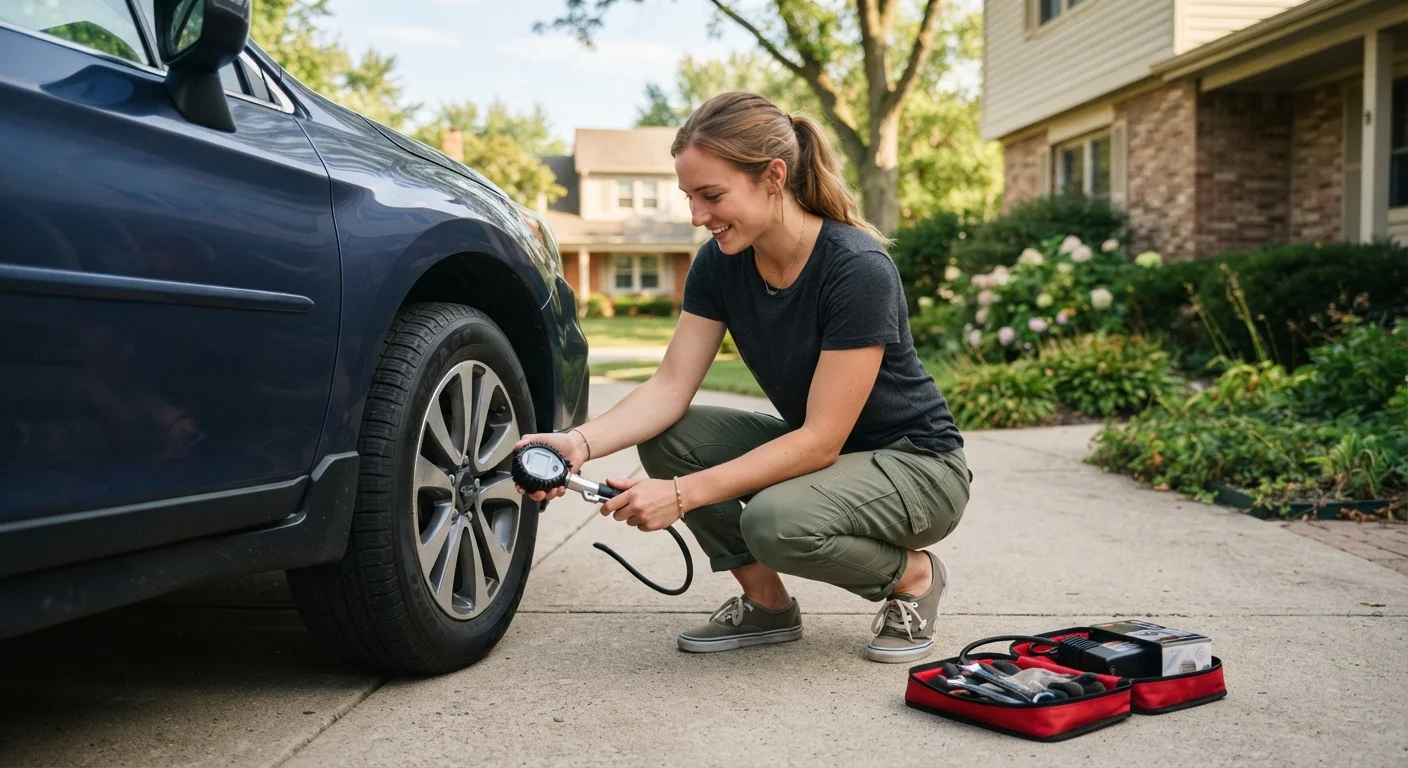
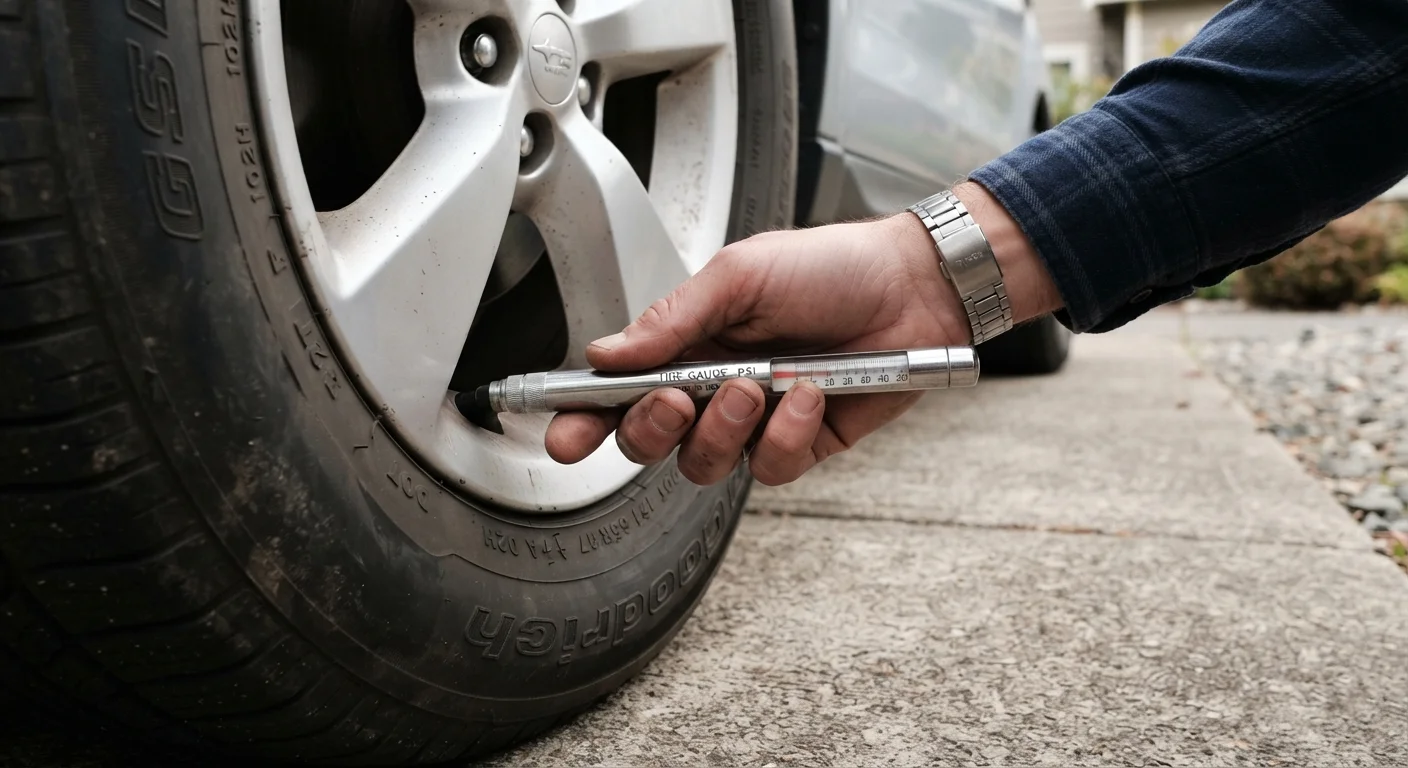
To check pressure correctly, use a handheld digital or dial gauge (these are inexpensive and widely available). Remove the valve stem cap, press the gauge firmly onto the stem, and read the result. Do this when tires are cold - meaning the car has been parked for at least three hours or driven fewer than a mile. Driving warms air inside the tire and raises pressure artificially.
Always check tire pressure before a long highway trip, not just monthly. Highway speeds generate more heat, and a tire that's borderline low at home can become a problem at 70 mph.
Heat builds pressure and stresses the tire casing; starting a highway run with correct inflation gives you the best margin of safety.
Keep a quality digital gauge in your glove box - gas station air machines are often inaccurate and can give misleading readings.
A reliable personal gauge costs only a few dollars and eliminates guesswork; accuracy matters when you're targeting a specific PSI.
Tire pressure drops roughly 1 PSI for every 10°F drop in ambient temperature. That means a tire correctly inflated in summer can be 6-8 PSI low by mid-winter without losing a drop of air. Check monthly, and always after the first cold snap of the season. You can also pair this habit with the seasonal checks covered in our seasonal car maintenance guide.
Tread Depth: The Penny Test and What Worn Tires Actually Risk
Tire tread channels water away from the contact patch, maintaining grip on wet roads. As tread wears down, that ability degrades - which is why wet stopping distances on bald tires are dramatically longer than on new ones.
The standard minimum legal tread depth in the US is 2/32 of an inch. The classic penny test works as follows: insert a penny into a tread groove with Lincoln's head pointing down toward the tire. If you can see all of Lincoln's head, your tread is at or below 2/32" - time to replace. A quarter gives you an earlier warning: if Washington's head is fully visible, you're at 4/32", which many safety experts recommend as a more practical replacement threshold, especially in wet climates.
Don't Rely on Looks Alone
A tire can look fine from the outside while being dangerously close to the wear limit inside the grooves. Always use a physical gauge or the penny/quarter test rather than judging by visual inspection from a standing position. Sidewall appearance tells you almost nothing about remaining tread depth.
Many tires have built-in tread wear indicators - small raised bars molded into the grooves. When the surrounding tread wears flush with these bars, the tire is legally at minimum depth. Check multiple grooves around the tire, not just one spot; uneven wear (cupping, feathering, or center wear) signals other problems like improper inflation or alignment issues.
Good tread also matters at night. Night driving on wet roads is particularly unforgiving when tires are marginal.
Tire Rotation: Why It Matters and How Often to Do It
Front and rear tires wear at different rates. On front-wheel-drive vehicles, the front tires handle both steering and power delivery, wearing significantly faster. On rear-wheel-drive cars, the rear tires take the brunt of acceleration forces. Even all-wheel-drive vehicles develop wear imbalances if tires aren't regularly rotated.
Rotating tires redistributes this wear so all four tires degrade at roughly the same rate, extending the life of the full set. Most manufacturers and tire industry groups recommend rotating every 5,000 to 7,500 miles - which, for many drivers, lines up conveniently with oil changes. Check your owner's manual for the specific recommendation for your vehicle.
A shop will typically perform a rotation as part of a standard service, but it's also one of the DIY car maintenance tasks you can handle yourself if you have a floor jack, jack stands, and a torque wrench. If you go this route, always confirm lug nut torque specs from your owner's manual and never work under a car supported only by a floor jack.
Sync Rotation With Oil Changes
Many drivers find it easiest to rotate tires at every other oil change, which typically aligns with a 5,000-7,500-mile interval for modern engines. Bundling these tasks means one fewer separate appointment and makes it harder to forget. Ask your shop to note the mileage on a sticker in your windshield alongside the oil reminder.
Knowing When Replacement Is Overdue
Tread depth isn't the only signal that tires need replacing. Age matters independently of how worn the rubber looks. Tires degrade from the inside out due to UV exposure, heat cycling, and oxidation. Most tire manufacturers and the NHTSA suggest inspecting tires older than five or six years carefully and replacing them by ten years regardless of apparent condition.
To find a tire's age, look for the DOT code on the sidewall. The last four digits indicate the week and year of manufacture - for example, 2419 means the 24th week of 2019.
Other signs that replacement may be needed:
- Sidewall cracking or bulges - structural damage that can't be repaired
- Persistent vibration or pulling that rotation and balancing don't resolve
- Repeated pressure loss in the same tire despite no visible puncture
- Uneven wear patterns that have gone too far to correct
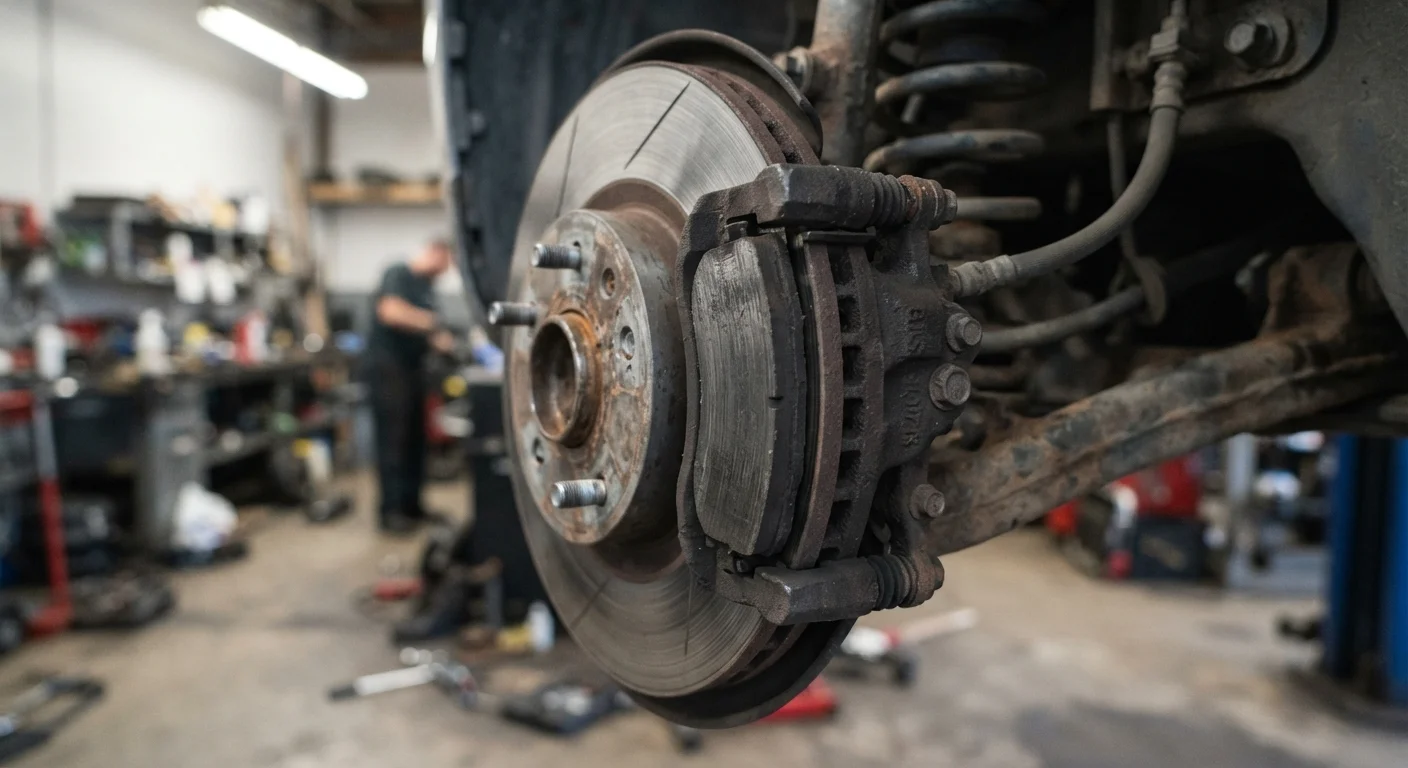
Just as brake wear is cumulative and gradual, tire deterioration often sneaks up on drivers. Our guide on brake pads and rotors covers a similarly overlooked wear cycle worth tracking alongside your tires.
Bulging Sidewalls Are an Emergency
A visible bulge or bubble on a tire sidewall means the internal structure has already failed. Do not continue driving on that tire - it can blow out suddenly at highway speeds. Have the vehicle towed or drive at the lowest safe speed to the nearest tire shop. This is not a wait-until-the-weekend situation.
Putting It All Together: A Simple Tire Maintenance Routine
Consistent, light-touch maintenance prevents nearly all avoidable tire problems. Here's a practical cadence that fits into any driver's schedule:
- Monthly
- Check all four tires (and your spare) with a gauge when cold. Add air if any tire is more than 3 PSI below the door-jamb spec.
- Every 5,000-7,500 miles
- Rotate tires. Use this appointment to inspect tread depth and look for uneven wear patterns.
- Every year
- Inspect sidewalls for cracking or bulges. Check the DOT date code if your tires are approaching five or six years old.
- After any significant impact
- If you hit a pothole hard or clip a curb, have that tire inspected - internal damage isn't always visible from the outside.
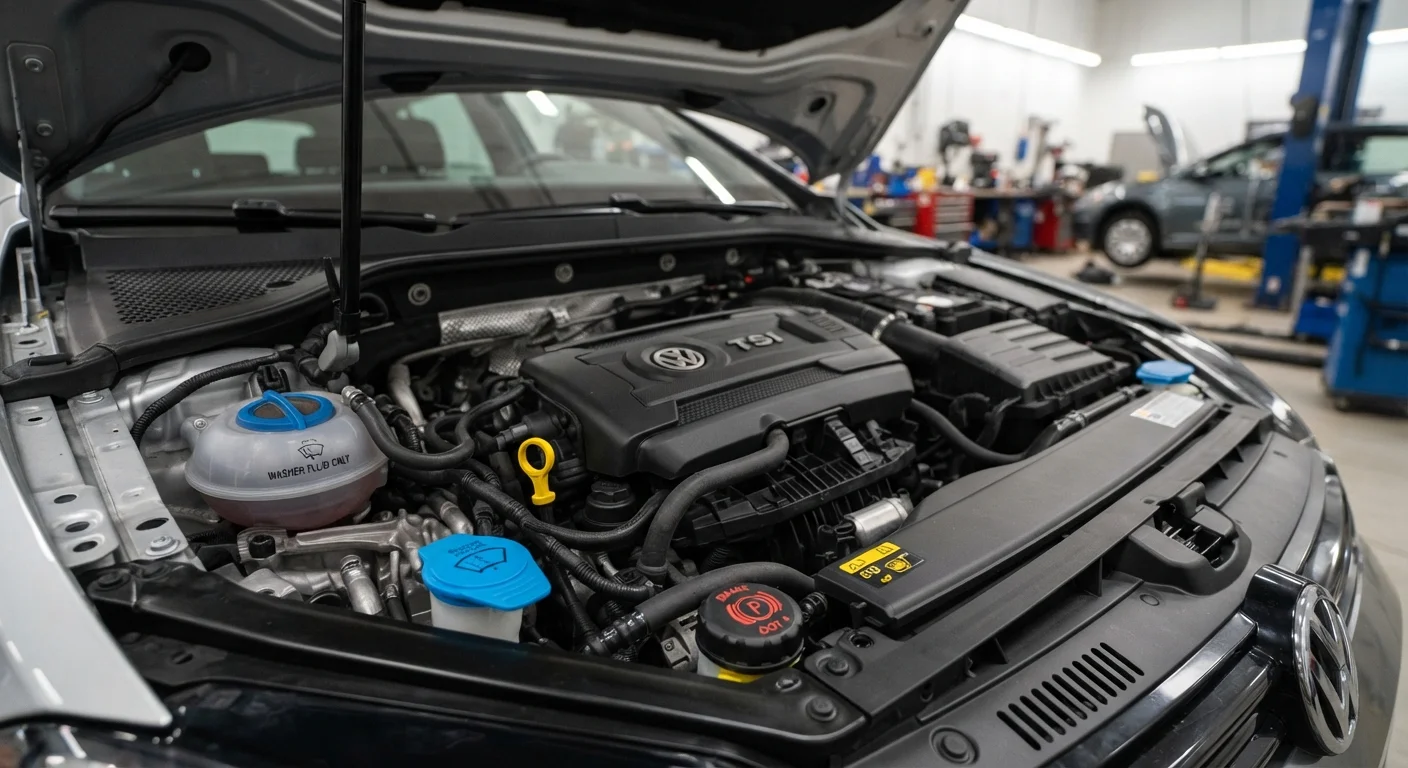
Tire maintenance connects directly to other routine checks. When you're already under the hood, it's a good moment to run through fluid levels too. And if you want to deepen your overall awareness behind the wheel, our guide to reading traffic patterns is worth your time - sharper situational awareness and well-maintained tires are a natural pairing.
“Tires are the single most safety-critical component on any vehicle. Everything else - the engine, the brakes, the suspension - ultimately depends on those four contact patches doing their job.”
— Tire Industry Association, US tire industry trade organization representing manufacturers and retailers