Before You Touch the Ignition
The minute before you start the engine is one of the highest-value minutes of any drive. New drivers often skip it - and experienced drivers often rush it - but a brief pre-drive check is what catches the flat tire, the foggy windshield, or the missing insurance card before they become a crisis on the road.
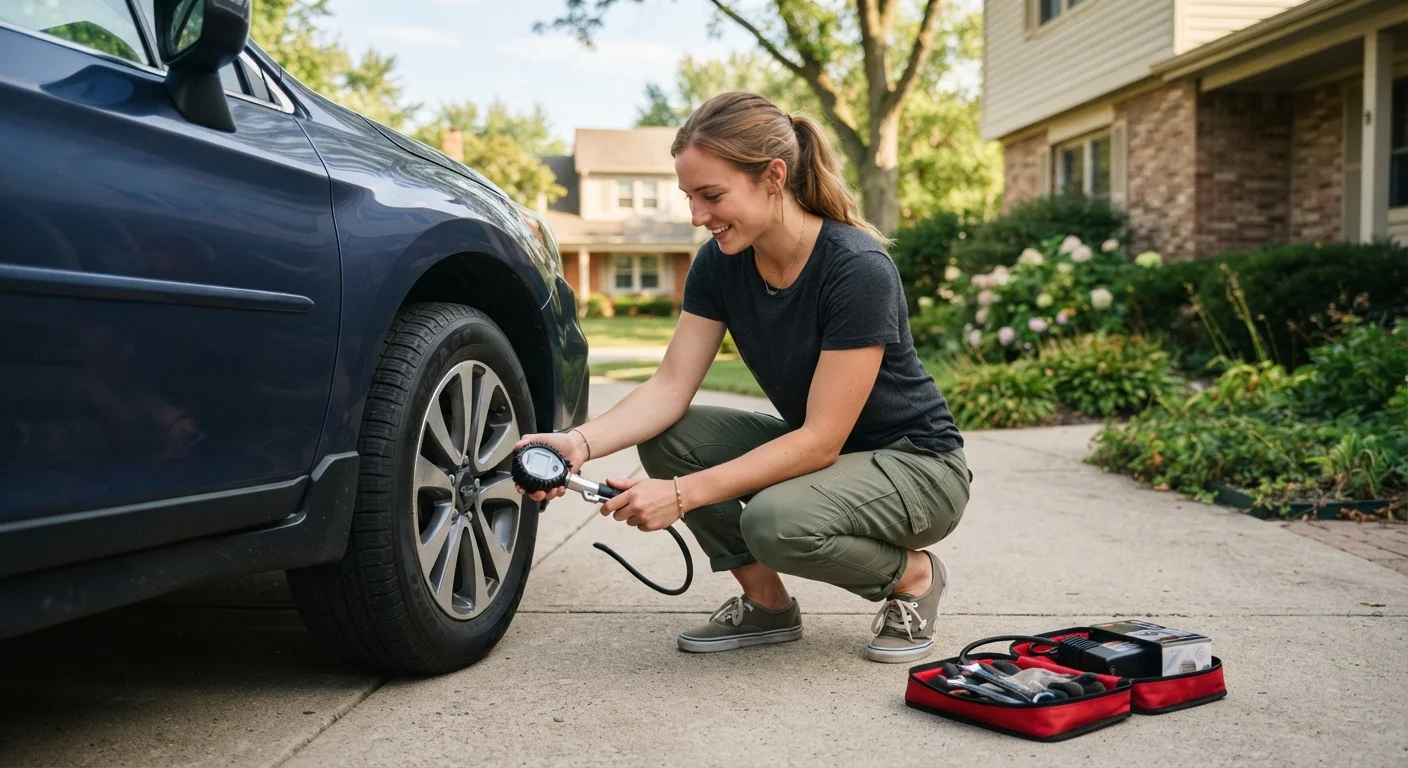
Walk around the vehicle and do a visual scan: tires should look fully inflated with no visible bulging or debris, headlights and taillights should be intact, and nothing should be behind or under the car. Inside, confirm your documents are accessible - driver's license, registration, and proof of insurance. Refer to our pre-trip safety checklist for a reliable step-by-step scan you can run in under two minutes.
If your dashboard shows any warning lights after startup, don't ignore them. Learn what the most common indicators mean - our car maintenance hub covers the basics of vehicle upkeep that every new owner should know.
Make the Pre-Drive Check a Ritual
Doing the same brief check in the same order every time - even when you're in a hurry - is what makes it stick. Think of it like buckling your seatbelt: automatic, not optional. Two minutes before every drive is a habit that pays dividends for your entire driving life.
Adjusting Your Mirrors and Seat Correctly
Poor mirror positioning is one of the most common and easily corrected mistakes new drivers make. Many people set mirrors so they can see too much of their own car - which feels reassuring but wastes your field of view on metal instead of road.
Set your driver-side mirror so only a thin sliver of your vehicle appears along the inner edge, with the rest showing the lane beside you. Apply the same logic to the passenger-side mirror. Your interior rearview mirror should frame the full rear window without you needing to tilt your head. Done correctly, this trio of mirrors overlaps coverage and shrinks - though never eliminates - blind spots. Always check blind spots with a quick shoulder glance before changing lanes.
Your seat position matters just as much. You should be able to fully depress the brake pedal with a slight bend in your knee, not a locked-out leg. The steering wheel should be reachable without leaning forward. Adjust everything before you move - never while driving.
Blind spot
The area around your vehicle that your mirrors don't cover. You must turn your head and glance over your shoulder to check it before changing lanes.
Three-second rule
A method for gauging safe following distance: count three seconds between when the car ahead passes a fixed point and when you reach the same point.
Field of view
The total area visible to you through your windshield and mirrors at any given moment. Proper mirror adjustment maximizes this coverage.
Scanning ahead
The habit of looking well down the road - not just at the nearest car - so you have more time to respond to changing conditions.
Warning light
An indicator on your dashboard that alerts you to a vehicle system issue, such as low oil pressure or tire inflation problems. Do not ignore illuminated warning lights.
Choosing Your First Route Wisely
Your first solo drive is not the moment to tackle downtown traffic or freeway on-ramps. Choose a route you've traveled as a passenger multiple times - familiarity reduces the cognitive load of navigation so you can focus entirely on driving mechanics.
Stick to residential streets or lightly trafficked roads with lower speed limits. Avoid school zones during pickup and drop-off hours, construction areas, and routes with complex intersections until you've built a base of comfort. Keep your trip short - even 10 to 15 minutes of focused solo driving builds real skill.
City and highway environments demand distinctly different techniques. Before you graduate to high-speed merging or stop-and-go urban traffic, it's worth understanding how those settings differ. Our article on highway driving vs. city driving breaks down exactly what changes and why.
In-the-Moment Habits That Keep You Safe
Safe driving isn't about reacting well - it's about not needing to react in the first place. The habits below help you stay ahead of situations rather than scrambling to catch up.
- Scan far ahead. Keep your eyes looking 10-15 seconds down the road, not just at the bumper in front of you. This gives you time to respond to slowing traffic, pedestrians, or road hazards without sudden braking.
- Maintain following distance. The three-second rule is a practical baseline: count three full seconds between when the car ahead passes a fixed point and when you do. New drivers consistently underestimate how much space they need - our article on following distance explains the psychology behind this habit.
- Signal early and consistently. Signaling three to five seconds before a turn or lane change gives other drivers time to respond. It also forces you to commit to a decision before executing it.
- Minimize distractions. Phone down, radio low, conversation limited. Cognitive load is genuinely higher during solo driving - reserve your attention for the road.
Never Handle Your Phone While Driving
Distracted driving is a leading cause of crashes among new drivers. Even a brief glance at a notification takes your eyes off the road for several seconds - enough time to cover significant distance at typical speeds. Put your phone on Do Not Disturb before you start the car, every time.
Building Confidence Over Time
Confidence behind the wheel is built deliberately, not automatically. Adding miles matters less than adding varied miles - new roads, different times of day, different weather conditions, and progressively more complex environments all expand your competence in ways that repetitive commuting doesn't.
Track the scenarios you haven't practiced yet: parallel parking, night driving, rain, highway merging. Target them intentionally. For parallel parking specifically, our step-by-step parking guide breaks the maneuver into repeatable steps that work on real streets.
If anxiety is a persistent barrier rather than healthy alertness, that's worth addressing too. Behavioral patterns that underlie driving confidence are learnable - see our guide on habits that separate confident from anxious drivers for a grounded look at what makes the difference.
Finally, make sure your vehicle ownership basics are in order. If your first solo drive is also your first time driving your own car, understanding your insurance policy before you need it is one of the smartest moves you can make.
Graduated Licensing Restrictions Still Apply
Many states impose restrictions on newly licensed drivers - such as limits on nighttime driving or passenger numbers - even after you pass your test. These rules vary by state and age. Check your state's graduated licensing law to make sure your solo drives comply with any conditions on your license.