What Ground Covers Actually Do in Your Yard
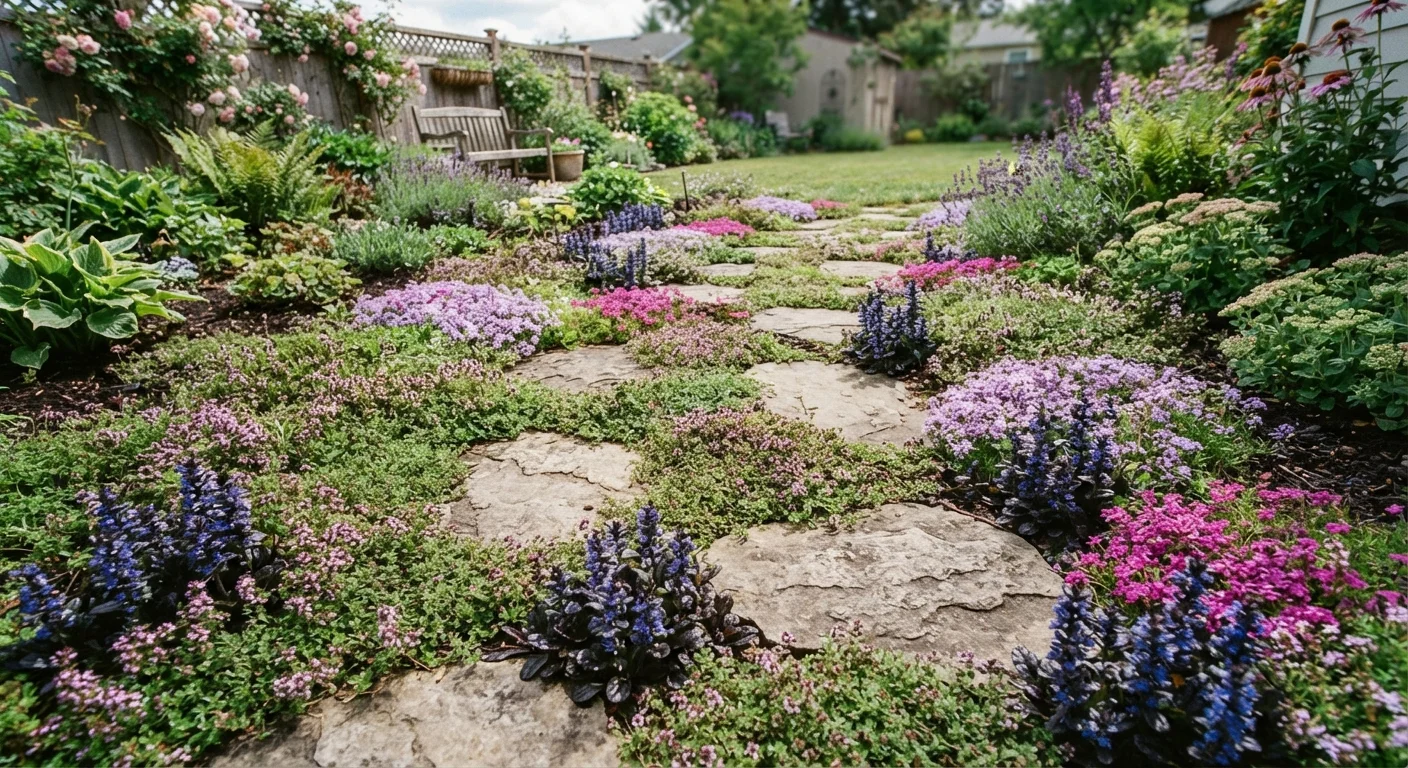
A ground cover is any plant that grows low and spreads laterally to cover bare soil. That's a broad category - it includes flowering perennials like creeping phlox, leafy spreaders like ajuga, herbs like thyme, and even some grasses used as ornamentals rather than lawn turf. What they share is the ability to form a living layer that protects and stabilizes the soil beneath them.
In practical terms, ground covers solve several common yard problems at once. They protect bare soil from rain erosion, shade out weeds by blocking light at ground level, and reduce the amount of mulch you need to reapply each year. In slopes, shady corners, or spots where grass refuses to grow evenly, they're often a more reliable solution than trying to force a lawn where conditions aren't ideal.
Because most garden-variety ground covers are perennials - plants that return each growing season without replanting - the investment of getting them established tends to pay off over several years. That makes them worth understanding if you're trying to make an outdoor space more manageable. Perennial vs. annual plant choices affect long-term cost and effort in ways that are easy to underestimate when you're just starting out.
~30%
Of US lawns include areas where grass struggles to grow
Shaded spots, slopes, and compacted soil edges are among the most common problem areas homeowners report, according to garden industry surveys.
1-2 seasons
Typical time to full establishment for most ground covers
After the establishment period, most perennial ground covers require significantly less watering, weeding, and intervention than a maintained lawn of the same area.
Zero
Mowing required once a ground cover is established
Unlike turf grass, the vast majority of ground cover plants stay naturally low and do not require regular cutting to maintain their form.
Matching Plant to Conditions: Light, Soil, and Traffic
The most important step in choosing a ground cover isn't picking the prettiest one - it's identifying what your yard actually offers. Three conditions matter most: light level, soil drainage, and whether people or pets will be walking through the area.
- Full sun (6+ hours): Creeping thyme, sedum, and ice plant all thrive in dry, sunny spots. They're drought-tolerant once established and can handle reflected heat from pavement.
- Partial shade (3-6 hours): Ajuga, sweet woodruff, and lamium do well under trees or along north-facing walls where grass typically thins out.
- Full shade: Pachysandra and vinca (periwinkle) are reliable performers in deep shade, though vinca can spread aggressively - check whether it's invasive in your region before planting.
Soil type matters too. Sandy or rocky soil pairs well with drought-tolerant spreaders. Clay-heavy soil - which holds moisture and drains slowly - suits plants like hostas that don't mind wet feet. If you're unsure what you're working with, our guide on soil types and what each is for explains the differences clearly.
Check for Invasive Status Before You Plant
Some popular ground covers - including English ivy, vinca, and crown vetch - are classified as invasive species in certain US states, meaning they can spread beyond your yard and displace native plants. Before purchasing, check your state's invasive species list (most state agriculture or natural resources departments publish one online) or ask at a local nursery. Native ground cover alternatives are often equally effective and better for local ecosystems.
For foot-traffic areas, creeping thyme is a standout: it handles light to moderate walking, releases a mild scent when stepped on, and flowers in summer. Clover is another option that tolerates foot traffic and fixes nitrogen into the soil - a bonus for overall soil health.
How to Get Ground Covers Established
The first season is the critical window. Ground covers aren't fully maintenance-free until they've spread enough to shade out competition - before that, some weeding and consistent watering are still necessary.
- Clear the area first. Remove existing weeds, grass, and debris before planting. Covering the area with cardboard and a few inches of compost for a few weeks before planting (a method called sheet mulching) can smother existing growth and improve the soil simultaneously.
- Space plants according to their mature spread. Planting too close wastes money; too far apart leaves gaps for weeds to exploit. Check the plant tag or variety descriptions for guidance - spacing typically ranges from 6 to 18 inches depending on the species.
- Water regularly through the first season. Even drought-tolerant varieties need consistent moisture while their roots establish. Once they've filled in, most can rely on rainfall alone in most US climates.
- Mulch lightly between plants in year one. A thin layer of mulch between new transplants keeps weeds down while the ground cover spreads. You can reduce or eliminate mulch reapplication once the plants close the gaps.
For small outdoor spaces, combining ground covers with thoughtful layout can make the area feel more cohesive. Our guide on making a small outdoor area feel larger covers how plant placement contributes to that effect.
When Ground Covers Make More Sense Than Grass or Mulch
Ground covers aren't a universal replacement for lawn - in high-traffic areas like play zones or pathways, grass or hardscape is usually more practical. But there are specific situations where a ground cover is clearly the better choice:
- Slopes and banks: Grass on a slope is difficult to mow safely, and bare soil erodes quickly. Ground covers with fibrous root systems - like creeping juniper or crown vetch - anchor soil and require no mowing.
- Under trees: Tree roots compete aggressively with grass, and shade thins it out. Shade-tolerant ground covers thrive in exactly the conditions grass struggles with.
- Narrow strips and edges: Strips between a sidewalk and fence, or around foundation plantings, are awkward to mow and often become weed magnets. A dense ground cover handles these naturally.
- Low-water zones: In drought-prone areas or where watering isn't practical, spreading succulents or native ground covers designed for the local climate can be far more sustainable than grass.
If you garden in containers or have limited outdoor access as a renter, ground covers in pots or window boxes can still deliver some of the same texture and coverage benefits - our article on container gardening on a renter's budget explores what works in confined spaces. And if you're weighing whether to plant in the ground at all, raised beds vs. in-ground planting walks through the tradeoffs for small-space gardens.
“The best garden is one that works with the conditions you already have, not against them. Ground covers are often the honest answer to spots where we keep trying to force grass to grow.”
— Extension Horticulture Educator, University cooperative extension service, Midwest region