What 'Perennial' and 'Annual' Actually Mean
These terms describe a plant's life cycle - not its quality or difficulty level. An annual germinates, grows, flowers, sets seed, and dies all within one growing season. A perennial lives for three or more years, dying back to its roots in winter (in most climates) and re-emerging the following spring.
There's also a middle category worth knowing: biennials complete their cycle over two years, blooming in the second year. You'll encounter them occasionally, but most garden plants fall clearly into annual or perennial territory.
A key nuance: "perennial" is climate-dependent. A plant labeled perennial in USDA Hardiness Zone 8 may behave as an annual in Zone 5 because it can't survive a harder winter. Always check the zone rating on the plant tag, and cross-reference with your local conditions. The USDA Plant Hardiness Zone Map is a reliable free reference for this. See also what plant label terms really mean for your growing conditions - light requirements interact with plant type in ways that affect survival.
| Criterion | Perennials | Annuals |
|---|---|---|
| Lifespan | 3+ years | One growing season |
| Upfront cost | Higher per plant | Lower per plant |
| Replanting frequency | Rarely (once established) | Every season |
| Bloom duration | 2-6 weeks typically | Spring through frost |
| Design flexibility | Low (harder to move) | High (change yearly) |
| Best for renters | Generally no | Yes, especially in containers |
| Long-term cost | Lower (self-renewing) | Higher (annual purchase) |
| Climate zone sensitivity | High - must match zone | Lower - replaced each year |
Cost, Effort, and the Long Game
Perennials typically cost more per plant at the nursery - sometimes two to three times the price of a comparable annual. That cost reflects their longer lifespan. In years two and three, those same plants return without any additional purchase, which is why gardeners often describe perennials as "paying for themselves" over time. However, if you move or the plant fails to establish, that upfront investment is lost.
Annuals have a lower per-plant cost but require full replacement every season. If you're filling a large bed entirely with annuals each spring, that cost compounds quickly. The labor of replanting is also real - pulling spent plants, amending soil, and replanting takes meaningful time each year.
2-3×
Typical perennial price premium over annuals
Perennials generally cost more at the nursery, but return each season without repurchase, reducing cost over a multi-year horizon.
2-6 weeks
Average perennial bloom window per season
Most perennials bloom for a limited window each year, which is why gardeners often supplement with annuals for continuous seasonal color.
3-5 years
Timeframe for perennial clumps to self-divide
Many perennials can be split and replanted once established, effectively multiplying your plants without additional nursery purchases.
Perennials also spread. Many will self-divide over several years, meaning you can split and relocate clumps rather than buying new plants - a significant long-term saving. If you're planning a stable garden in a home you own, perennials reward patience. If you're in a rental or just starting out, annuals give you a low-stakes way to learn what you enjoy. Our guide to container gardening on a renter's budget covers how annuals work especially well in portable setups.
Bloom Time, Flexibility, and Design Tradeoffs
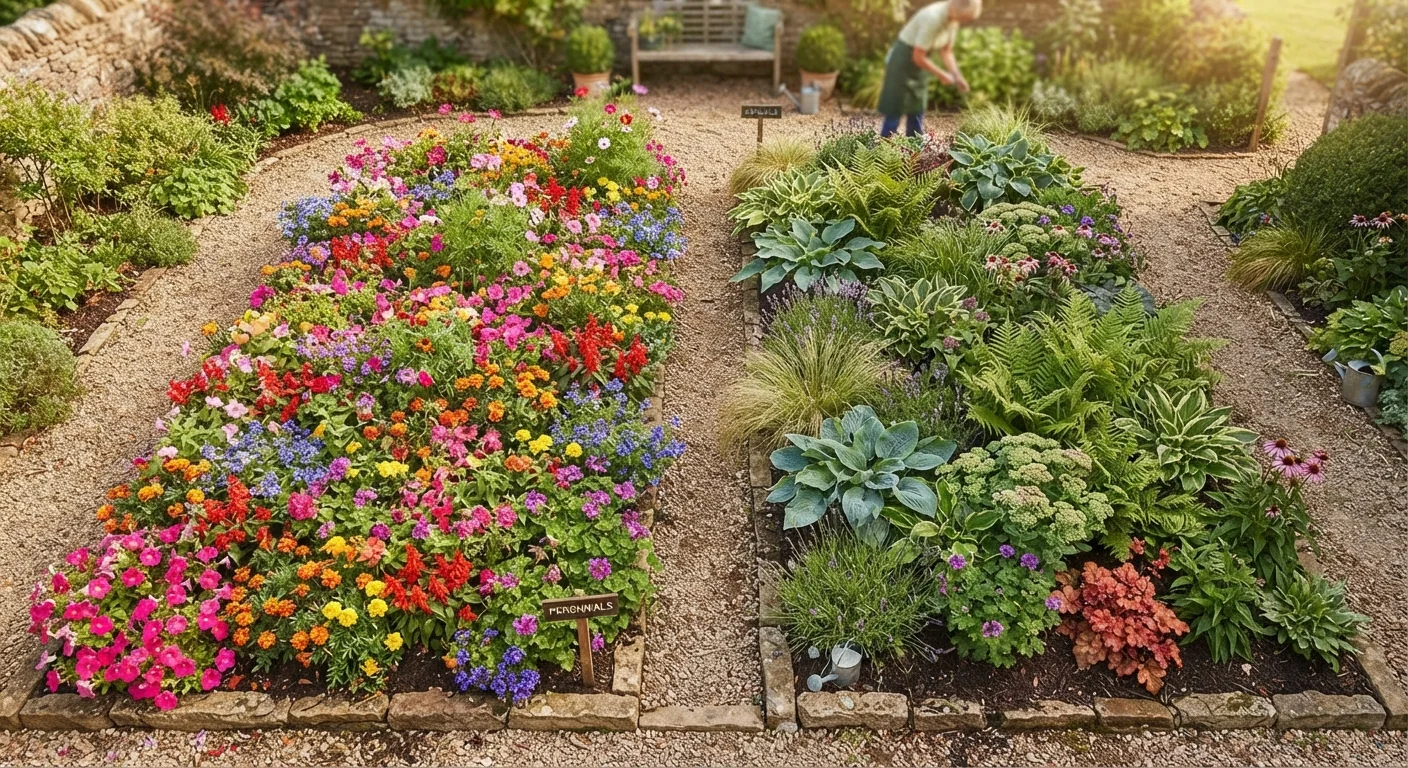
One of the most misunderstood differences: most perennials bloom for only two to six weeks per season. After their bloom window, they contribute foliage and structure but not necessarily color. Annuals, by contrast, are bred to bloom continuously from spring planting through the first frost - that's what makes them so visually impactful in window boxes and front-entry beds.
This is why many experienced gardeners combine both types strategically: perennials form the dependable structure of a bed, while annuals fill color gaps during the perennial off-season. You're not choosing one over the other entirely - you're deciding what ratio suits your space and schedule.
Annuals also give you design flexibility. Because you replant annually, you can change colors, varieties, and arrangements every year without committing to a permanent layout. Perennials are harder to rearrange once established - moving mature root systems risks damaging the plant or setting it back significantly.
For beds where soil quality matters (and it does for both types), understanding what you're planting into makes a real difference. Learn what distinguishes soil, potting mix, and garden dirt before your next planting session. And if you're managing water across a mixed planting, deep vs. frequent watering has important implications depending on root depth - perennials develop deeper roots over time and often need less frequent watering than shallow-rooted annuals.
A Note on 'Tender Perennials'
You may see plants labeled 'tender perennial' at the nursery. These are plants that behave as perennials in warm climates but cannot survive freezing winters in colder zones - so they're grown as annuals in most of the US. Common examples include impatiens, coleus, and certain salvias. They offer the lush look of a perennial but require the same yearly replacement as a true annual in most US regions. Check the hardiness zone on the tag to know what to expect.