Why Light Labels Matter More Than You Think
Flip over almost any plant tag at a nursery and you'll see a sun icon with a description: full sun, partial shade, shade tolerant. These labels exist for good reason - light is the single most critical environmental factor for plant survival. Get it right, and most plants are surprisingly forgiving. Get it wrong, and no amount of watering or fertilizing will compensate.
The frustrating part is that these terms are used inconsistently. 'Partial shade' on one tag might mean something different from 'partial shade' on another. Understanding the actual definitions - in hours of direct sun per day - removes the guesswork entirely.
Pairing light knowledge with other fundamentals, like soil selection (see our guide to soil and potting mix) and understanding your USDA hardiness zone, gives you the clearest picture of what will actually thrive in your space.
Breaking Down the Three Main Categories
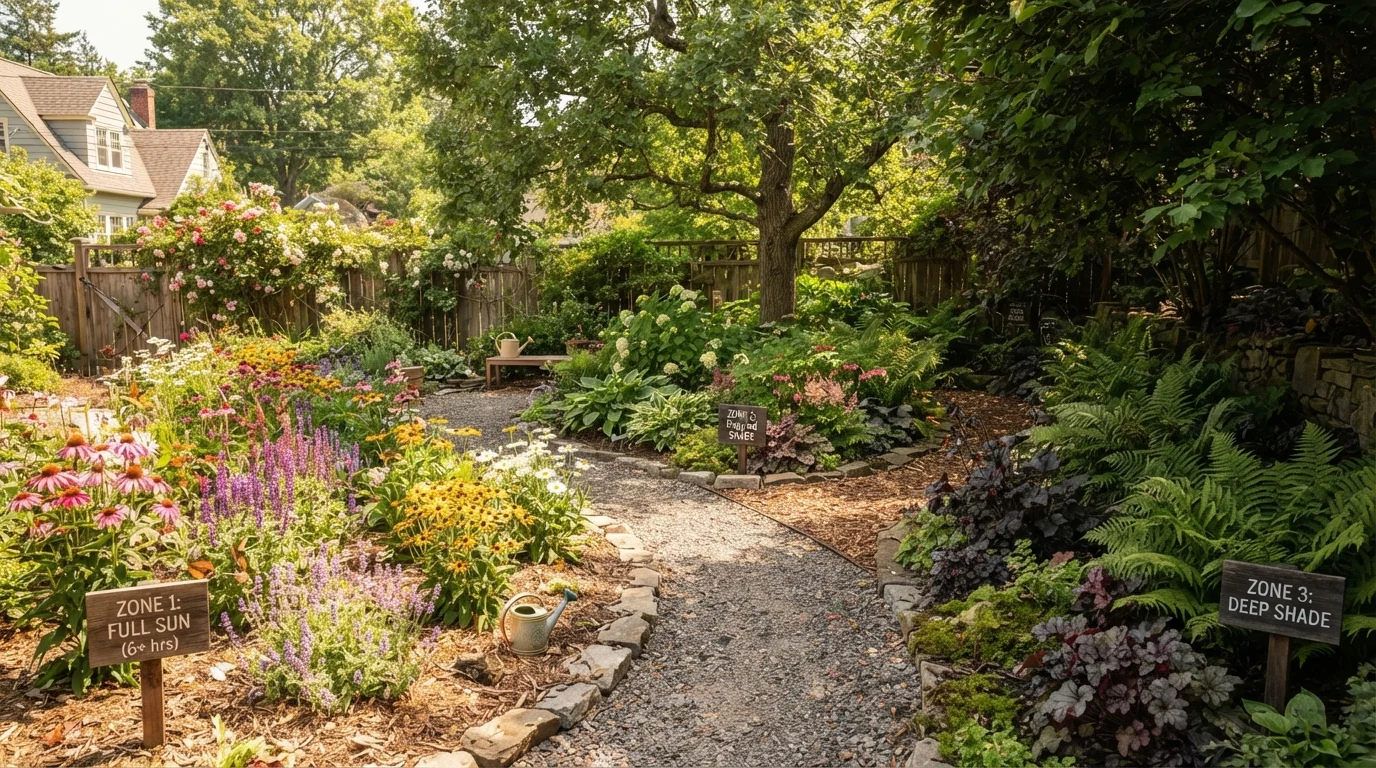
Full Sun: 6+ Hours of Direct Light
A full-sun plant needs at least six hours of direct, unobstructed sunlight each day. Many perform best with eight or more. 'Direct' is key here - light filtered through a sheer curtain, bounced off a wall, or broken up by a tree canopy doesn't count. Classic full-sun plants include tomatoes, most herbs, roses, coneflowers (echinacea), and lavender.
Partial Shade (or Partial Sun): 3-6 Hours
This is the middle ground - and the most commonly misunderstood category. Plants labeled 'partial shade' or 'partial sun' need between three and six hours of direct sun per day, but they benefit from protection during the hottest part of the afternoon. Morning sun with afternoon shade is often the sweet spot. Impatiens, astilbe, coral bells (heuchera), and many ferns fall into this range.
Deep Shade: Fewer Than 3 Hours
Deep shade - sometimes called 'full shade' - means fewer than three hours of direct sun daily. This often applies to areas under dense tree canopies, on north-facing walls, or in narrow side yards between buildings. The plant palette for true deep shade is narrower but still real: hostas, certain ferns, mosses, and pachysandra can all thrive here.
6 hrs
Minimum daily sun for 'full sun' plants
This is the widely accepted horticultural threshold used by nurseries and extension programs across the US.
3-6 hrs
Daily sun for partial shade or partial sun
The midrange where timing matters as much as duration - morning sun is gentler than afternoon exposure in most climates.
<3 hrs
Daily sun threshold for deep shade
Areas receiving less than 3 hours of direct sun per day require plants specifically adapted to low-light conditions.
How to Actually Assess Your Space
Most beginner gardeners make a rough mental estimate - 'my backyard gets decent sun' - and then wonder why plants underperform. A more reliable approach takes less than a day.
- Pick a clear, sunny day. Overcast days will undercount available light.
- Check your planting area every two hours from around 8 a.m. to 6 p.m. Note whether each spot is in direct sun or shade at each check.
- Count the hours of direct sun. Add up only the periods when the area received unobstructed sunlight.
- Watch for seasonal shifts. A spot that gets full sun in summer may receive far less in spring or fall when the sun's angle is lower. Trees also create more shade once leafed out.
Use Your Phone to Track Sun Patterns
Take photos of each planting area at two-hour intervals on a clear day and timestamp them. Reviewing the photos side by side makes it easy to visualize exactly how long each spot is in direct sun - far more reliable than trying to remember or estimate. Some gardeners use free sun-tracking apps as a supplement, though observational data beats any model on complex sites.
Renters with small or shaded outdoor spaces shouldn't feel limited - containers let you move plants to chase available light, which gives you flexibility permanent beds don't.
Matching Conditions to Plants (Not the Other Way Around)
The most common mistake new gardeners make is choosing a plant they love and then hoping the conditions work out. The more reliable approach is to assess your conditions first and then select plants suited to what you actually have.
If your front stoop gets blazing afternoon sun, lean into it: choose heat-tolerant, drought-adapted plants like sedum or ornamental grasses. If your shaded side yard feels like a problem, reframe it - that's exactly where hostas and ferns look their best, creating lush texture without any sun. Understanding the difference between perennials and annuals also helps here, since perennials that are well-matched to your light conditions tend to strengthen and expand each year with minimal intervention.
Light conditions also affect watering needs. Full-sun spots dry out faster than shaded ones, so it's worth reading up on deep versus frequent watering once your plants are in the ground.