Why the Difference Matters More Than You'd Think
Walk into any garden center and you'll find shelves stacked with bags labeled 'potting mix,' 'garden soil,' 'topsoil,' and more. The packaging looks similar. The prices are close. And the labels use these terms almost interchangeably - which is genuinely confusing.
But using the wrong medium in the wrong place is one of the most avoidable reasons plants struggle. Filling a container with garden soil, for instance, is a very common mistake that leads to compaction, waterlogging, and root suffocation. Understanding what each product is actually made of - and what job it was designed to do - is foundational gardening knowledge that pays off immediately.
If you're also deciding where to grow, our guide to raised beds vs. in-ground planting covers how your choice of bed type affects which growing medium makes the most sense.
What Potting Mix Actually Is
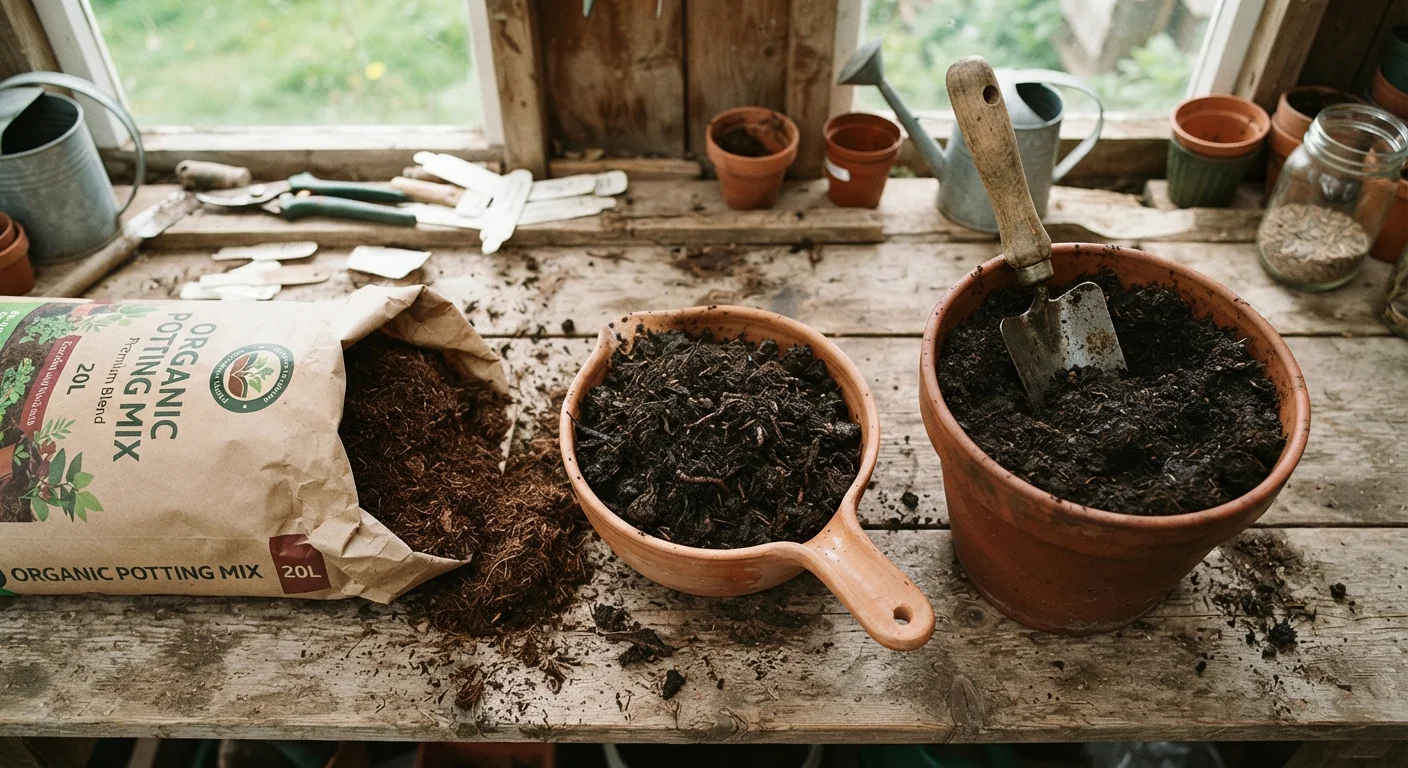
Despite the name, most potting mix contains no actual soil at all. It's a manufactured blend of lightweight materials - typically peat moss or coco coir for moisture retention, perlite or vermiculite for drainage and aeration, and sometimes bark or compost for structure. This combination is purpose-built for containers.
The key property is drainage. Roots in a pot need both water and oxygen. Garden soil compacts tightly in a container, squeezing out air pockets. Potting mix stays loose and open, letting water move through and air follow behind it. That's non-negotiable in any container - from a small herb pot to a large planter box.
Read the Label Before You Buy
Bag labels often list an intended use on the front - 'for use in containers' or 'for use in garden beds.' This single line tells you more than the product name does. Flip the bag over for an ingredient list: a true potting mix will list peat, coco coir, perlite, or bark - not mineral soil - as its primary components.
Products labeled 'potting soil' may include actual soil and behave differently from pure potting mix. Check the ingredient list: if it lists perlite, coco coir, or peat as primary ingredients with no mineral soil, it's a true soilless mix - and that's what you want for most containers.
If you're losing container plants regularly, this mismatch is worth investigating. See why potted plants keep dying for a fuller breakdown.
What Garden Soil Is - and Where It Belongs
Bagged garden soil is a blended product designed to improve the ground you already have. It's heavier than potting mix because it contains actual mineral soil - often combined with compost, bark fines, or other organic matter. This weight and density is a feature, not a flaw, when used in the right context.
Garden soil is suited for:
- In-ground planting beds - worked into existing yard dirt to improve its structure and fertility
- Raised beds - mixed with compost to create a nutrient-rich, well-draining blend at a reasonable cost
- Topdressing lawn bare spots - as a thin layer to support grass seed germination
In a container, though, the same density that makes garden soil useful in a bed becomes a liability. Water pools, roots can't breathe, and plants decline. It's a mismatch of physics, not product quality.
~40%
Of US households participate in food gardening
According to the National Gardening Association, container gardening has grown significantly as apartment and small-space living increases.
6-7
Ideal soil pH range for most vegetables
Most vegetable crops perform best in slightly acidic to neutral soil; pH outside this range can lock nutrients out of reach of plant roots regardless of fertilizer applied.
Garden Dirt: Your Yard's Native Material
'Garden dirt' isn't a product - it's whatever mineral soil is already in your yard. Its quality varies enormously depending on where you live, your property's history, and what's happened to it over time (construction fill, clay subsoil brought to the surface, or depleted topsoil are all common scenarios).
Native yard dirt can absolutely support plants, but it often needs some help. Sandy soil drains too fast and holds few nutrients. Clay soil holds too much water and compacts easily. Silty soil is somewhere in the middle but can crust over in dry weather. Most yard dirt benefits from regular additions of organic matter - compost is the most widely recommended amendment for all three types.
A basic soil test, often available through your local cooperative extension office, will reveal your soil's pH and nutrient levels and tell you exactly what it needs. This step is especially worth doing before establishing a new planting bed.
Once you know what your dirt needs, pairing the right medium with the right plant - and the right light conditions - sets you up for success. Our article on what sun and shade labels really mean is a useful companion read.
Compost Is Not the Same as Soil
Compost is decomposed organic matter - a soil amendment, not a standalone growing medium. It improves drainage in clay soils, increases water retention in sandy soils, and feeds soil biology across the board. Used alone as a growing medium, though, it can be too rich and may compact. Think of compost as an ingredient to blend in, not a replacement for soil or potting mix.
Matching the Medium to the Job
Here's a practical summary to take shopping with you:
| Situation | What to Use |
|---|---|
| Container or pot | Potting mix (soilless) |
| Raised bed | Garden soil + compost blend |
| In-ground planting bed | Work garden soil or compost into existing dirt |
| Topdressing or patching lawn | Topsoil or garden soil, thin layer |
| Improving heavy clay or sandy yard dirt | Compost, worked in repeatedly over seasons |
The type of plant matters too. Some species need sharply draining mixes; others prefer moisture-retentive blends. Seed-starting mixes, cactus mixes, and orchid bark are all specialized variations on this spectrum. Reading the growing requirements of each plant - and then matching your growing medium to those needs - is the core decision-making loop that experienced gardeners run every time they pot or plant. Understanding whether you're growing perennials or annuals also affects how much investment in soil preparation makes sense.