The Real Reasons Your Potted Plants Keep Failing
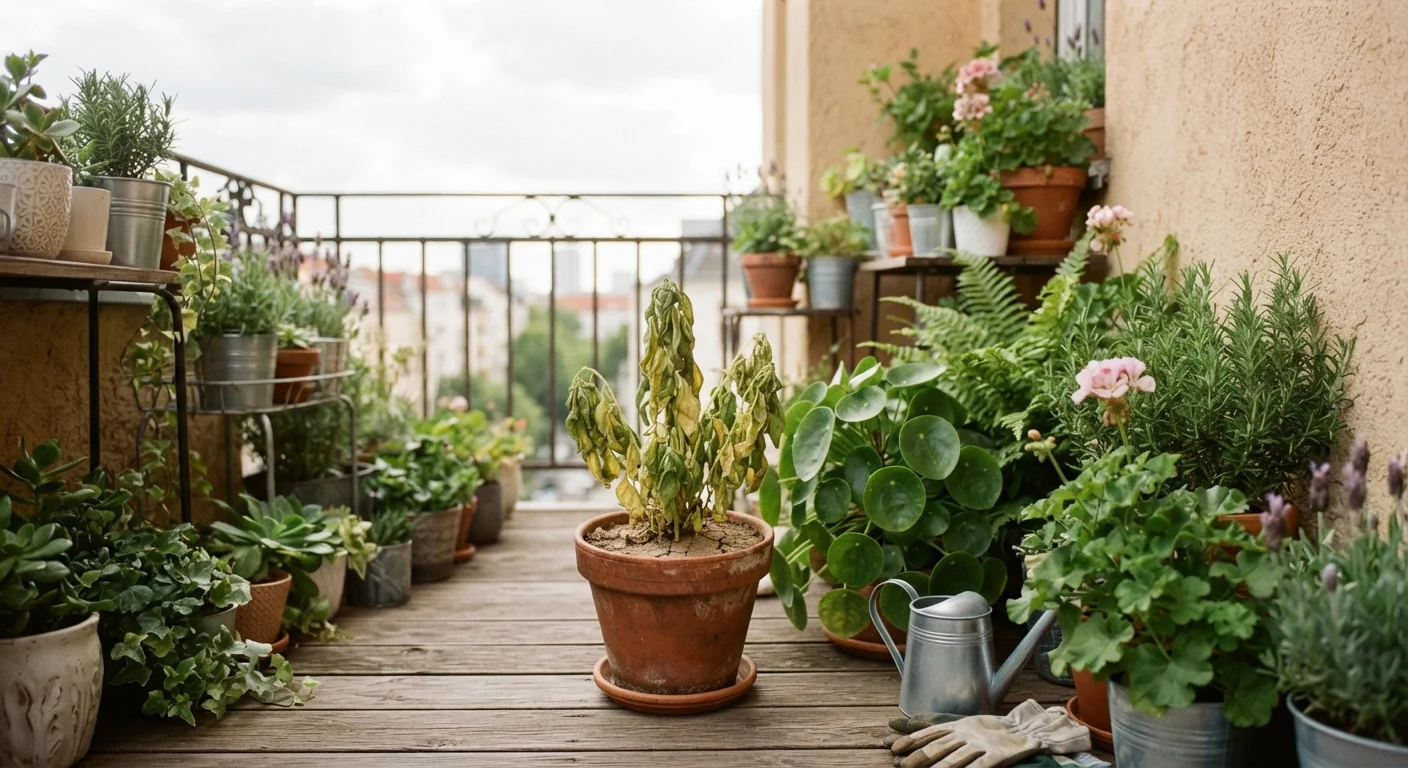
Container gardening looks simple - pick a pot, add a plant, water occasionally. But the controlled environment of a pot is less forgiving than open ground. Roots can't spread to find water or escape soggy soil, and sunlight hitting a balcony doesn't always match what the plant tag promises. The good news: most failures trace back to a short list of very correctable mistakes. Understanding why they happen is the first step to stopping the pattern.
If you're just getting started with outdoor container growing, our guide to container gardening on a renter's budget covers the practical foundation before you invest in more pots.
Watering on a fixed schedule instead of checking the soil first.
Why it happens: It feels responsible to water every day or every other day, and many beginner guides suggest a routine. But containers dry out at wildly different rates depending on pot size, plant type, temperature, and sun exposure.
Using a pot with no drainage hole, or blocking the drainage hole with gravel.
Why it happens: Decorative pots often lack drainage, and the old advice about a gravel layer at the bottom has been passed down for decades - but research shows it actually raises the water table inside the pot rather than lowering it.
Filling containers with garden soil or topsoil instead of potting mix.
Why it happens: Garden soil looks similar to potting mix and often costs less. Many beginners assume soil is soil. But garden soil compacts heavily in containers, cutting off oxygen to roots and preventing water from draining properly.
Placing the plant where it looks nice rather than where the light is right.
Why it happens: It's tempting to put a plant wherever it fits your space aesthetically. Phrases like 'indirect light' or 'partial shade' on plant tags are also easy to misread - a shaded corner indoors is very different from bright indirect outdoor light.
Repotting into a container that's much larger than the rootball.
Why it happens: It feels logical to give a plant plenty of room to grow. But a large volume of potting mix around a small rootball retains moisture the plant can't use, keeping soil wet far longer than needed.
How to Course-Correct Before You Lose Another Plant
Diagnosing what went wrong is more useful than replacing the plant and repeating the same setup. Before buying anything new, pause and run through the checklist: Does the pot have drainage? Is the mix a proper potting mix - not garden dirt? Is the light exposure actually matching the plant's label? For a clear breakdown of what separates potting mix from other soil types, see our explainer on soil, potting mix, and garden dirt.
Root Rot Is Often Invisible Until It's Severe
By the time a plant shows yellowing leaves or wilting that doesn't recover after watering, root rot may already be well advanced. If you suspect it, remove the plant from the pot and inspect the roots - healthy roots are white or tan and firm, while rotted roots are brown, mushy, and may smell. Trim away all affected roots with clean scissors, repot into fresh potting mix with proper drainage, and adjust your watering habits going forward.
Watering is the area where most people overcorrect in the wrong direction. After losing a plant to drought, they water more frequently - and lose the next one to overwatering. The fix isn't frequency, it's method. Watering deeply but less often trains roots to grow downward toward consistent moisture, rather than staying shallow where soil dries fastest.
90%
Of houseplant deaths attributed to overwatering
Horticulture educators commonly cite overwatering - not drought - as the leading cause of preventable container plant death.
6+ hrs
Direct sun needed daily for 'full sun' plants
The standard horticultural definition of full sun exposure requires at least six hours of direct sunlight per day for plants to thrive.
Finally, plant selection matters as much as care. Choosing a plant that naturally fits your light levels and schedule - rather than one you have to fight to keep alive - changes the whole experience. Our guide to perennials vs. annuals helps you match plant type to your actual lifestyle. Once you've fixed the underlying problems, container growing becomes far more rewarding and far less frustrating.