Why Perception Matters More Than Square Footage
A small patio or yard doesn't have to feel like one. Much of what makes a space feel cramped or generous has less to do with actual dimensions and more to do with how it's arranged, coloured, and layered. Designers working in compact urban environments have long relied on a set of visual principles - the same ones that make small interior rooms feel airy - and these translate directly outdoors.
Whether you're renting an apartment with a narrow balcony or settling into a first home with a modest backyard, the changes that matter most cost little and leave no permanent mark. For a broader look at low-commitment upgrades, see our guide on outdoor space upgrades that work whether you own or rent.
Colour, Light, and Surface Choices That Expand a Space
Colour is one of the easiest levers to pull. Dark fences and walls absorb light and visually close in a space; pale tones - whites, soft greiges, light greys - reflect it and push surfaces back. Even painting a single boundary wall in a lighter shade can make a fence line feel further away than it is.
Mirror Panels Can Help Outdoors Too
Outdoor-rated mirror panels mounted to a fence or wall reflect light and greenery, creating the illusion of a garden continuing beyond the boundary. Look for acrylic or treated glass versions designed for outdoor use, and position them to reflect plants rather than direct sunlight, which can create unwanted glare.
Surface choice on the ground matters too. Light-coloured pavers, pale gravel, or a neutral outdoor rug do the same job underfoot. Avoid busy patterns on small floors - they segment the eye rather than letting it travel. A single, continuous surface treatment reads as more expansive than a patchwork of materials.
Furniture Scale and Zone Definition
Oversized furniture is the fastest way to make a small outdoor area feel cluttered. Choose pieces proportional to the space and prioritise multifunctional options - a bench with built-in storage, a folding table that tucks away, or stackable chairs. Leaving a clear central corridor of open floor, even a narrow one, preserves a sense of movement and breathing room.
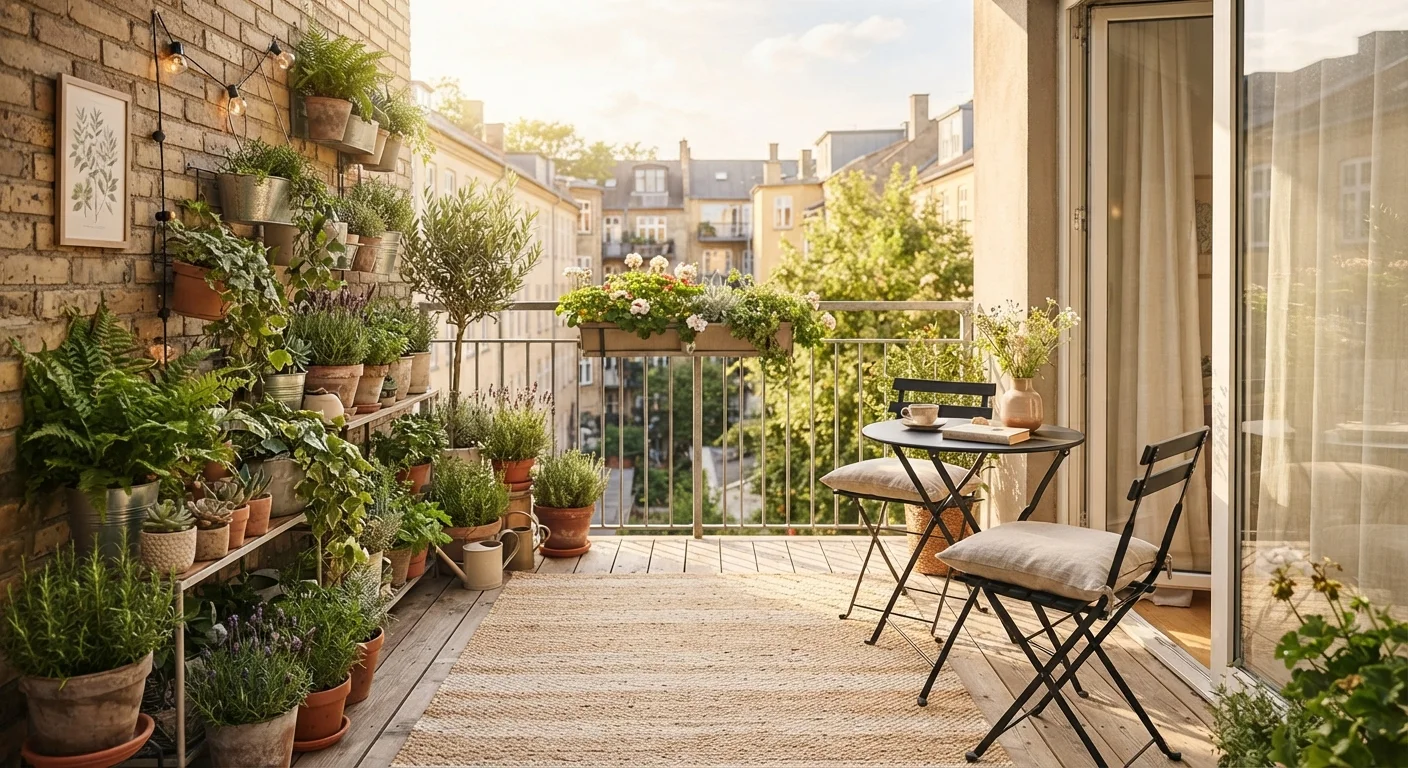
Defining distinct zones - a seating area, a planting zone, a dining corner - gives a small space purpose without fragmenting it. An outdoor rug anchors a seating zone without construction, signalling to the eye that this area belongs together. The same principle that applies to small kitchen layouts works outdoors: clear visual organization makes limited square footage feel intentional rather than tight.
Using Plants to Add Depth Without Adding Clutter
Plants are among the most effective tools for shaping how a space reads. The key is layering height: low groundcover or trailing plants at the edge, mid-height shrubs or grasses in the middle, and taller vertical elements - a trellis with climbers, tall ornamental grasses, or a columnar plant - at the back. This creates depth the eye reads as distance.
Vertical growing is especially powerful in compact spaces. Wall-mounted planters, a simple trellis panel leaning against a fence, or a tiered plant stand draws attention upward rather than inward, making boundaries feel like backdrops rather than walls. If you're working with containers, our container gardening guide for renters covers practical setup without permanent changes.
Keep the planting footprint off the main circulation area. Group containers at the perimeter or in corners to preserve open floor space in the centre, which is the area that most directly reads as the room's size.
Ground Covers Can Replace Hard Surfaces
If your small yard has bare soil patches between pavers or along edges, low-growing ground cover plants can fill those spaces with texture and colour without construction. They also reduce weeds and soften hard boundaries. Our article on ground cover plants as a low-maintenance alternative explains which varieties suit different conditions.