Why Outdoor Upgrades Don't Have to Be Permanent
Whether you're renting an apartment with a juliet balcony or settling into a house with a scrappy backyard, the instinct to improve your outdoor space is worth acting on - carefully. The mistake most people make is assuming a worthwhile upgrade requires permanent installation. It doesn't.
A growing range of outdoor improvements work just as well without anchors, concrete, or permission slips. They're designed to be rearranged, packed up, and brought along when you move. That makes them a smart investment whether you own or rent - and especially valuable if you're still figuring out what you actually want from a space.
The upgrades below span patios, balconies, and backyards. They're organized around what they add: comfort, greenery, privacy, or atmosphere. For a broader look at what's possible inside your home too, see our renter-friendly interior upgrades.
Define the floor with an outdoor rug
A bare concrete slab or plain decking reads as unfinished. An outdoor rug immediately signals that a space is meant to be used. It anchors furniture, adds warmth underfoot, and visually defines a seating zone - the same way a rug structures a living room.
Look for rugs made from polypropylene or other synthetic outdoor-rated materials that resist moisture, UV fading, and mildew. Sizes that match your seating arrangement work best; too small and the rug becomes a visual afterthought rather than a zone anchor. Most outdoor rugs roll up easily for storage or moving.
An outdoor rug turns a plain slab into a room - without touching a single wall.
Add container plants at different heights
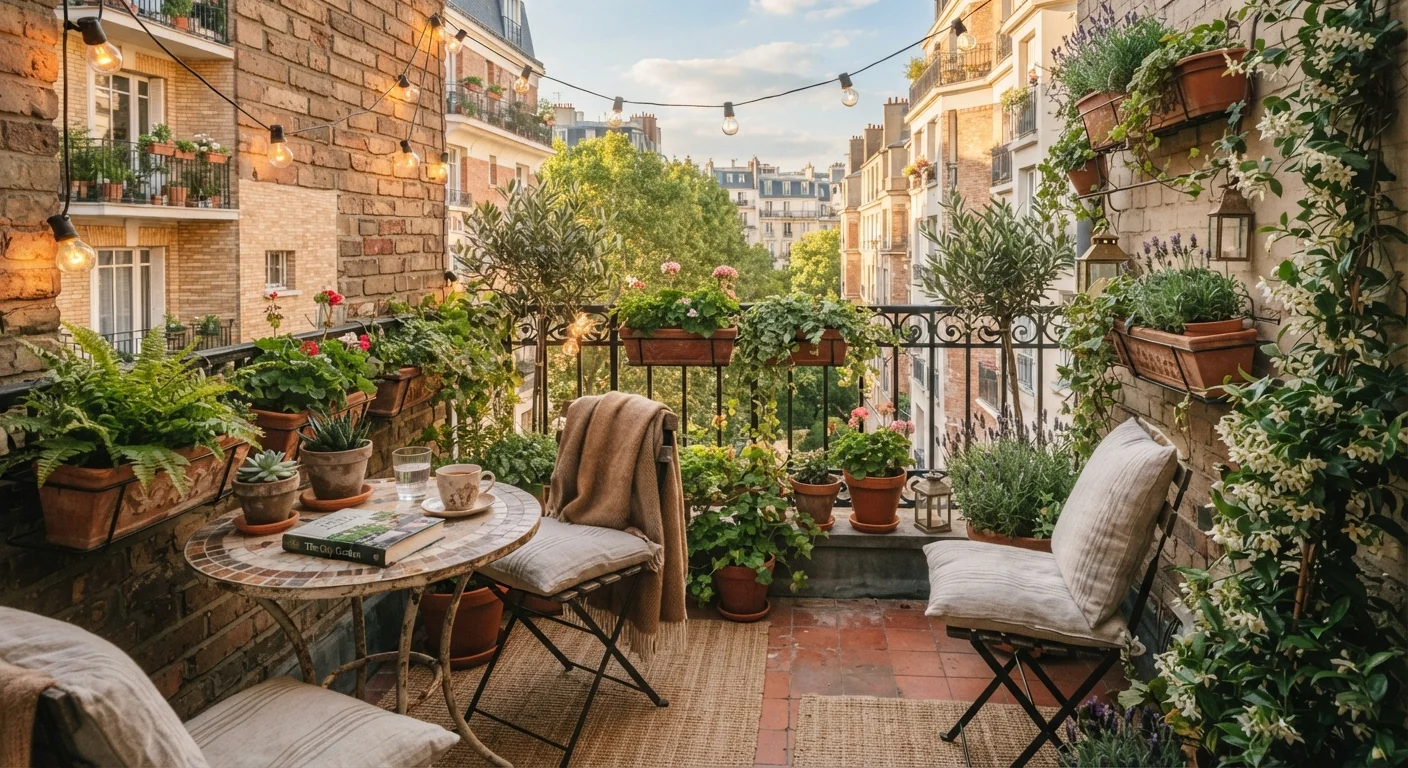
A single pot of flowers near a door is decorative. A thoughtful arrangement of containers at varying heights - floor planters, elevated stands, railing boxes - starts to feel like a garden. Height variation is what creates visual depth and makes greenery feel intentional rather than incidental.
For renters, containers are ideal because they're fully portable. For beginners, they're also forgiving: you control the soil quality, the drainage, and the sun exposure by choosing where each pot sits. Herbs, ornamental grasses, ferns, and succulents all perform well in containers with minimal fuss. See our guide to small-space food growing if edible plants are part of your plan.
Containers at multiple heights create the sense of a garden without a single patch of soil.
Use a freestanding privacy screen
Privacy is one of the most underrated outdoor comfort factors - and one of the hardest to improve without permanent fencing. Freestanding lattice panels, bamboo screens, and outdoor folding dividers solve this without any installation. Many are designed to be weighted at the base or fastened to railing with zip ties rather than hardware.
Beyond blocking sightlines from neighbors, screens also act as windbreaks on exposed balconies and create a sense of enclosure that makes a space feel more like a room. Pair a screen with climbing plants or hanging planters to soften the look further.
A freestanding screen creates privacy and enclosure without touching a wall or fence post.
Hang string lights without drilling
Evening ambiance is what makes people actually use an outdoor space after dark. String lights are the most accessible tool for this - but drilling anchor points into rental walls or fascia is off the table for most renters. The workaround is using outdoor-rated adhesive hooks, railing clamps, or weighted shepherd's hooks planted in large pots to run the lights from point to point.
Solar-powered string lights sidestep the need for an outdoor outlet entirely. They charge during the day and switch on automatically at dusk, which also means no extension cords trailing across the floor - a practical safety win.
Solar string lights and adhesive hooks deliver evening ambiance with zero drilling required.
Try a vertical planter for tight spaces
When floor space is limited - as it often is on balconies - going vertical is the practical move. Freestanding vertical planters, pocket-style wall planters hung from railing, and tiered plant stands all grow greenery upward rather than outward. This approach can dramatically increase your plant count without claiming additional square footage.
Vertical planters also tend to be strong focal points. A well-planted tower or wall panel draws the eye and makes a compact space feel more lush and finished. Lightweight trailing plants like pothos, string of pearls, or trailing petunias work especially well in elevated or wall-facing positions. For more ideas on working with constrained layouts, our small outdoor space design guide covers scale and placement in detail.
Going vertical multiplies your plant count without claiming a single extra square foot.
Choose movable, right-sized furniture
Oversized furniture on a small patio crowds the space and makes it harder to use. Undersized furniture looks lost and doesn't invite lingering. Getting the scale right is one of the highest-impact decisions in any outdoor setup - and it's also easy to get wrong when shopping online.
Folding bistro sets, stackable chairs, and modular sectionals that can be reconfigured all offer flexibility without commitment. Before purchasing, measure your usable area and map out the arrangement on paper, leaving at least 30-36 inches of clearance for walking paths. Furniture that folds or stacks also stores compactly during winter months or between leases. The Home Improvement hub has more resources on making thoughtful space decisions throughout your home.
Right-sized, movable furniture is the single biggest factor in whether a space actually gets used.
Create shade with a freestanding umbrella or canopy
An exposed outdoor space with no shade is uncomfortable for most of the day in warm months - which means it goes unused. A freestanding market umbrella with a weighted base or a pop-up canopy shelter addresses this without attaching anything to a wall, ceiling, or overhead structure.
Weighted umbrella bases typically require 50-100 lbs of sand or water ballast to stay stable in moderate wind. Always check manufacturer guidance on wind ratings and bring the umbrella in during storms. Canopies with side panels also do double duty as privacy screens and rain shelters, extending how many months per year the space is usable.
Freestanding shade structures turn an unusable sun trap into a space worth sitting in.
Putting It All Together
The best outdoor spaces feel intentional - like someone actually thought about how they'd be used. That doesn't require a big budget or a permanent footprint. It requires layering a few well-chosen elements: a defined floor area, seating that fits the scale, something living and green, and light for evenings.
Start with one or two upgrades that address what's currently missing from your space. A shadeless patio needs shade before it needs décor. A concrete balcony needs softness - a rug and a plant - before it needs string lights. Work from the functional gaps outward.
Start with the problem, not the product
Before buying anything, spend time in your outdoor space at different times of day and note what's actually stopping you from using it. Too hot? Too exposed? No seating? Solving the real friction point first - rather than decorating around it - makes every dollar you spend more effective. Most outdoor spaces need one functional fix before any aesthetic upgrades will feel worthwhile.
If you're working with a compact area and want to go further, our guide on making small outdoor areas feel larger covers layout and scale strategies that change how a space reads without adding a single permanent fixture. And if growing your own food appeals to you, growing food in a small space sets realistic expectations for urban edible gardening at any skill level.