Why Small-Space Food Growing Fails (and How to Avoid It)
Most small-space food gardens fail for one of three reasons: too little sun, wrong plant choices, or underestimating how much water containers need. None of these are hard to fix - but they're easy to overlook when enthusiasm is high and the planting catalogs look tempting.
Before buying a single seed packet, spend a full day observing your space. Count the hours of direct sunlight it receives - not estimated, but counted. Most edible plants need at least six hours of direct sun to fruit or develop fully. Herbs and leafy greens can manage with four to five, but anything that requires flowering to produce food (tomatoes, peppers, beans) will struggle below six.
Assess Sun Before You Plant Anything
Use your phone's compass and spend one full day noting which parts of your space receive direct sun - and for how long. Apps that simulate sun angles for your location can also help. This single step prevents most plant selection mistakes before they happen.
Renters often have an additional layer to consider: weight limits on balconies, restrictions on permanent fixtures, and soil access. The good news is that container growing sidesteps most of these issues. See our guide to container gardening on a renter's budget for practical starting points.
What Actually Grows Well in Tight Spaces
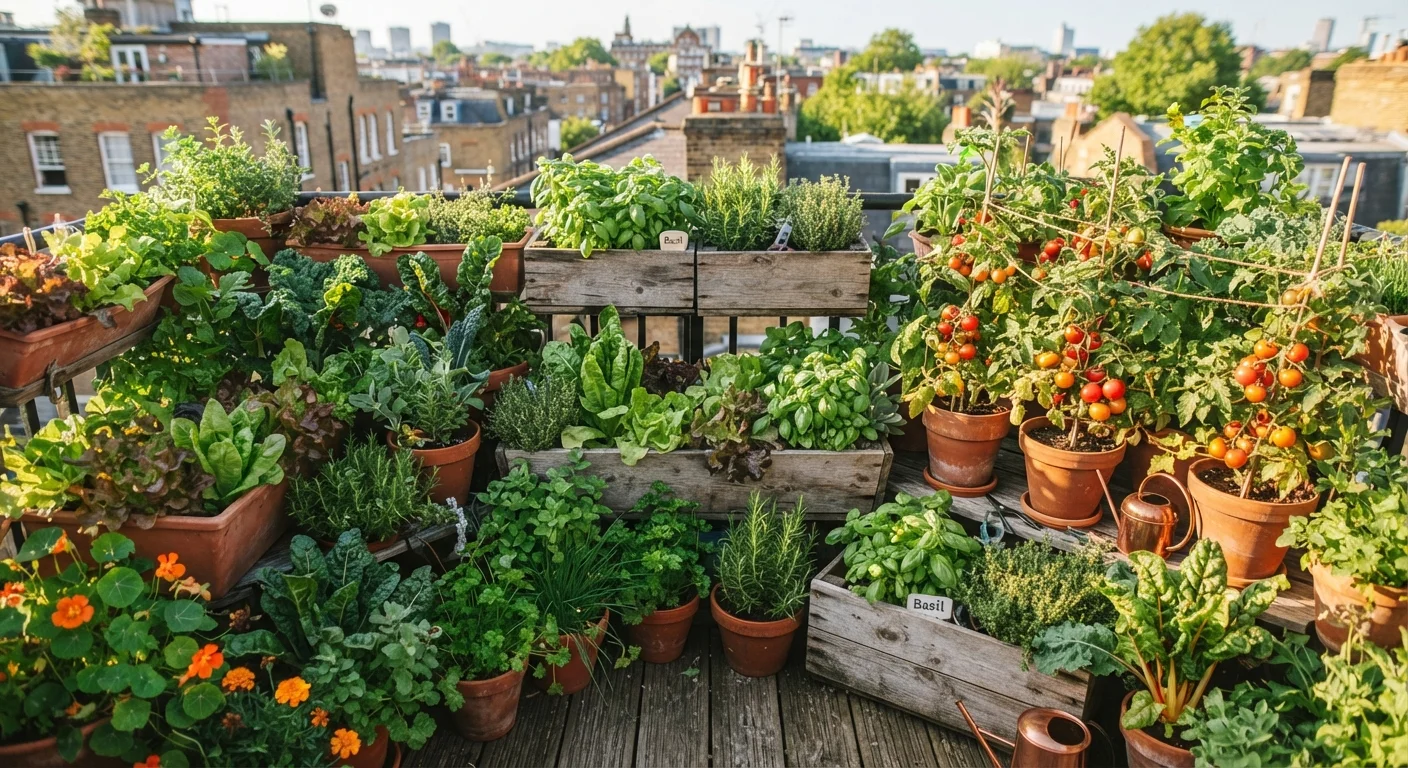
These categories consistently reward small-space growers because they're compact, productive relative to their footprint, and forgiving of the learning curve.
Herbs
Basil, chives, mint (keep it in its own pot - it spreads aggressively), parsley, and cilantro all thrive in modest containers. They grow quickly, get harvested frequently, and tolerate partial shade better than most food plants. A windowsill with four to five hours of sun can sustain a reliable herb supply.
Leafy Greens
Lettuce, spinach, arugula, kale, and chard are cut-and-come-again crops: harvest outer leaves and the plant keeps producing. They prefer cooler temperatures, making them excellent for spring and fall growing when a balcony might otherwise sit unused.
Compact Tomatoes and Peppers
Determinate (bush) tomato varieties and compact pepper types are specifically bred for container life. They cap out at manageable heights, don't require aggressive staking, and produce genuine harvests in a 5-gallon or larger pot. Cherry tomato varieties tend to be more reliable than large slicing types.
Radishes and Green Onions
These are among the fastest-maturing vegetables - radishes can go from seed to harvest in three to four weeks. They're ideal for beginners who need early wins to stay motivated.
6 hrs
Minimum daily direct sun for fruiting crops
General horticultural guidance consistently cites six hours of direct sunlight as the threshold below which tomatoes, peppers, and beans underperform.
3-4 wks
Time from seed to harvest for radishes
Radishes are among the fastest-maturing food crops, making them a high-reward choice for beginners or anyone wanting early results.
5 gal
Recommended minimum pot size for tomatoes
Container gardening guidance from university extension programs commonly recommends at least a 5-gallon container for compact tomato varieties.
What Rarely Works - and Why
Knowing what to avoid saves money, space, and frustration. These crops aren't impossible in small spaces, but the yield-to-effort ratio is almost always discouraging.
Corn
Corn requires wind pollination across large plantings and grows tall - it's poorly suited to containers or small plots both practically and structurally. Even with adequate sun, expect very little return.
Vining Squash, Pumpkins, and Melons
These plants spread aggressively. A single zucchini plant can take up four to six square feet of ground space and still need significant water and feeding. Compact or bush varieties exist but still underperform in containers.
Root Vegetables (Carrots, Parsnips)
Long-rooted varieties need deep, loose soil that most containers can't provide. Shorter varieties like Chantenay carrots can work in deeper pots, but they're slower and less dependable than greens or herbs.
Space-Hungry Crops Will Disappoint You
Squash, corn, melons, and large indeterminate tomato varieties are not well-suited to small-space or container growing - even if the seed packet doesn't say so explicitly. Their root systems, water demands, and physical spread exceed what most compact gardens can support. Choose compact or dwarf varieties whenever a category matters to you, and read the mature plant dimensions before purchasing.
For a deeper look at how your growing setup affects plant success, the comparison in our raised beds vs. in-ground planting article breaks down when each approach makes practical sense.
Containers, Soil, and the Setup That Matters
The container is not where most growers should cut corners. Pots that are too small dry out faster, restrict root development, and limit yield. For tomatoes and peppers, 5-gallon minimum is a reasonable rule of thumb. Herbs can manage in smaller containers, but anything under 6 inches in diameter will dry out quickly in summer heat.
Potting mix - not garden soil - is essential for containers. Garden soil compacts, drains poorly in pots, and can introduce pests and disease. A quality potting mix that includes perlite or vermiculite maintains the air pockets roots need.
When filling containers, leave about an inch of space at the top - this prevents soil and water from washing over the edge during watering and makes it easier to top-dress with compost later.
Overfilled pots lose nutrients and soil with every watering, and the inch of clearance makes moisture management more consistent throughout the season.
Group containers together rather than spacing them out. Plants clustered near each other create a slightly more humid microclimate, slow evaporation, and are easier to water efficiently.
Isolated containers in full sun lose moisture rapidly and can stress plants between watering sessions, particularly during summer heat.
Drainage is non-negotiable. Every container needs holes at the base. Sitting in standing water causes root rot faster than almost any other mistake. Elevating pots slightly with feet or bricks helps drainage flow freely.
If you want to go further with soil amendment and nutrient recycling, composting at home is worth exploring - even a small worm bin can generate usable compost for container top-dressing.
Making It Sustainable Without Burning Out
The most common reason small food gardens get abandoned mid-season isn't failure - it's overcommitment. Starting with two or three containers of reliable crops is smarter than filling every inch of a balcony in April and watching it collapse by July.
Watering is where most beginners underestimate the workload. Containers in full sun during summer may need watering once or even twice daily. A simple drip irrigation timer connected to a spigot or hose eliminates this friction significantly.
Beyond practical setup, think about how your outdoor space is functioning overall. Food growing works best when it's part of a broader vision for the space, not a standalone project dropped into an otherwise unused area. Our article on outdoor space upgrades that work whether you own or rent offers low-commitment ways to improve the surrounding environment while you grow.
Track what works each season: note which varieties produced well, which ones you actually used in the kitchen, and which were more effort than they were worth. That reflection is how beginner gardeners become consistent ones.
Container Gardening on a Renter's Budget
Covers what to grow, how to set up containers without permanent changes, and how to keep costs manageable. A practical companion to this article.
Raised Beds vs. In-Ground Planting Guide
Helps you weigh the trade-offs between raised beds and in-ground growing for small-space gardens, including soil control and maintenance differences.
Composting at Home Explainer
Explains how composting works and whether it's worth it for small-space growers looking to improve their container soil over time.