The Science Behind Decomposition
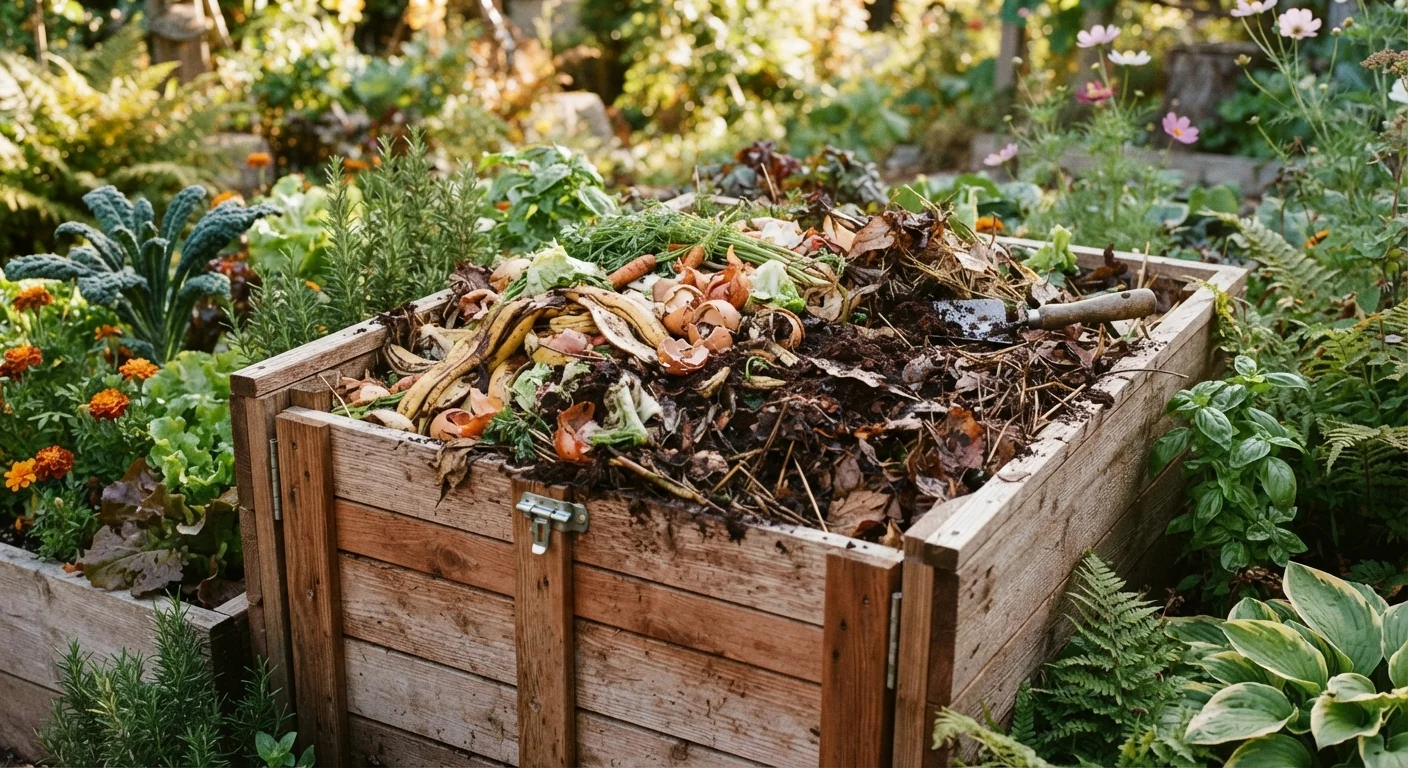
Composting is essentially managed decomposition. Bacteria, fungi, and other microorganisms break down organic matter into a stable, humus-rich material that plants can use. The process isn't magic - it depends on four inputs working together: carbon-rich materials ("browns"), nitrogen-rich materials ("greens"), moisture, and oxygen.
Carbon materials include dry leaves, cardboard, paper, and straw. Nitrogen materials include food scraps, coffee grounds, fresh grass clippings, and plant trimmings. A general guideline is to aim for roughly 3 parts carbon to 1 part nitrogen by volume - this ratio keeps microbial activity high without producing bad odors. Too much nitrogen and your pile turns slimy and smells; too much carbon and decomposition slows to a crawl.
Moisture matters too. A healthy pile should feel like a wrung-out sponge - damp but not saturated. Oxygen keeps the process aerobic, which is faster and odor-free. That's why turning or aerating the pile regularly speeds things up.
Hot vs. Cold Composting
Hot composting involves actively managing your pile to reach internal temperatures of 130-160°F, which speeds decomposition and kills weed seeds. Cold composting is a more passive approach - you add materials over time without turning - and takes longer but requires far less effort. Most beginners start with cold composting and graduate to active methods as they build confidence.
What You Can (and Can't) Compost
Most kitchen and yard scraps are fair game: fruit and vegetable peels, coffee grounds and paper filters, eggshells, dry leaves, grass clippings, shredded newspaper, and cardboard. These form the backbone of any home compost pile.
A few things should stay out of a home bin. Meat, fish, and dairy attract pests and create persistent odors in smaller systems. Cooked foods, oily items, and pet waste introduce pathogens that a backyard pile may not heat up enough to neutralize. Diseased plants and invasive weeds are best left out too, since they can survive and spread if the pile doesn't reach high enough temperatures.
If you're working with a limited outdoor footprint - a balcony or shared patio - a sealed tumbler or a small bokashi system (a fermentation method using inoculated bran) can handle most food scraps, including items traditional composting can't. See our renter-friendly container gardening guide for ways to use finished compost even in a compact outdoor setup.
Pros and Cons of Home Composting
Composting isn't the right fit for every living situation. Here's an honest look at what it offers and where it falls short.
Converts kitchen waste into free soil amendment
Rather than sending food scraps to landfill, composting transforms them into a nutrient-dense material that improves soil structure - at no cost beyond setup.
Reduces household waste sent to landfill
Food scraps and yard waste can account for a significant share of household trash. Composting diverts this material and reduces the methane it would generate in anaerobic landfill conditions.
Improves plant health without synthetic fertilizers
Compost feeds soil biology, not just plants directly. Healthier microbial activity in soil leads to better nutrient availability and more resilient root systems.
Works in small spaces with the right system
Compact tumblers, worm bins (vermicomposting), and bokashi systems make composting viable for renters, apartment dwellers, and anyone without a traditional yard.
Low ongoing cost after initial setup
Most composting methods require only a bin or designated area and minimal supplies. Inputs are household materials you'd otherwise discard.
Requires consistent attention and maintenance
A neglected pile slows down, develops odors, or attracts pests. Turning, moisture checks, and balanced layering need to happen regularly - roughly once a week for active systems.
Can attract pests if managed incorrectly
Open bins or improperly buried food scraps invite rodents and insects, particularly in urban areas. A sealed bin or careful layering under browns significantly reduces this risk.
Takes weeks to months to produce usable material
Unlike fertilizer you can apply immediately, compost requires patience. If you need to amend soil for a current growing season, you may need to start months in advance.
Limited capacity in apartment or renter setups
Small indoor systems like worm bins process scraps slowly and in smaller volumes. High-output cooking households may generate more organic waste than a compact system can handle.
The practical takeaway: most drawbacks are manageable with setup and habit. Odor and pests are problems of neglect, not inevitability. If space is genuinely limited, a 5-gallon sealed tumbler on a balcony can process a meaningful amount of kitchen scraps.
How to Use Finished Compost
Finished compost looks and smells like dark, crumbly earth - not identifiable food scraps. It typically takes four to eight weeks in an active, well-managed tumbler, or three to six months in a passive outdoor pile. You'll know it's ready when the original materials are no longer recognizable and the pile has shrunk considerably.
Work finished compost into garden beds before planting, blend it into potting mix or garden soil at a ratio of roughly one part compost to three or four parts mix, or use it as a surface mulch around established plants. Compost improves drainage in heavy clay soils and water retention in sandy ones - it's genuinely one of the most versatile soil amendments available. For ideas on where to put it to use, our guide on growing food in a small space walks through realistic setups where compost-enriched soil makes a measurable difference.
~30%
Share of household waste that is compostable
The U.S. EPA estimates that food scraps and yard trimmings together make up roughly 30% of what households throw away - all of it compostable.
4-8 weeks
Time to finished compost in an active tumbler
A consistently turned, well-balanced tumbler system can produce finished compost in as little as four to eight weeks under favorable conditions.