
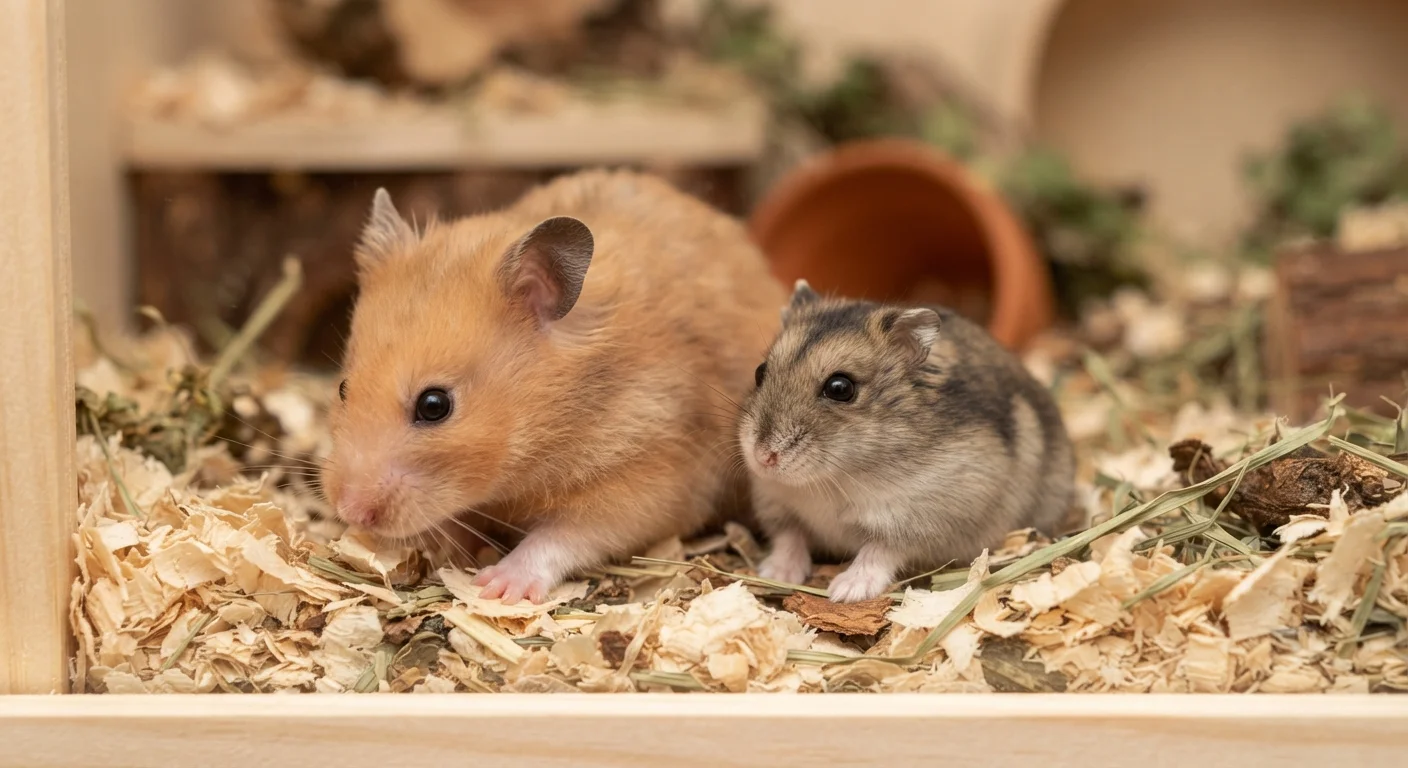
Size, Lifespan, and What That Means Day to Day
The most visible difference between Syrian and dwarf hamsters is size. Syrians typically reach 5–7 inches in length, while the most common dwarf species — Roborovski, Campbell's, and Winter White — range from 2–4 inches. That size difference has real care implications.
Syrians generally live 2–3 years, while most dwarf species live 1.5–3 years depending on genetics and environment. Neither lifespan is dramatically different, but the commitment is real for both. Before choosing, run through the small pet readiness checklist to make sure your living situation and schedule align with what either hamster needs daily.
Wheel size is one area where the size difference matters practically. Syrians need a wheel of at least 10–11 inches in diameter to avoid spinal arching during use. Dwarf hamsters can use 6–8 inch wheels. Using the wrong size causes discomfort and potential long-term health issues.
| Criterion | Syrian Hamster | Dwarf Hamster |
|---|---|---|
| Typical adult size | 5–7 inches | 2–4 inches |
| Housing with others | Must live alone | Some pairs possible (with risk) |
| Ease of taming | Generally easier | More challenging, skittish |
| Minimum wheel size | 10–11 inches | 6–8 inches |
| Common health concern | Wet tail (bacterial) | Diabetes (esp. Campbell's) |
| Best for | Beginners, hands-on owners | Experienced or observation-focused owners |
| Activity style | Calmer, deliberate mover | Fast, highly energetic |
Social Behavior and Housing: The Most Critical Difference
Syrian hamsters are strictly solitary animals. In the wild, adults maintain individual territories and only tolerate others during mating. Keeping two Syrians together — regardless of sex — will almost certainly result in serious injury or death. This is non-negotiable, not a matter of individual personality.
Dwarf hamsters are more socially flexible, but this is frequently overstated. Roborovski dwarfs are the most likely to cohabitate peacefully in same-sex pairs when raised together from a young age. Campbell's and Winter Whites can coexist but are prone to sudden aggression, even between bonded pairs. If you house dwarf hamsters together, you must have a second enclosure ready to separate them at the first sign of conflict.
Stress from inappropriate housing is a genuine welfare concern for both species. Learn to recognize the subtle signs of stress in small pets — hiding more than usual, over-grooming, bar-chewing, and weight loss are all indicators something is wrong.
450 sq in
Minimum recommended enclosure floor space
Many hamster welfare organizations and exotic-animal veterinarians recommend at least 450 square inches of unbroken floor space for any hamster species.
2–4 inches
Adult size of most dwarf hamster species
The small size of dwarf hamsters makes them faster to escape and harder to handle safely compared to the larger Syrian species.
Temperament, Handling, and Taming
Syrian hamsters have a reputation for being more handleable, and it's generally earned. They're calmer, slower-moving, and more likely to sit still once tamed through consistent, patient interaction. Most Syrians will accept being cupped in both hands after a few weeks of gradual acclimation.
Dwarf hamsters are notably faster and more skittish. Even well-socialized individuals can dart unexpectedly, making drops a real risk. Nipping is also more common in dwarfs that feel cornered or are handled too abruptly. This doesn't make them bad pets — it makes them better suited to experienced handlers or owners primarily interested in observation rather than frequent handling.
For detailed guidance on what genuinely supports hamster wellbeing beyond just taming, see what hamsters actually need to thrive. Both species require far more enrichment, burrowing material, and space than most commercial setups provide.
Nocturnal by Nature — Plan Interactions Accordingly
Both Syrian and dwarf hamsters are primarily nocturnal or crepuscular (most active at dawn and dusk). Waking a hamster during the day to handle it causes genuine stress and can increase biting. Plan interaction sessions for the evening hours when your hamster is naturally alert and active. Consistent timing helps your hamster anticipate and tolerate handling more calmly.
Veterinary Care and Health Considerations
Both Syrian and dwarf hamsters require exotic-animal veterinary care — not all general practice vets are experienced with small mammals. Syrian hamsters are susceptible to wet tail (proliferative ileitis), a bacterial condition that progresses rapidly and requires prompt veterinary attention. Dwarf hamsters, particularly Campbell's, have a genetic predisposition to diabetes, making diet quality especially important for that species.
Finding the right vet before you bring any hamster home is essential. Our guide on what to look for in a small-animal veterinarian explains which qualifications and questions matter most when choosing a provider for a small exotic pet.
Regardless of species, any hamster showing lethargy, significant weight loss, labored breathing, or diarrhea should be seen by a vet as soon as possible. Hamsters are prey animals that instinctively mask illness, so visible symptoms often indicate a condition that has already progressed.
This article is for general informational and educational purposes only. It is not a substitute for professional veterinary advice. Always consult a qualified exotic-animal veterinarian for guidance specific to your pet's health and care needs.