
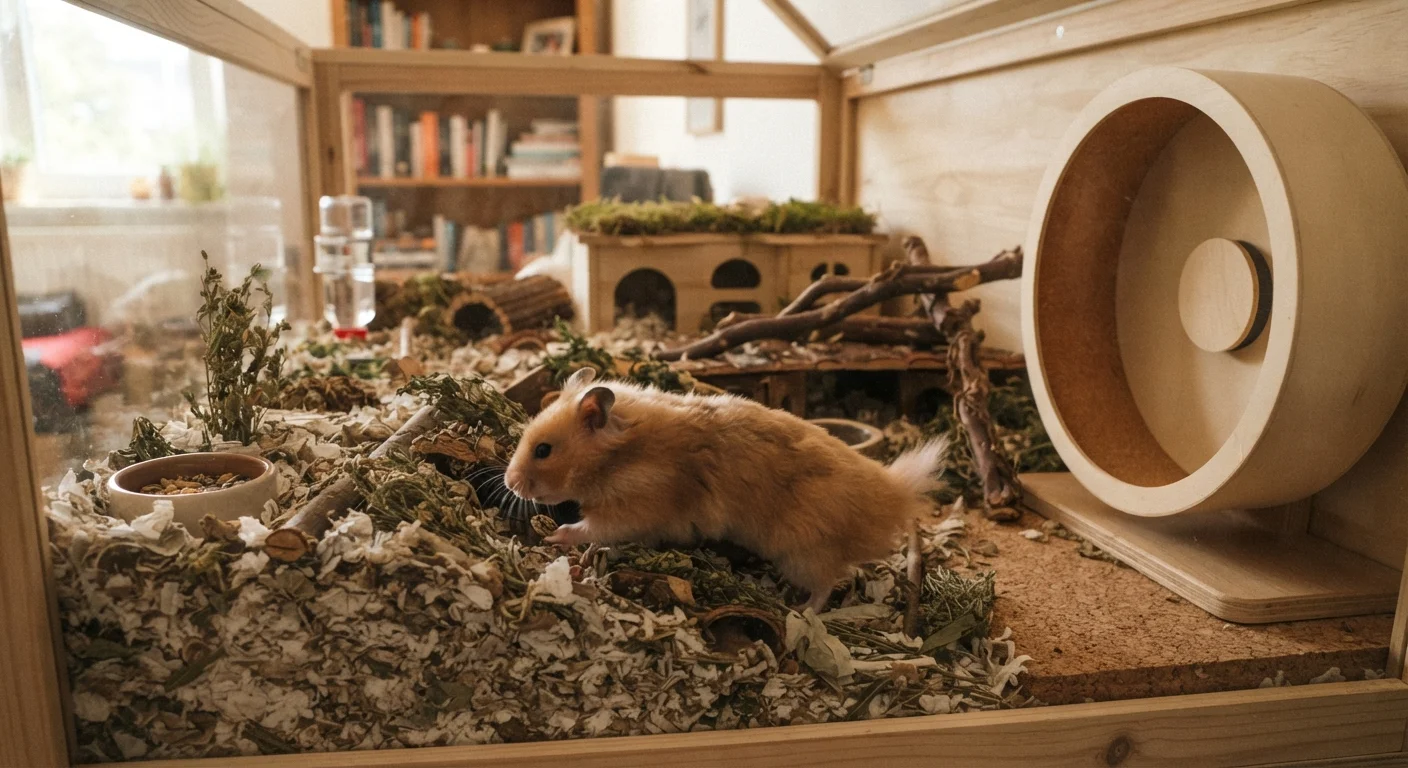
Why Hamster Care Is More Demanding Than It Looks
Hamsters consistently rank among the most popular small pets in the US, yet veterinary and animal welfare professionals frequently note that the majority of pet hamsters live in conditions that compromise their wellbeing. This is rarely the result of carelessness — it is almost always a gap in accessible, accurate information.
The standard advice passed along at point of purchase often reflects outdated or commercially motivated guidance rather than current understanding of hamster biology. This article addresses the most common and consequential mistakes, explaining why they happen and what to do instead. Whether you are setting up your first enclosure or reconsidering an existing one, these corrections are practical and achievable.
For those still deciding which hamster species is right for them, understanding species-specific needs is a useful first step. Syrian and dwarf hamsters have meaningfully different requirements that affect every aspect of setup and handling.
The Most Common Mistakes — And How to Fix Them
The errors below are not minor inconveniences — several of them directly affect a hamster's physical health, mental stimulation, and lifespan. Addressing even one or two can make a measurable difference in your hamster's quality of life.
Using a cage that is too small, typically one marketed as a 'starter' hamster cage.
Why it happens: Pet store packaging rarely reflects animal welfare science, and small cages are cheaper and more appealing visually on a shelf.
Providing less than 6 inches of bedding, limiting the hamster's ability to burrow.
Why it happens: Owners often assume a light layer of substrate is sufficient, especially when following minimal instructions included with a purchased cage.
Waking or handling the hamster during daytime hours when it is naturally asleep.
Why it happens: Owners, especially children, want to interact and assume the hamster will adapt to a human schedule.
Using a wire or mesh-surface wheel, or one that is too small for the hamster's body size.
Why it happens: Small, wire wheels are the most widely available option in pet stores and are often included with starter cages.
Feeding only a seed mix without supplementing with fresh foods and protein sources.
Why it happens: Seed mixes are easy, inexpensive, and widely marketed as complete nutrition, but hamsters tend to selectively eat their favorites and skip nutritional variety.
Skipping veterinary care because hamsters are perceived as low-maintenance pets.
Why it happens: Hamsters are often bought as a 'starter pet' and owners underestimate their care complexity or believe vet visits are unnecessary for small animals.
Never House Syrian Hamsters Together
Syrian hamsters are strictly solitary animals. Keeping two together — even temporarily — can result in serious injury or death from fighting. This is not a personality issue; it is a deeply hardwired biological behavior. If you own a Syrian hamster, it must always live alone. Dwarf hamsters can sometimes coexist in same-sex pairs, but introductions must be carefully managed. For a full comparison, see Syrian vs. Dwarf Hamster care differences.
Once you have the basics right, enrichment becomes the next priority. Enrichment ideas for small pets go well beyond a wheel — foraging opportunities, tunnels, and varied textures all support natural behavior. If you notice your hamster becoming less active, hiding more, or bar-chewing persistently, those can be early stress signals worth investigating promptly.
450 sq in
Minimum recommended enclosure floor space
Animal welfare organizations and exotic veterinarians widely cite this as the minimum floor space for a single hamster's healthy life.
6+ inches
Minimum bedding depth for burrowing
Hamsters in the wild dig burrows up to several feet deep; replicating this with deep substrate reduces stereotypic stress behaviors.
This article is for general informational purposes only and does not constitute veterinary advice. Consult a qualified exotic animal veterinarian for guidance specific to your hamster's health and care needs.