
Before Pickup Day: Getting Your Home Ready
Puppy-proofing — or dog-proofing — is not optional. Dogs explore with their mouths and noses, and a curious dog can get into trouble surprisingly fast. Before your dog arrives, walk through every room at floor level and remove or secure anything that poses a hazard.
- Electrical cords: Tuck them behind furniture or use cord covers.
- Toxic plants: Common household plants such as pothos, sago palm, and lilies are toxic to dogs. Move them out of reach or rehome them entirely.
- Trash cans: Use bins with lids or store them inside cabinets.
- Cleaning supplies and medications: Lock them in cabinets at least as high as the dog can reach when standing.
- Small objects: Coins, rubber bands, and children's toys are all choking hazards.
Designate a specific area of your home as your dog's initial base — a single room or gated section where it can decompress without being overwhelmed. Expanding access gradually is far less stressful than giving full run of the house on day one.
Renting? Check Your Lease First
If you rent your home, verify your lease terms and any pet deposit requirements before bringing a dog home. Many leases have breed or weight restrictions. Getting this sorted in advance avoids a stressful situation for you and your new dog.
Essential Supplies to Have on Hand
Having everything ready before your dog arrives prevents chaotic last-minute runs and lets you focus on your new companion. Here is what you need from day one:
- Collar and ID tag: Your dog should wear identification the moment it enters your home. Include your phone number at minimum.
- Leash: A standard six-foot leash works for most situations.
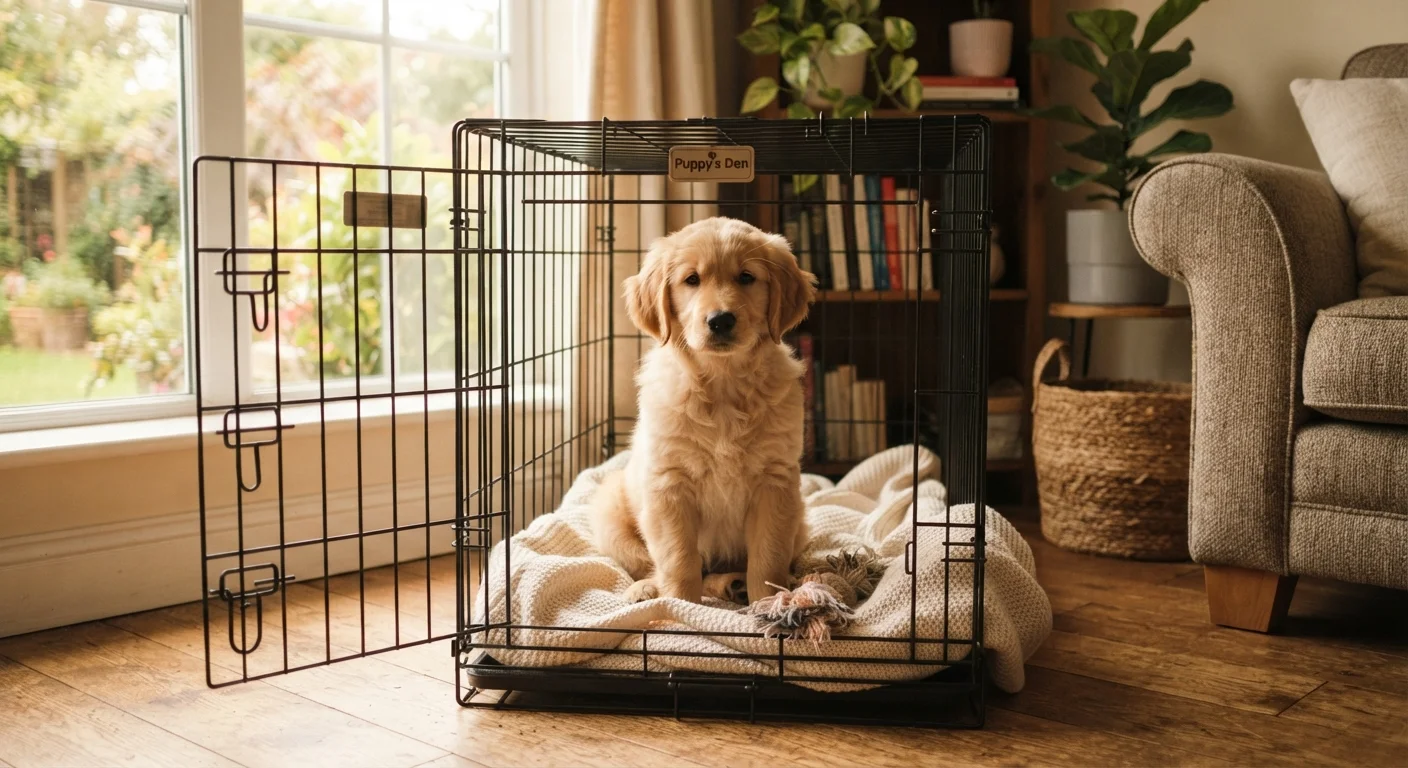
- Crate: Sized so your dog can stand, turn around, and lie down comfortably. Our crate training guide explains how to introduce it properly.
- Food and water bowls: Sturdy, easy to clean, and appropriately sized.
- Dog food: Find out what the shelter or breeder was feeding and continue that brand initially.
- Bed or blanket: Soft bedding placed inside the crate or in a quiet corner.
- Enzymatic cleaner: Accidents happen — this type of cleaner eliminates odor and discourages repeat marking.
Ask What Food They Were Using
Before pickup day, contact the shelter or breeder and ask specifically what food your dog has been eating, how much, and how often. Continuing the same food prevents digestive upset during an already stressful transition. Keep a small supply on hand even if you plan to switch later.
The First 24 Hours: What to Expect
The first day is about decompression, not bonding activities. Resist the urge to show your dog off to friends and family immediately — that can wait a few days. Instead, keep the environment quiet and allow your dog to explore its designated space on its own terms.
Common behaviors in the first 24 hours include hiding, refusing food, excessive sniffing, whimpering, or conversely, hyperactivity. All of these are normal stress responses. Avoid forcing interaction; let your dog approach you when it feels ready.
Take your dog outside frequently — every one to two hours for puppies — using the same spot each time to begin house training. Reward outdoor eliminations calmly and immediately. Accidents indoors should be cleaned without scolding; punishment at this stage only increases anxiety.
For the first night, place the crate near your bed if possible. The proximity provides reassurance without reinforcing problematic habits. Expect some whining — it is normal. Responding calmly and briefly is fine; prolonged attention to distressed behavior can accidentally reinforce it.
Read more about common stumbles in our guide on mistakes new dog owners make in month one.
Building a Routine From Day One
Dogs thrive on predictability. A consistent schedule for feeding, walks, play, and sleep reduces anxiety and accelerates housetraining. Even if your life runs on flexible hours, building a loose daily framework pays dividends quickly.
Housetraining
Teaching your dog to eliminate outdoors (or in a designated indoor spot) rather than inside the home. Consistent schedules and immediate positive reinforcement are the core tools.
Decompression period
The adjustment window — typically the first two to four weeks — during which a dog gets used to its new environment. Keeping things calm during this time reduces stress behaviors.
Crate
A dog-sized enclosure used as a safe resting space and a housetraining aid. When introduced correctly, most dogs voluntarily retreat to their crate for rest.
Enzymatic cleaner
A cleaning product that uses enzymes to fully break down the biological compounds in pet urine and feces, eliminating the odor that can attract a dog back to the same spot.
Preventive care
Routine veterinary services — vaccinations, parasite prevention, wellness exams — designed to keep a dog healthy before problems develop rather than treating illness after the fact.
Redirecting
A training technique where you interrupt an undesired behavior (like chewing a shoe) and immediately guide your dog toward an acceptable alternative (like a chew toy).
A basic daily structure for most adult dogs looks like this:
- Morning walk and feeding
- Midday bathroom break (critical for puppies)
- Afternoon or early evening walk and play session
- Evening feeding
- Final bathroom trip before bed
Puppies under six months generally need to eat three times daily and go outside every one to two hours. Adult dogs typically do well with two meals and three to four outdoor outings. Your vet can give guidance specific to your dog's age, size, and health status.
Consistent rules matter too. Decide before your dog arrives whether it will be allowed on furniture, in certain rooms, or to jump up on people — and apply those rules from day one. Changing rules mid-adjustment is confusing and slows down training.
Your First Vet Visit
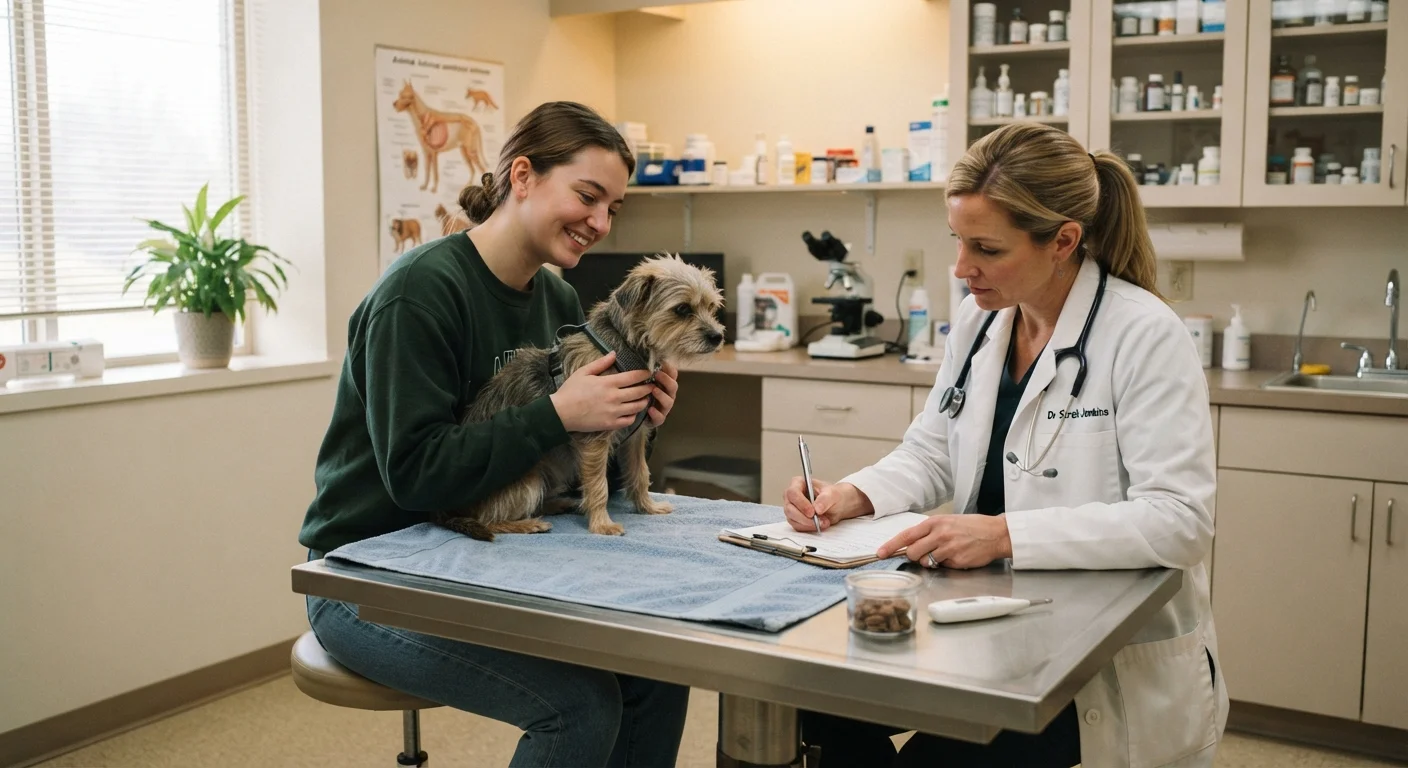
Schedule a wellness exam within the first week, regardless of what records came with your dog. This visit establishes a relationship with your veterinarian, confirms vaccination status, screens for parasites, and gives you a chance to ask questions specific to your dog's breed, age, and history.
Bring any health records from the shelter or breeder. Your vet will check weight, body condition, teeth, eyes, ears, and heart, and will advise you on a going-forward preventive care schedule — including flea, tick, and heartworm prevention appropriate for your region.
Know the signs that warrant an urgent call to your vet rather than waiting for a scheduled appointment. Our overview of signs your dog may be unwell is a useful reference for new owners navigating what's normal and what isn't.
This article is for general informational and educational purposes only. It is not a substitute for professional veterinary advice. Always consult a licensed veterinarian for guidance specific to your dog's health and care needs.