
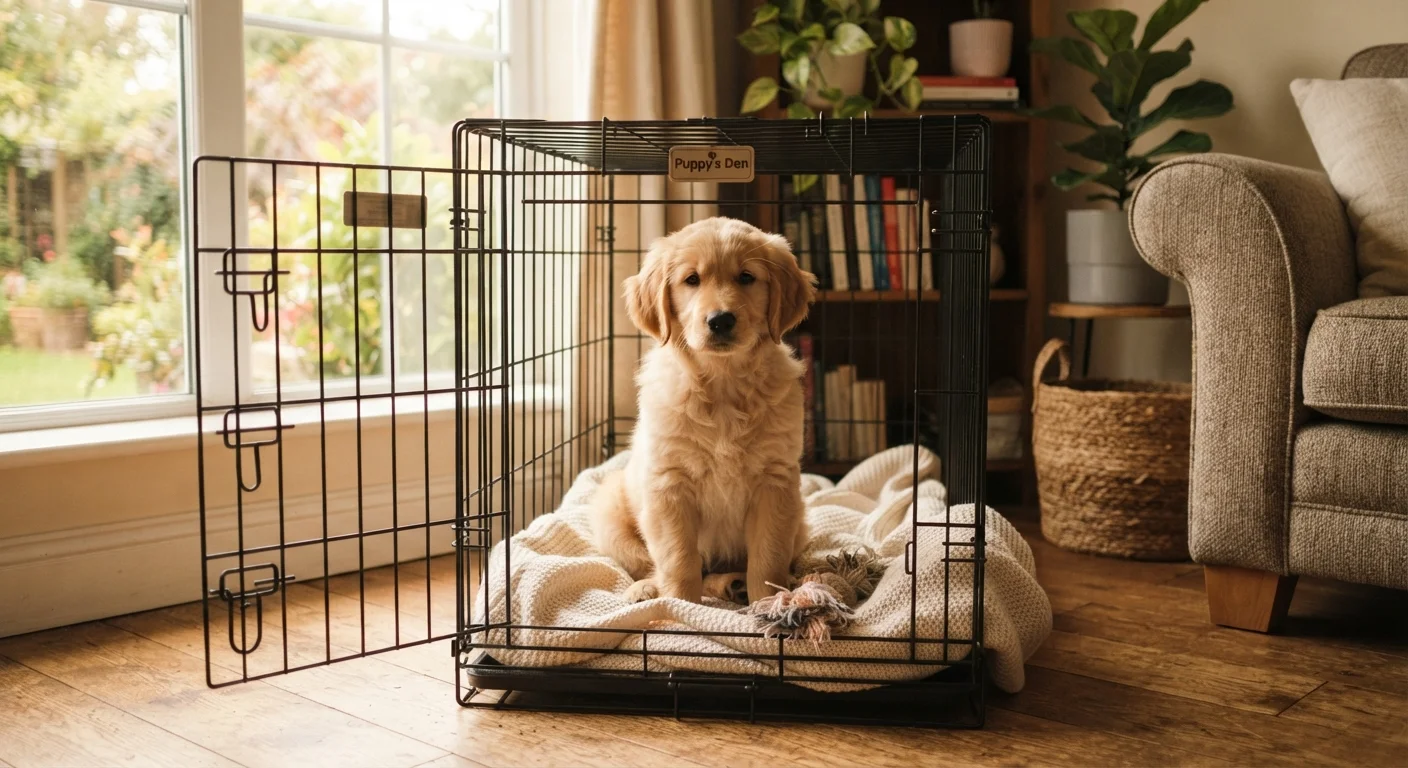
What Crate Training Actually Means
Crate training is widely misunderstood — and that misunderstanding stops many dog owners from using a tool that genuinely helps both dogs and their families. At its core, crate training means teaching your dog that their crate is a positive, personal space. It is not about locking a dog away; it is about giving them somewhere they feel settled and secure.
The crate serves two practical purposes. First, it supports housebreaking: dogs instinctively avoid soiling where they sleep, so a properly sized crate encourages bladder control and makes potty training faster and more predictable. Second, it provides a safe space during unsupervised periods — preventing destructive behavior and keeping curious puppies out of danger when you cannot watch them directly.
If you are still in the early stages of bringing a new dog home, this fits alongside everything else you will be setting up — our guide for first-time dog owners covers the full picture of that transition.
Crate Type Matters Less Than You Think
Wire crates, plastic travel crates, and soft-sided fabric crates all work for crate training. The right choice depends on your dog's size, temperament, and how the crate will be used. Wire crates allow more visibility and airflow; plastic crates feel more den-like. Either can be effective when introduced properly.
Common Misconceptions About Crates
Many people associate crates with punishment, but that framing is the opposite of the goal. A crate should never be used as a consequence for bad behavior. Sending a dog to their crate when they have done something wrong attaches a negative emotion to the space — and that undermines everything crate training is designed to accomplish.
Another misconception is that crate-trained dogs are somehow deprived or unhappy. In practice, dogs that have been properly introduced to a crate often retreat to it voluntarily during the day, the same way a person might close the door to a home office for some quiet. The key phrase is properly introduced — the experience has to be built on positive associations from day one.
“The crate gives the dog a place of their own — a place where they can feel safe and settle without the pressure of the whole household. That sense of predictability is good for any dog, but especially for one still learning the rules of a new home.”
— American Veterinary Society of Animal Behavior, Professional organization providing evidence-based guidance on animal behavior and training
How to Introduce the Crate: A Step-by-Step Approach
Successful crate training is gradual. Rushing the process is the most common reason it fails. Here is a reliable sequence:
- Make the crate inviting before your dog enters it. Place it in a frequented area of your home with the door open. Put a soft blanket and a chew toy inside. Let your dog explore it at their own pace.
- Feed meals near the crate, then inside it. Start by placing the food bowl just outside the door. Over several days, move it progressively further inside. This builds a strong positive association without pressure.
- Close the door briefly during meals. Once your dog eats comfortably inside the crate, close the door while they finish eating, then open it immediately. Gradually extend the time the door stays closed.
- Build up time in short sessions. Practice short periods of crating — five to ten minutes at first — while you remain nearby. Gradually increase duration over days and weeks.
- Practice longer periods and overnights. Once your dog is settled for 30 minutes or more, you can begin leaving the room and eventually using the crate overnight.
Use High-Value Treats at the Start
When first luring your dog into the crate, use treats that are more enticing than their usual kibble — small pieces of cooked chicken or similar high-value rewards can make a meaningful difference. Reserve these for crate training sessions so the association stays strong. Once your dog is comfortable, you can phase them down to regular treats.
Consistency matters more than speed. Aim for daily practice rather than sporadic long sessions.
What to Expect on the Timeline
Most dogs reach a point of genuine comfort with their crate within two to four weeks, though some take longer — especially dogs with prior anxiety or rescue dogs adjusting to a new environment. Puppies often adapt faster than adult dogs simply because they have fewer ingrained habits.
Expect some whining or resistance in the early sessions. That is normal. The goal is to move slowly enough that your dog is always slightly ahead of discomfort — not pushed past it. If your dog is showing significant distress (drooling excessively, pawing at the door repeatedly, or refusing food near the crate), slow the process down and consult your veterinarian or a certified professional dog trainer for guidance.
2–4 weeks
Typical crate comfort timeline for dogs
Most dogs with consistent, positive-reinforcement training become comfortable with crate routines within this window, according to general veterinary behaviorist guidance.
1 hr/month
Maximum crating duration per month of puppy age
This guideline — age in months plus one hour maximum — is widely cited by veterinarians and trainers to prevent over-crating young puppies.
This article is for general informational purposes only and does not constitute veterinary advice. Consult a licensed veterinarian or certified professional dog trainer for guidance specific to your dog's needs.