Why the First Vet Visit Sets the Foundation
Your dog's first veterinary appointment is more than a formality — it establishes a health baseline, catches any issues you may not have noticed, and starts a relationship with a provider who will know your pet over time. If you've just brought your dog home, our guide for first-time dog owners walks through everything leading up to this moment.
Most veterinarians recommend scheduling a wellness visit within the first week of getting a new dog, regardless of age. Puppies often need a series of vaccines and parasite screenings; adult dogs may need records verified and preventive care updated. Either way, walking in prepared makes the appointment faster, more productive, and less stressful for both you and your dog.
Signs That Need Immediate Attention
If your dog is vomiting repeatedly, struggling to breathe, unresponsive, or has visible injuries, do not wait for a scheduled wellness visit. Contact a veterinarian or emergency animal clinic right away. This checklist is designed for healthy dogs attending a routine first appointment.
This article covers general preparation for a routine wellness visit. If your dog is showing signs of illness — vomiting, lethargy, difficulty breathing, or visible injury — contact a veterinarian promptly rather than waiting for a scheduled appointment. For a reference on what to watch for, see our overview of symptoms that warrant a vet call.
What to Bring to the Appointment
Arriving with the right materials saves time and helps the vet make informed decisions from the start. Use the checklist below to pull everything together the evening before.
Documents & Records
Samples & Physical Items
Questions & Owner Preparation
Day-of Logistics
Not sure what vaccines your dog may have already received? Ask the breeder, rescue, or shelter for a written copy of the vaccination history. This directly affects whether boosters are due and which vaccines can be deferred. You can cross-reference timing with our dog vaccination schedule reference.
Sealed sample container or zip-lock bag
Used to transport a fresh fecal sample for parasite testing at the clinic.
Leash and collar or pet carrier
Required to safely transport and control your dog during the visit.
Written question list
Helps you remember what to ask during a fast-moving appointment.
Vaccination and medical records
Gives the vet a complete picture of prior care and prevents duplicate vaccinations.
Familiar treat or toy
Helps reduce your dog's anxiety in an unfamiliar clinical environment.
What the Vet Will Likely Assess
A standard wellness exam follows a fairly predictable structure. Understanding what's coming helps you stay engaged and ask better follow-up questions.
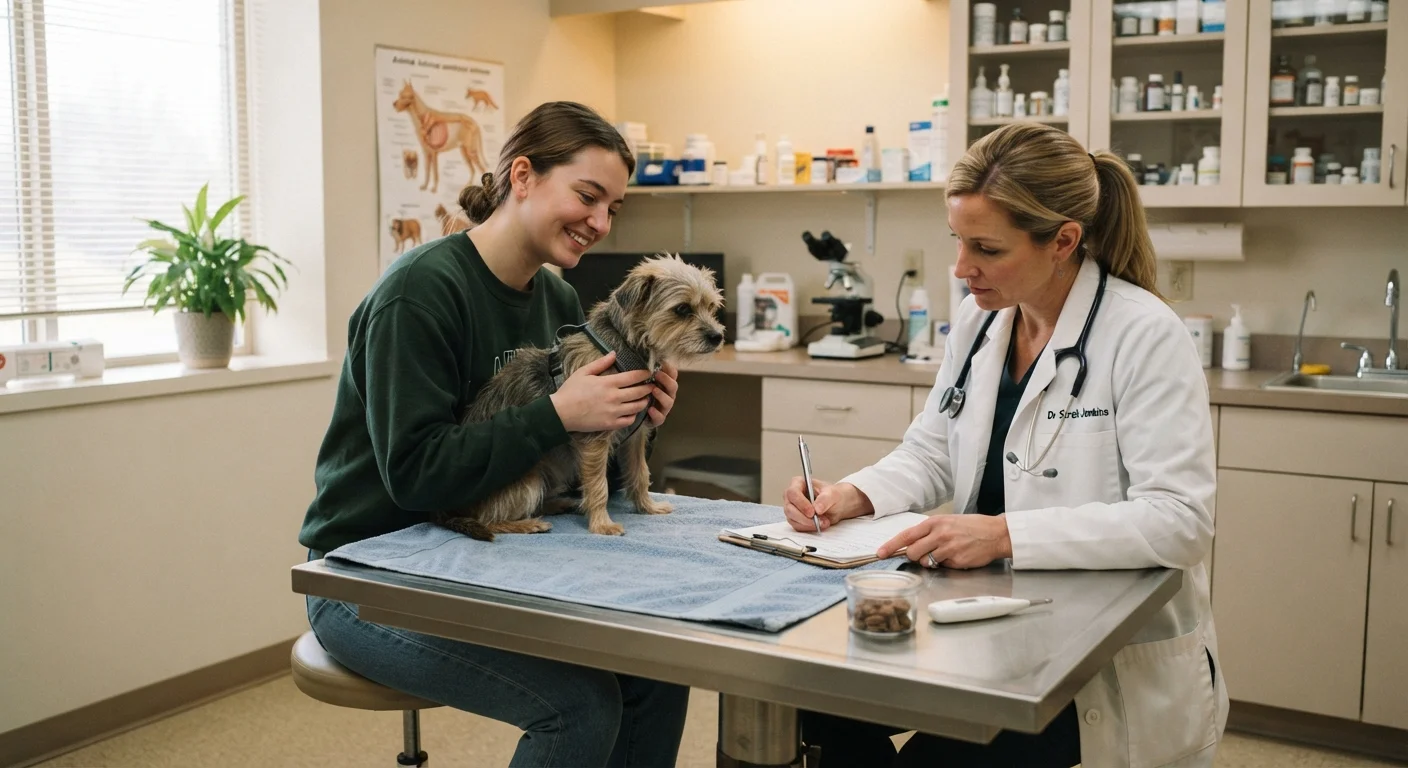
The vet will typically conduct a head-to-tail physical exam, checking eyes, ears, teeth, skin and coat, lymph nodes, heart and lung sounds, abdomen, joints, and genitalia. They'll weigh your dog and note the body condition score — a standardized way of assessing whether your dog is underweight, at a healthy weight, or overweight.
Depending on your dog's age and history, the appointment may also include:
- Fecal testing for intestinal parasites (roundworms, hookworms, giardia, etc.)
- Heartworm testing (typically for dogs over six months or with unknown history)
- Vaccine administration or scheduling
- Discussion of flea, tick, and heartworm prevention options
- Microchip verification or implantation
- Basic nutrition and feeding guidance
Don't Leave Without a Clear Plan
It's easy to feel rushed at the end of an exam. Before you leave, confirm the date of the next visit, ask whether any lab results are pending and how you'll receive them, and clarify what symptoms or changes should prompt an earlier call. Leaving with unanswered questions is a common first-visit pitfall — don't hesitate to ask the vet or front desk staff to slow down.
First-time owners sometimes leave without fully understanding next steps. Before you walk out, confirm: when the next visit should be, whether any test results are pending, and what signs would warrant an earlier call. One of the most common early mistakes new dog owners make is skipping or delaying follow-up care after that first appointment.
This article is for general informational purposes only and does not constitute veterinary advice. Always consult a licensed veterinarian for guidance specific to your dog's health and care needs.