
Why the First Month Sets the Foundation
The habits, boundaries, and routines you establish in the first 30 days with your dog shape how they behave for years. This isn't meant to be intimidating — it's encouraging. Small, consistent actions early on do the heavy lifting for you later. But several common missteps can quietly undermine that foundation before new owners realize it's happening.
If you're still in the preparation stage, our complete guide to bringing a dog home for the first time covers the groundwork before and after pickup day. This article focuses on what tends to go sideways once your dog is already home.
~40%
Dogs surrendered due to behavior problems
According to the American Society for the Prevention of Cruelty to Animals (ASPCA), behavioral issues are among the leading reasons dogs are relinquished to shelters — many of which stem from gaps in early training.
4–6 months
Typical potty training timeline for puppies
The American Kennel Club notes that most puppies are not reliably house-trained until 4 to 6 months of age, even with consistent effort — setting realistic expectations helps owners stay patient.
The Most Common First-Month Mistakes — and How to Avoid Them
These mistakes show up repeatedly in first-time dog ownership — not because new owners don't care, but because dog behavior is nuanced and the learning curve is real. Understanding why these errors happen is the first step to preventing them.
Don't Skip That First Vet Visit
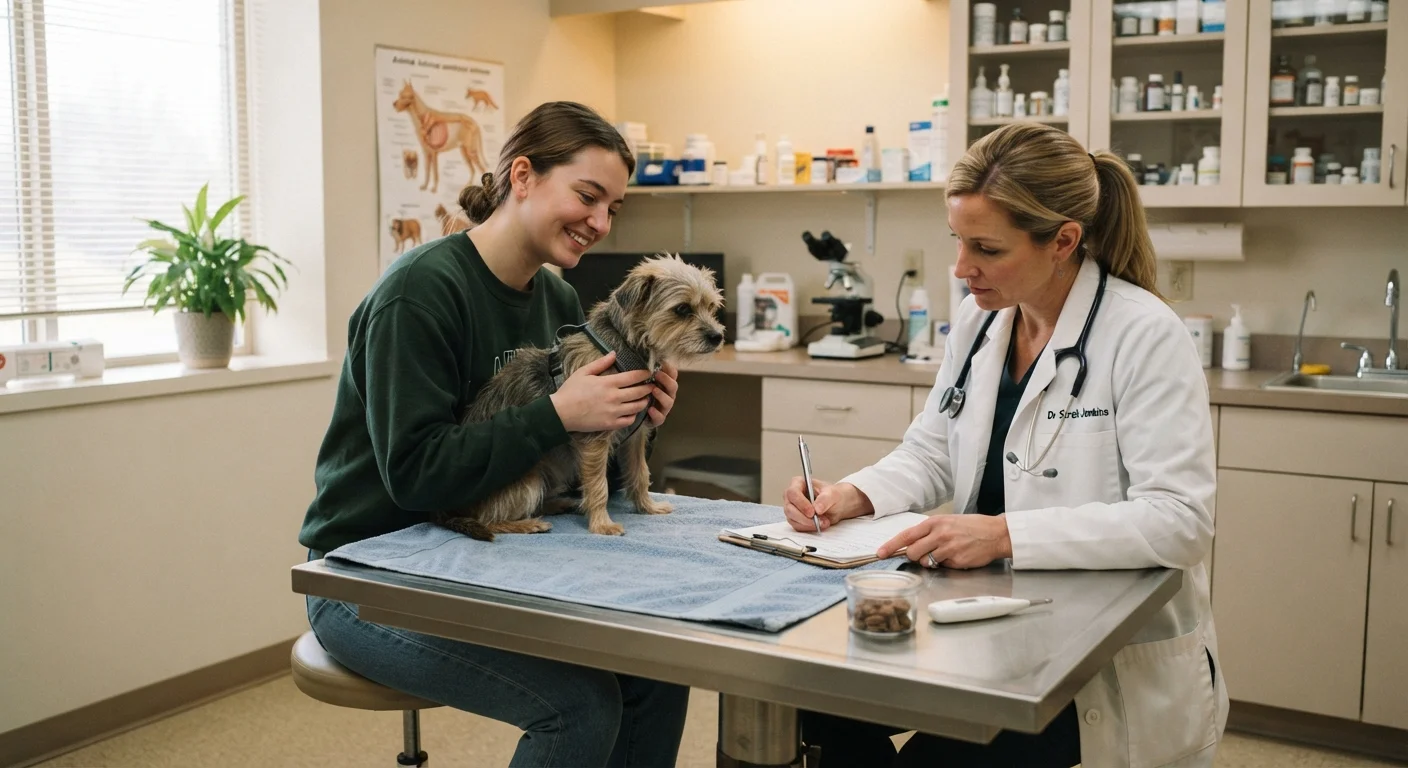
A veterinary exam within the first week of bringing your dog home is strongly recommended by animal health professionals. Your vet will check for parasites, assess vaccination status, and flag any health concerns you may not notice on your own. See our guide to preparing for your first vet appointment so you arrive ready.
Delaying or skipping the first veterinary visit.
Why it happens: New owners often assume a dog looks healthy enough to wait, or feel overwhelmed by expenses in the first week. Some simply don't know how soon a visit is recommended.
Allowing inconsistent rules and routines in the first weeks.
Why it happens: Owners want to be warm and accommodating during the adjustment period, so rules get relaxed — the dog sleeps on the bed 'just this once,' or skips a walk when life gets busy.
Using punishment-based corrections instead of positive reinforcement.
Why it happens: Frustration with accidents or chewing leads owners to react with scolding or physical correction, especially if that's what they grew up seeing. It can feel like it's working in the moment.
Misreading stress signals as stubbornness or bad behavior.
Why it happens: New owners often aren't familiar with canine body language — a dog that yawns, lip-licks, or looks away during training isn't being difficult; it may be overwhelmed or anxious.
Skipping crate training or abandoning it too quickly.
Why it happens: Crates feel unkind to many new owners, and when a dog initially whines in the crate, owners often give in — reinforcing the whining and undermining the process.
Underestimating how much exercise and mental stimulation dogs need.
Why it happens: Owners assume a backyard or short walks are sufficient, particularly for smaller breeds. Mental stimulation is rarely considered at all.
Missing the Socialization Window
Puppies have a critical socialization period roughly between 3 and 14 weeks of age. Inadequate exposure to people, sounds, environments, and other animals during this window can result in fearfulness or reactivity that persists into adulthood. Even older adopted dogs benefit from gradual, positive new experiences — but early exposure matters most for puppies.
If you're also a first-time cat owner, you'll find some parallel patterns in our breakdown of common first-month cat owner mistakes.
This article is for general educational purposes only and is not a substitute for professional veterinary advice. Always consult a licensed veterinarian for concerns about your dog's health or behavior.