Why Vaccines Matter for Dogs
Vaccines train your dog's immune system to recognize and fight specific pathogens before a real infection occurs. For puppies especially, this protection is critical — their maternal antibodies fade around 6–8 weeks of age, leaving a window of vulnerability. A proper vaccination schedule closes that gap and keeps your dog protected as they grow.
If you're just getting started, our guide on bringing a dog home for the first time covers everything you need before and after pickup day, including setting up that first vet visit.
Vaccines are divided into two categories: core vaccines, recommended for all dogs regardless of lifestyle, and non-core vaccines, which a vet may recommend based on your dog's environment, activities, and risk exposure.
Core Vaccines and When They're Given
Core vaccines protect against diseases that are widespread, severe, or transmissible to humans. The American Animal Hospital Association (AAHA) identifies the following as core for all dogs:
- Distemper, Adenovirus (Hepatitis), Parvovirus (DAP or DHPP combo): First dose at 6–8 weeks, then every 3–4 weeks until 16 weeks old. Booster at 1 year, then every 1–3 years depending on your vet's recommendation.
- Rabies: First dose between 12–16 weeks (required by law in most US states), booster at 1 year, then every 1–3 years depending on local regulations and vaccine type used.
The DHPP combo is the most common format — it covers four diseases in one injection, reducing the number of separate shots your puppy needs. Your vet will select the specific schedule and product type based on your dog's age, health, and local disease prevalence.
Non-Core Vaccines: Based on Lifestyle and Risk
Non-core vaccines are not automatically given to every dog — your vet will assess your dog's exposure risk and recommend accordingly. Common non-core vaccines include:
- Bordetella (kennel cough): Recommended for dogs who visit dog parks, grooming salons, boarding facilities, or training classes. Often required by those facilities. Given as early as 8 weeks; may be annual or every 6 months depending on exposure.
- Leptospirosis: Recommended for dogs with outdoor exposure, especially near wildlife, standing water, or rural environments. Usually given starting at 12 weeks, with a booster 2–4 weeks later, then annually.
- Lyme disease: Recommended in tick-heavy regions or for dogs that spend time in wooded or grassy areas. Typically started at 9 weeks, with a booster 2–4 weeks later, then annually.
- Canine influenza: Recommended for social dogs in high-exposure settings. Two initial doses 2–4 weeks apart, then annual boosters.
Pair vaccines with a broader prevention plan. Our article on flea, tick, and heartworm prevention explains how parasite control fits alongside vaccination.
What to Expect at Vaccine Appointments
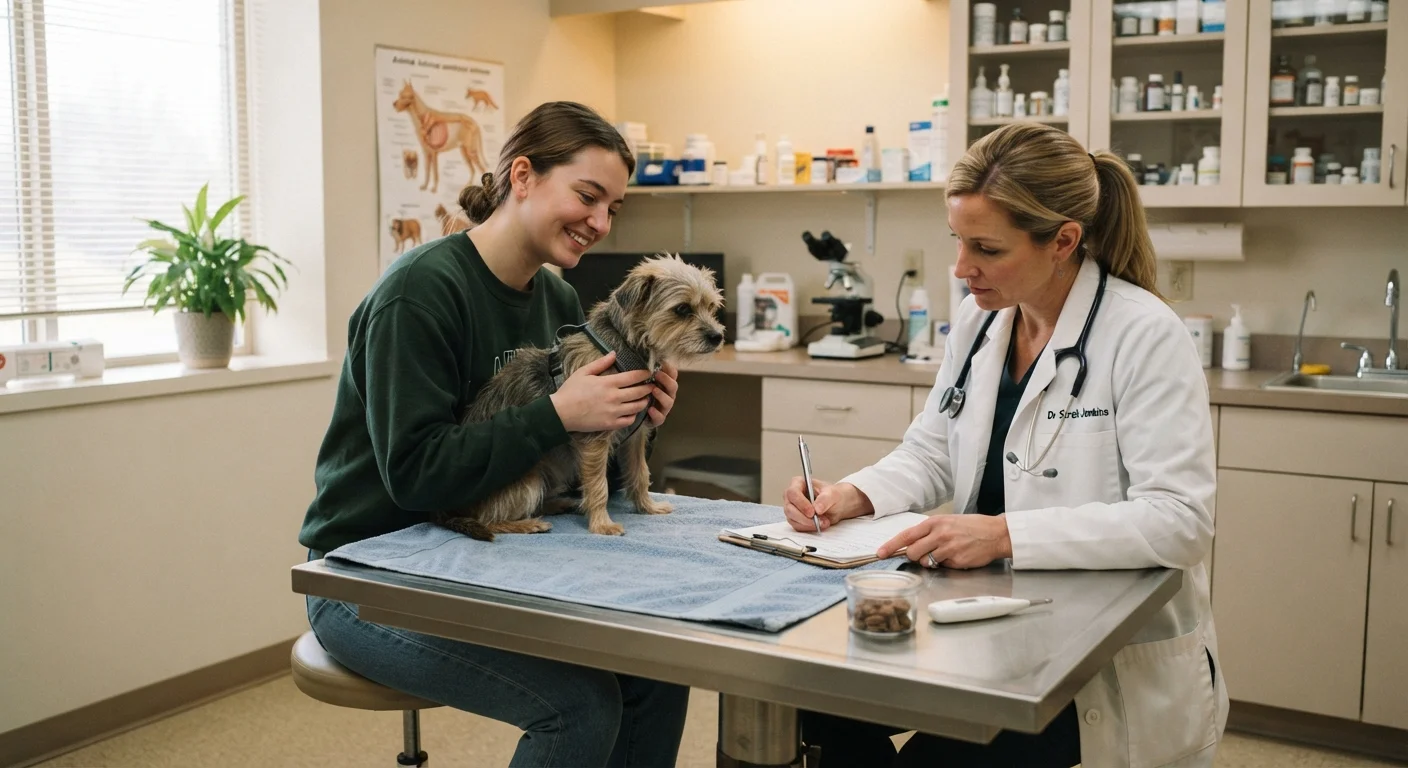
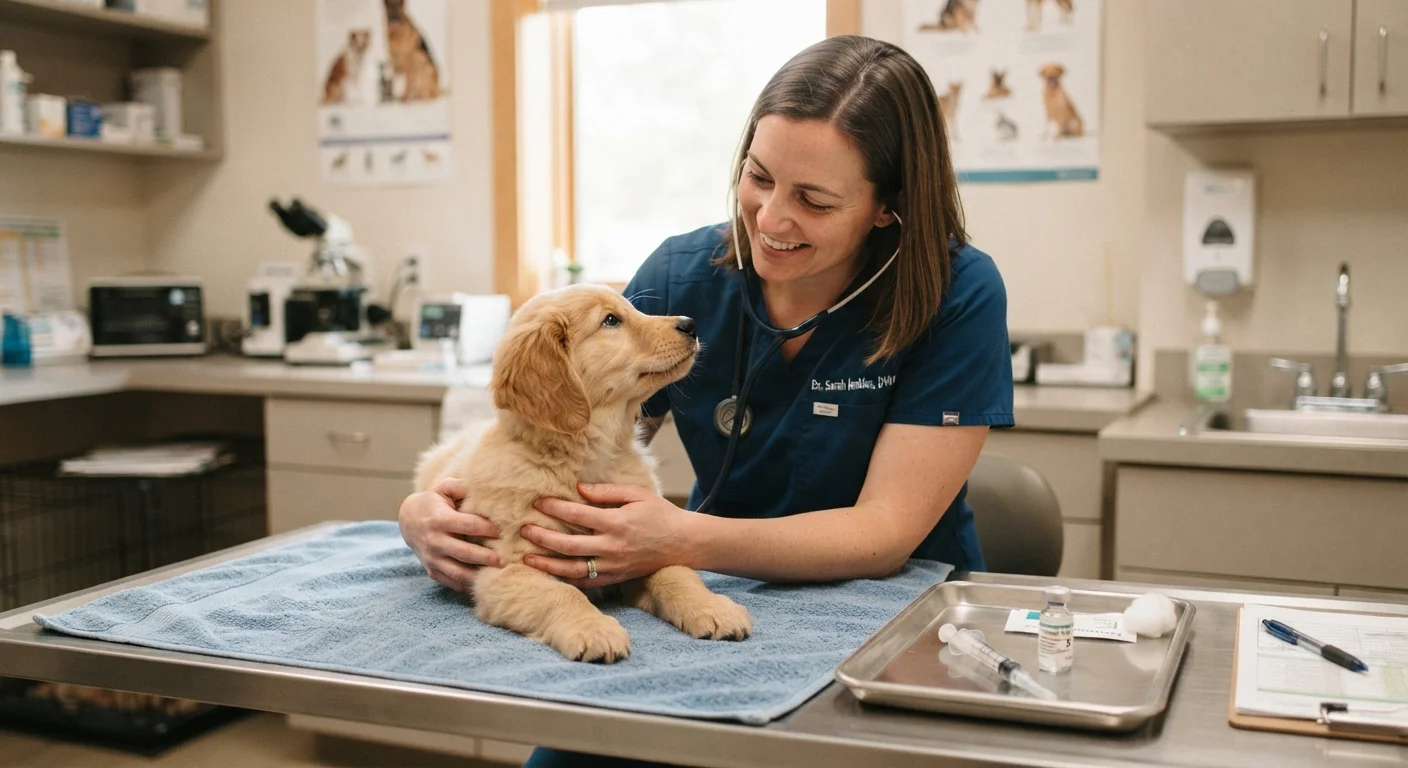
A vaccine visit isn't just a shot — your vet will typically perform a brief physical exam first to confirm your dog is healthy enough to receive vaccines. Mild side effects such as temporary soreness at the injection site, low energy, or slight fever can occur and usually resolve within 24–48 hours.
Serious reactions are rare but possible. Contact your vet immediately if you notice facial swelling, hives, difficulty breathing, or vomiting shortly after a vaccination.
Keep a personal record of every vaccine your dog receives, including the date, vaccine name, lot number, and administering clinic. This record is often required for boarding, grooming, and travel. Read our guide on what to bring to your first vet visit for a full checklist to have ready.
If your dog shows any unusual symptoms after a visit, our overview of signs your dog may be unwell can help you decide when to call the vet.
This article is for general educational purposes only and is not a substitute for professional veterinary advice. Always consult a licensed veterinarian for guidance tailored to your individual dog's health needs.