Why More Miles Don't Always Mean More Skill
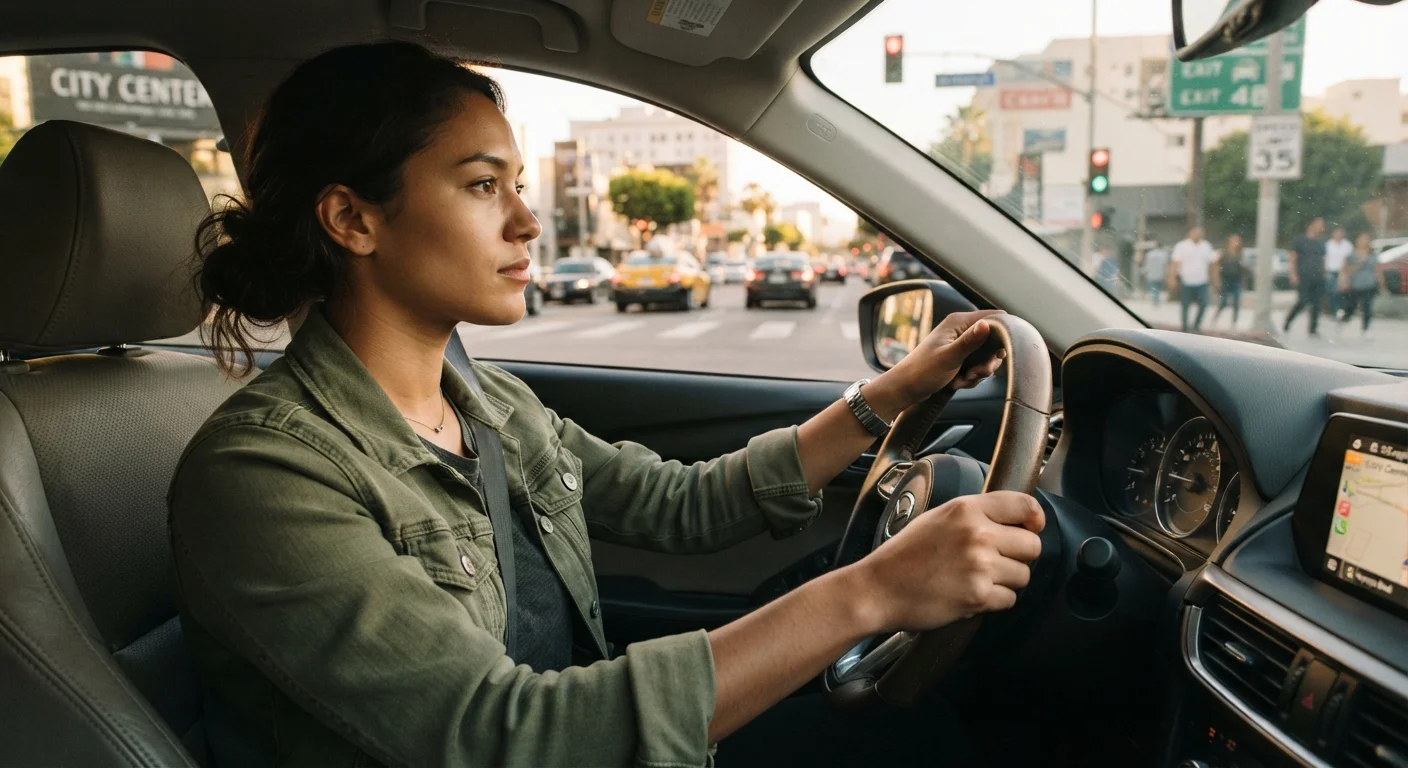
Most drivers assume that logging enough hours behind the wheel will naturally make them better. Research on skill acquisition tells a more complicated story. Repetition without reflection tends to reinforce existing habits - good or bad - rather than build new capability. A driver who commutes the same route every day for five years may become highly automatic on that stretch of road, while remaining underprepared for anything outside their comfort zone.
This is the core difference between passive experience and deliberate practice. Passive experience means going through the motions. Deliberate practice means setting specific goals, paying active attention, and honestly evaluating your performance afterward. The same principle applies to learning almost any complex skill - as our guide to the cognitive science of self-directed learning explores in depth.
Automation Isn't Always Progress
When a driving behavior becomes fully automatic, you stop consciously processing it - which is efficient for routine conditions but risky in novel or high-stakes situations. Keeping some level of conscious attention active, even on familiar routes, preserves your ability to respond to the unexpected. Think of it as staying engaged rather than just along for the ride.
Best Practices for Turning Drive Time into Real Improvement
The following practices reflect what separates drivers who genuinely improve over time from those who plateau early. Apply them consistently, and each drive becomes an opportunity rather than just a commute.
Set a specific skill focus before each drive, not after.
Entering a drive with a defined learning goal - such as smoother braking, earlier mirror checks, or better lane positioning - directs your attention productively. Without a focus, the brain defaults to autopilot and no real learning occurs.
Do a brief post-drive review within five minutes of parking.
Reflection immediately after a drive locks in lessons while they're still vivid. It converts raw experience into usable insight - the difference between driving and actually learning from it. This mirrors the active recall techniques shown to improve retention in educational research.
Intentionally seek out unfamiliar driving conditions.
Skill grows at the edges of your comfort zone, not in the middle of it. Driving exclusively in familiar environments means you're only practicing what you already know. Controlled exposure to new conditions - night driving, rain, unfamiliar road types - builds adaptability.
Eliminate distractions entirely - including music at high volume.
Distraction doesn't just create crash risk; it actively suppresses the attentional processing that turns experience into skill. You cannot improve at something you aren't paying attention to. Reducing cognitive load from non-driving inputs frees bandwidth for genuine learning.
Get structured feedback from an experienced observer or instructor.
Self-assessment has limits. Blind spots - in both the literal and figurative sense - are hard to catch on your own. External feedback, even occasionally, surfaces habits you can't see from the driver's seat.
Quick Wins You Can Start Today
You don't need a formal training program to get started. These immediate actions build momentum and set the foundation for lasting improvement.
Once you've built these habits into your routine, you'll be positioned to tackle more challenging skill areas - from navigating high-speed highway merges versus dense city traffic to applying real defensive driving principles.
Building a Driver Who Reads the Road
Skilled drivers don't just react - they anticipate. Developing this ability requires training your attention to process more information per second: reading brake light patterns several cars ahead, noticing subtle lane drift in surrounding vehicles, and identifying road conditions before they become problems. This is a learnable skill, not an innate talent.
If you're a new driver, pairing this mindset with the practical preparation covered in our first solo drive guide gives you a strong starting framework. Experienced drivers will find that learning to interpret traffic patterns is one of the highest-leverage skills they can develop. Confidence on the road, meanwhile, is its own skill set - one worth building deliberately, as explored in our piece on habits that separate confident drivers from anxious ones.
“Practice doesn't make perfect. Perfect practice makes perfect. The quality of your repetitions matters far more than the quantity.”
— Vince Lombardi, Legendary professional football coach, widely cited on the principles of deliberate practice
This article is for general educational purposes only. Always follow local traffic laws and consult a certified driving instructor for personalized guidance.