
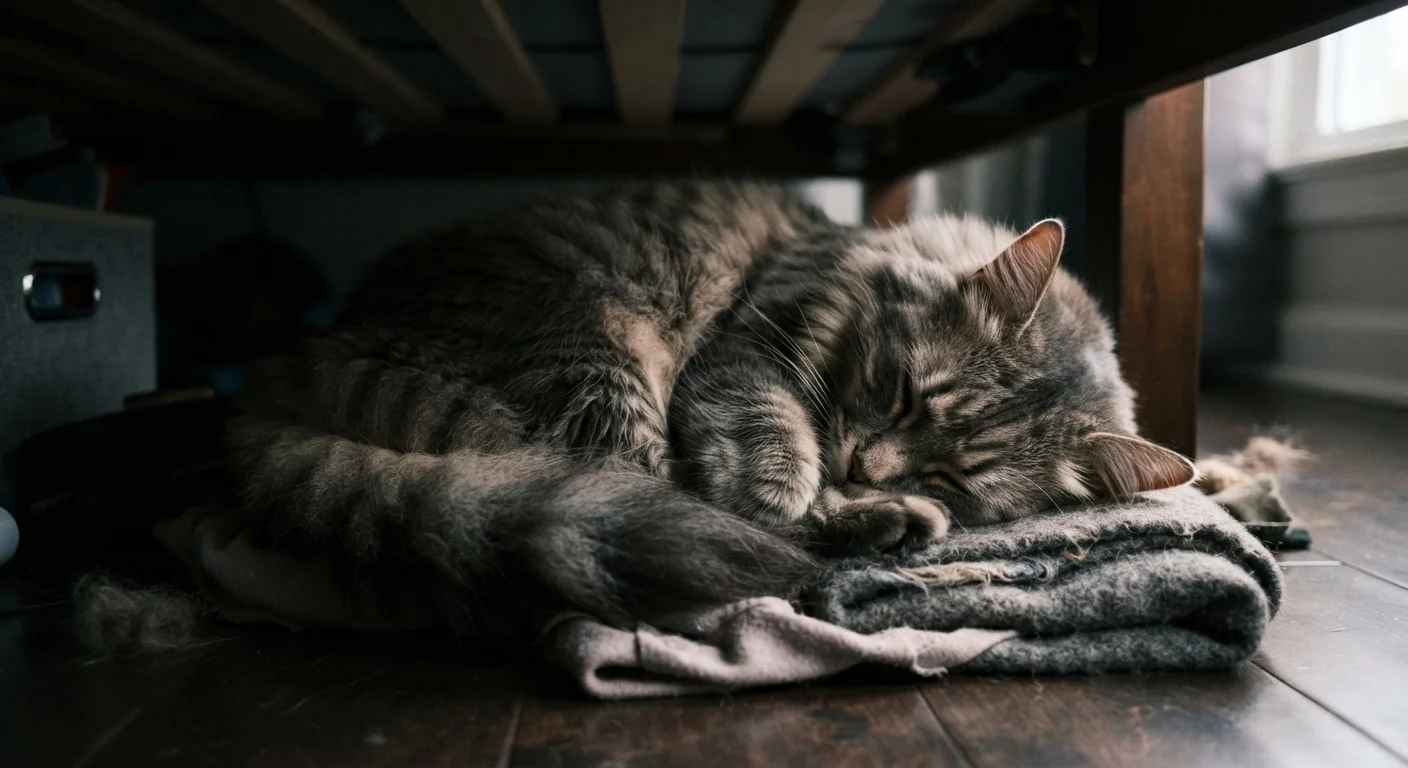
Why Cats Are Wired to Hide
Cats occupy an unusual ecological niche: they are predators that are also small enough to be prey. This dual role shaped their nervous system over thousands of years, and hiding is one of the clearest expressions of it. When a cat senses something threatening — a stranger in the home, a loud argument, or even an unfamiliar smell — withdrawing to a confined space reduces exposure and buys time to assess the situation.
This isn't weakness or antisocial behavior. In the wild, a cat that boldly stood its ground against every perceived threat wouldn't survive long. Retreating is strategic. Domesticated cats retain this wiring completely, which is why a perfectly loving, well-adjusted cat will disappear under the bed the moment your vacuum cleaner comes out.
It's also worth noting that hiding differs from social withdrawal in the way humans experience it. As explored in human stress coping research, avoidance can deepen anxiety in people — but for cats, short-term concealment is genuinely adaptive rather than counterproductive.
Hiding Isn't the Same as Being Unsocialized
Many owners worry that a hiding cat reflects poor bonding or a personality flaw. In most cases, it reflects a well-functioning stress response. A cat that feels secure enough in its environment to hide — rather than freeze or lash out — is actually demonstrating healthy self-regulation. Socialization and hiding behavior can comfortably coexist.
Common Triggers You Might Not Recognize
Some stress triggers are obvious — fireworks, a new baby, or an unfamiliar dog visiting the home. Others are easy to miss. Cats are highly sensitive to changes in scent, sound, and spatial layout. A piece of furniture moved to a new position, a different laundry detergent on your clothes, or even a shift in your work schedule can all register as meaningful disruptions.
- New household members (people or pets) are among the most reliable stress triggers.
- Veterinary visits create anticipatory stress that can linger well after returning home.
- Construction or renovation noise — even from a neighboring unit — may cause hiding for days.
- Changes in your routine, such as longer work hours or a new partner spending time at home, can unsettle a cat that has memorized your daily patterns.
If your cat seems to be hiding more than usual, a useful first step is mentally auditing what has changed in the home recently — even things that seem minor to you. Many pet owners are surprised to find a clear cause once they look. You can also learn more about how environmental enrichment for solo cats helps reduce the baseline anxiety that makes cats more reactive to these triggers.
~80%
Cats showing stress through behavioral changes
Veterinary behaviorists estimate that the large majority of stress-related feline issues manifest as behavioral changes like hiding rather than overt aggression, making them easy for owners to overlook.
Top 3
Rank of hiding among feline stress signals
Hiding, reduced appetite, and changes in elimination are consistently cited among the most common behavioral indicators of stress in cats according to feline welfare organizations.
5+ hiding spots
Recommended retreat locations per multi-cat home
Feline environmental enrichment guidelines generally suggest providing multiple distinct retreat areas so cats can avoid conflict without being cornered.
What Actually Helps — and What Doesn't
The instinct to comfort a hiding cat by retrieving it is understandable, but it's usually the wrong move. A cat that is pulled from its refuge while still stressed loses the one coping mechanism it initiated for itself. This often prolongs the hiding episode and may damage trust over time.
What consistently helps instead:
- Respect the retreat. Let your cat re-emerge at its own pace. Sitting calmly nearby without making direct eye contact communicates that the environment is safe.
- Provide dedicated hiding options. Cats that have reliable, predictable spots to retreat to — covered beds, boxes, enclosed cubbies in cat trees — show lower chronic stress than those that must improvise. This is sometimes called environmental control, and it's a core recommendation in feline welfare guidelines.
- Keep routines stable. Feeding, play, and interaction at consistent times reduce unpredictability, which is a significant driver of feline anxiety.
- Use scent thoughtfully. Synthetic feline facial pheromone diffusers — available from veterinarians and pet stores — are supported by some evidence for calming cats in stressful situations, though results vary by individual animal. Ask your vet whether this approach makes sense for your cat's specific situation.
For context on what not to believe about your cat's behavior, the cat myths vets want debunked resource covers several misconceptions that can lead owners to misread stress signals entirely.
Make Hiding Spots Part of Your Setup
Before a stressful event — like having guests over or rearranging the home — make sure your cat has at least one familiar, accessible hiding spot ready. A simple cardboard box with a cut-out opening placed in a quiet room can be surprisingly effective. Your cat knowing that refuge is always available reduces baseline anxiety even when nothing stressful is happening.
When Hiding Signals Something More Serious
Most hiding episodes resolve within a few hours once the stressor passes. But hiding that persists beyond 24–48 hours, especially when paired with reduced appetite, changes in litter box use, labored breathing, or visible disorientation, warrants a call to your veterinarian. Cats instinctively conceal illness — another survival adaptation — so prolonged unexplained hiding is one of the clearest signals owners have that something physical may be wrong.
Similarly, if your cat never had a hiding pattern before and has recently started hiding frequently without an obvious environmental cause, that behavioral shift is worth discussing with a vet. It may reflect pain, a developing health condition, or an anxiety level that could benefit from professional behavioral support.
It's also useful to compare notes across species: stress signals in small pets like rabbits and guinea pigs follow similar patterns, which can be helpful context if you have a multi-pet household.
This article provides general information about cat behavior and is not a substitute for professional veterinary advice. If you have concerns about your cat's health or behavior, consult a licensed veterinarian.