Why Apartment Setup Matters Before Your Cat Arrives
Cats are intensely curious animals that investigate every corner, climb every surface, and squeeze into spaces you didn't know existed. Small apartments aren't a disadvantage for cats — but they do concentrate potential hazards into a compact area, which means preparation matters more, not less.
Walking through your space with a safety-first mindset before your cat comes home saves you from scrambling to fix things while simultaneously managing a stressed or overexcited animal. If you're still planning your timeline, our guide to the first 72 hours covers what to expect once your cat is actually home.
Use this checklist room by room — it's designed to be completed in a single walkthrough of your apartment.
Lilies Are Extremely Dangerous for Cats
All parts of true lilies — including Easter, Tiger, and Asiatic varieties — are highly toxic to cats and can cause kidney failure even in small amounts. If you have lilies in your home, remove them entirely before your cat arrives. If you suspect your cat has ingested any part of a lily, contact a veterinarian or the ASPCA Animal Poison Control Center immediately. This is a medical emergency.
Room-by-Room Checklist
Work through each room systematically. The items below are organized by space and priority — must items are non-negotiable safety steps, should items significantly reduce risk, and nice-to-have items add an extra layer of care or comfort.
Living Room
Kitchen
Bathroom
Bedroom
General Apartment Safety
If you're a renter concerned about mounting cat furniture or anchoring shelves, there are deposit-safe solutions worth knowing. Our article on renter-friendly upgrades walks through wall-safe options that won't cost you your deposit.
Tools and Supplies You'll Need
Most of the items below are inexpensive and widely available at hardware and home goods stores. Gathering them before your cat arrives means you won't be improvising in the moment.
Cord concealers or cable sleeves
Protect electrical cords from chewing and keep them tidy against walls.
Cabinet safety latches
Prevent cats from opening lower kitchen or bathroom cabinets containing hazardous items.
Cat tree or wall-mounted shelving
Provide safe climbing and perching opportunities that satisfy natural exploratory behavior.
Window screen reinforcement clips
Secure existing window screens so cats cannot push them out while perching.
Lidded trash can
Stop cats from rummaging through garbage and accessing food scraps or packaging.
Adhesive furniture anchoring straps
Stabilize tall furniture like bookshelves without causing permanent wall damage — useful for renters.
Designated scratching post
Give your cat an approved outlet for scratching to protect furniture and support claw health.
Open Windows Are a Serious Fall Risk
A condition known as 'high-rise syndrome' is well-documented in veterinary medicine — cats can and do fall from open windows, even when they appear confident on ledges. Always verify that screens are firmly fitted before opening any window. Do not assume that cats will naturally avoid falling.
Human Medications Can Be Lethal in Small Doses
Even common over-the-counter medications like acetaminophen (Tylenol) are severely toxic to cats at doses far smaller than what affects humans. Never leave pills on nightstands, counters, or bathroom surfaces. Store all medications — including vitamins and supplements — in a closed cabinet at all times.
Making a Small Space Feel Enriching
Safety is the foundation, but enrichment is what makes apartment life genuinely good for a cat. Cats need opportunities to climb, scratch, watch, hide, and rest — and in a smaller space, you have to be intentional about providing all of these.
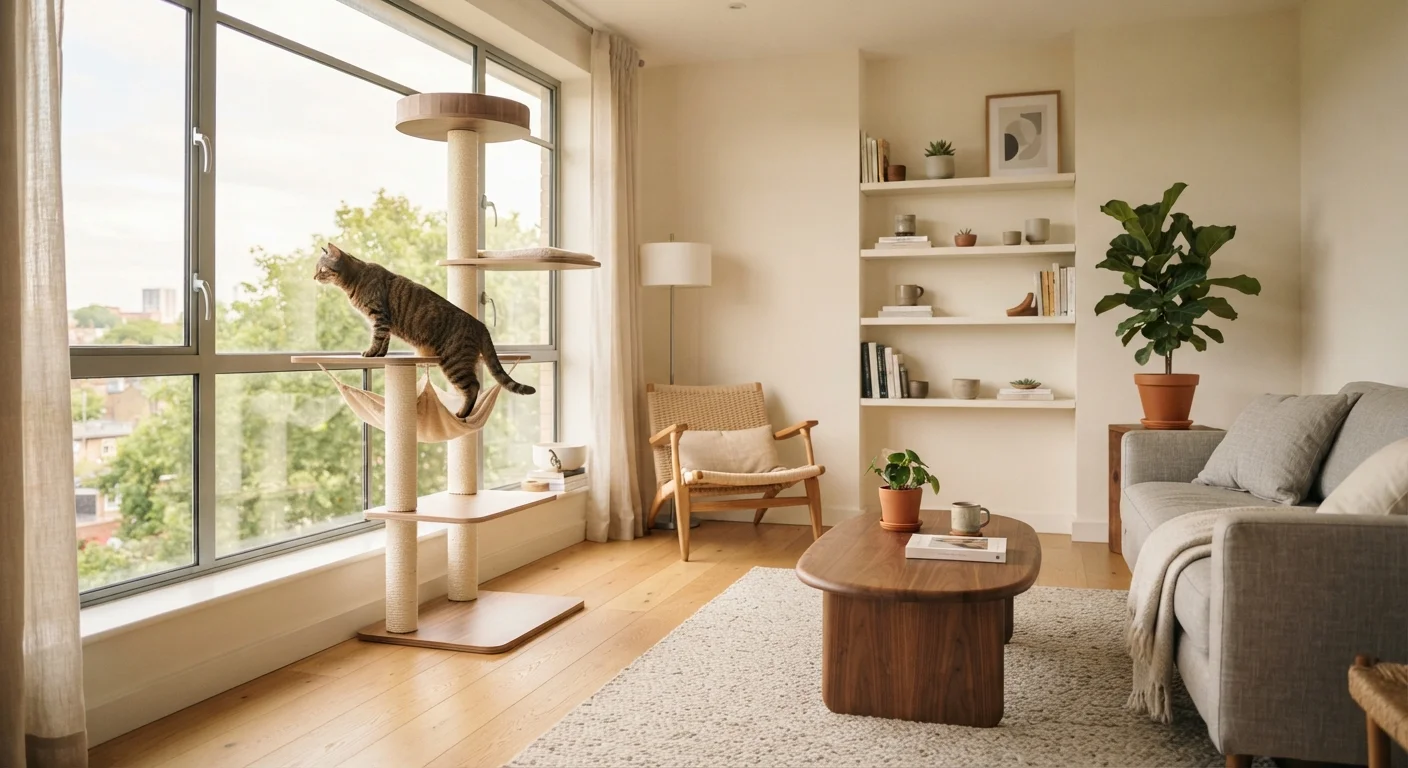
Vertical space is your biggest asset in a small apartment. A cat tree positioned near a window gives your cat a high perch, a view of outdoor movement, and a dedicated zone that belongs to them. Wall-mounted shelves, when properly secured, can create a navigable 'cat highway' around the room without taking up floor space. If you're thinking about open shelving in your kitchen, factor in that open shelves in cat households require more diligent organization to keep fragile or hazardous items out of reach.
Hiding spots matter too — covered beds, open cardboard boxes, and space under a low bed frame all give your cat places to retreat when overstimulated. This is especially important in the first weeks. For households considering adding another cat later, our piece on what changes with a second cat addresses how space and territory affect multi-cat dynamics.
This article is for general informational and educational purposes only. It is not a substitute for professional veterinary advice. Always consult a licensed veterinarian with questions about your cat's health or safety.