Why Water Pressure Is Worth Paying Attention To
Most homeowners only think about water pressure when a shower feels weak or a faucet sputters. But pressure is actually one of the earliest signals your plumbing system sends when something is off. Understanding what the numbers mean — and what can shift them — puts you in a much stronger position to catch problems before they become expensive repairs.
Think of water pressure as your home's circulatory pulse. A reading within the healthy range suggests the system is balanced. A reading outside it is a prompt to start asking questions. As part of a broader awareness of your home's major systems, understanding how plumbing fits into the whole picture can help you make sense of what you're seeing.
40–80 PSI
Acceptable residential water pressure range
The Uniform Plumbing Code and most plumbing industry guidance cite this range as standard for residential systems.
~65 PSI
Typical US municipal supply pressure
Municipal systems often deliver pressure toward the higher end of the residential range, making a PRV a common fixture in many homes.
1 in 5
Homes estimated to have high water pressure
Plumbing industry estimates suggest a notable share of US homes experience pressure above recommended levels without the homeowner's awareness.
How to Read Your Home's Pressure — Right Now
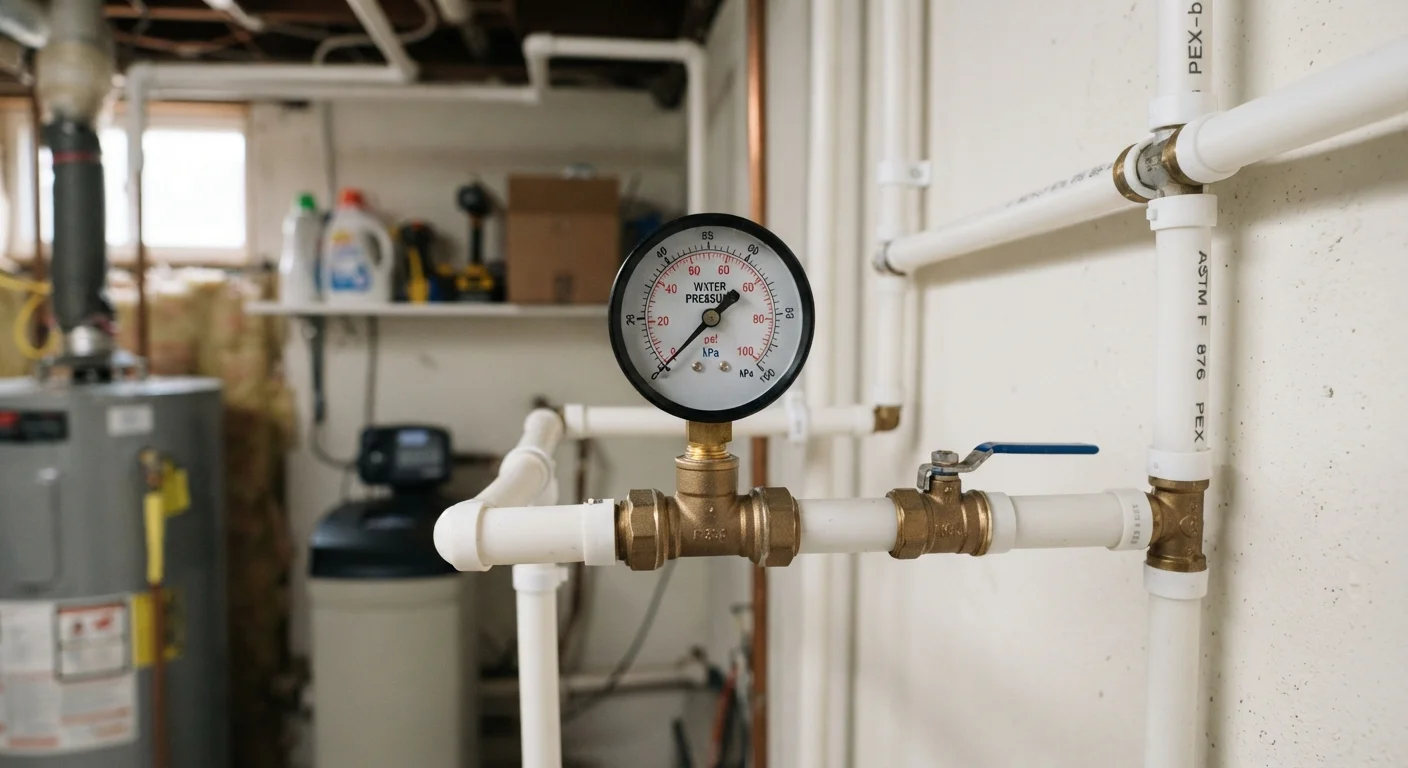
Checking water pressure requires no special skills. A threaded pressure gauge screwed onto an outdoor hose bib or a laundry room faucet gives you a reading in seconds. Turn the water on fully and note the PSI on the dial. The sweet spot for most homes is 45–65 PSI.
- Below 40 PSI: Often described as low pressure — noticeably weak flow at fixtures, slow appliance fill times.
- 40–80 PSI: The acceptable residential range. Toward the lower end is livable; toward the upper end is worth monitoring.
- Above 80 PSI: Considered high pressure. You may not feel it directly, but your pipes, fittings, and appliances do.
A $10 Gauge Can Save You Hundreds
A basic water pressure gauge is one of the most cost-effective diagnostic tools a homeowner can own. Screw it onto any hose bib and you have an instant read on your system's health. Keep one in your toolkit and test pressure once or twice a year — especially after any plumbing work or a noticeable change in flow.
Test pressure at different times of day if you can. Municipal supply pressure fluctuates with neighborhood demand — morning peaks can reveal highs you wouldn't see at midnight.
What Low Pressure Is Actually Telling You
Low pressure isn't one problem — it's a symptom with several possible causes. Diagnosing which one applies to your home narrows down whether you need a quick fix or professional help.
- Mineral buildup (scale)
- In areas with hard water, calcium and magnesium deposits gradually narrow pipe interiors and clog aerators. Pressure drops slowly over months or years. Cleaning or replacing aerators and showerheads is a straightforward first step.
- Partially closed shut-off valve
- After any plumbing work, valves sometimes don't get fully reopened. Check the main shut-off valve (usually near the water meter) and any secondary valves under sinks.
- A hidden leak
- Water escaping through a pipe breach reduces pressure downstream. If you notice damp drywall, unexplained puddles, or a water bill spike alongside pressure loss, treat it as urgent. Leaks that stay hidden can cause structural damage. Some common home maintenance myths lead homeowners to underestimate how quickly small leaks escalate.
- Pressure-reducing valve (PRV) failure
- If your home has a PRV and it begins to fail, it can restrict flow excessively. PRV adjustment or replacement requires a licensed plumber.
What High Pressure Is Actually Telling You
High water pressure is the silent wear-and-tear culprit most homeowners never see coming. Because high pressure rarely feels uncomfortable at the tap, it can go unnoticed for years — right up until a supply hose bursts or a faucet valve seat fails prematurely.
Common signs of high pressure include banging pipes (called water hammer), faucets that drip shortly after installation, and appliances like dishwashers or washing machines that seem to wear out valve components faster than expected.
If your gauge reads above 80 PSI consistently, a pressure-reducing valve is the standard solution. This is not a DIY project for most homeowners — PRV installation involves working on the main supply line and should be handled by a licensed plumber. Understanding when a repair is safe to DIY and when it isn't can save you from turning a manageable issue into a larger one.
When to Stop Diagnosing and Call a Pro
Some pressure-related fixes are genuinely straightforward — cleaning a clogged aerator, checking that a valve is fully open, or replacing a showerhead. Others sit firmly in licensed-plumber territory.
Call a plumber if you observe any of these:
- Pressure drops suddenly and doesn't recover without explanation
- You see or hear signs of a hidden leak alongside pressure loss
- Your pressure gauge consistently reads above 80 PSI despite no obvious cause
- You suspect the PRV needs adjustment or replacement
- Pressure is normal at the meter but weak throughout the house (possible pipe corrosion or undersized supply lines)
Water pressure issues that go unaddressed often compound. What starts as a nuisance can affect everything from your water heater's performance and lifespan to your home's foundation if a leak goes long enough without detection.
Renters Have Rights Here Too
If you're renting and notice persistent low or high pressure, document it and notify your landlord in writing. Landlords are generally responsible for maintaining functional plumbing systems. Keeping a record of when pressure issues started and what fixtures are affected protects you if the problem worsens.