How Each System Works — and Why It Matters for Upkeep
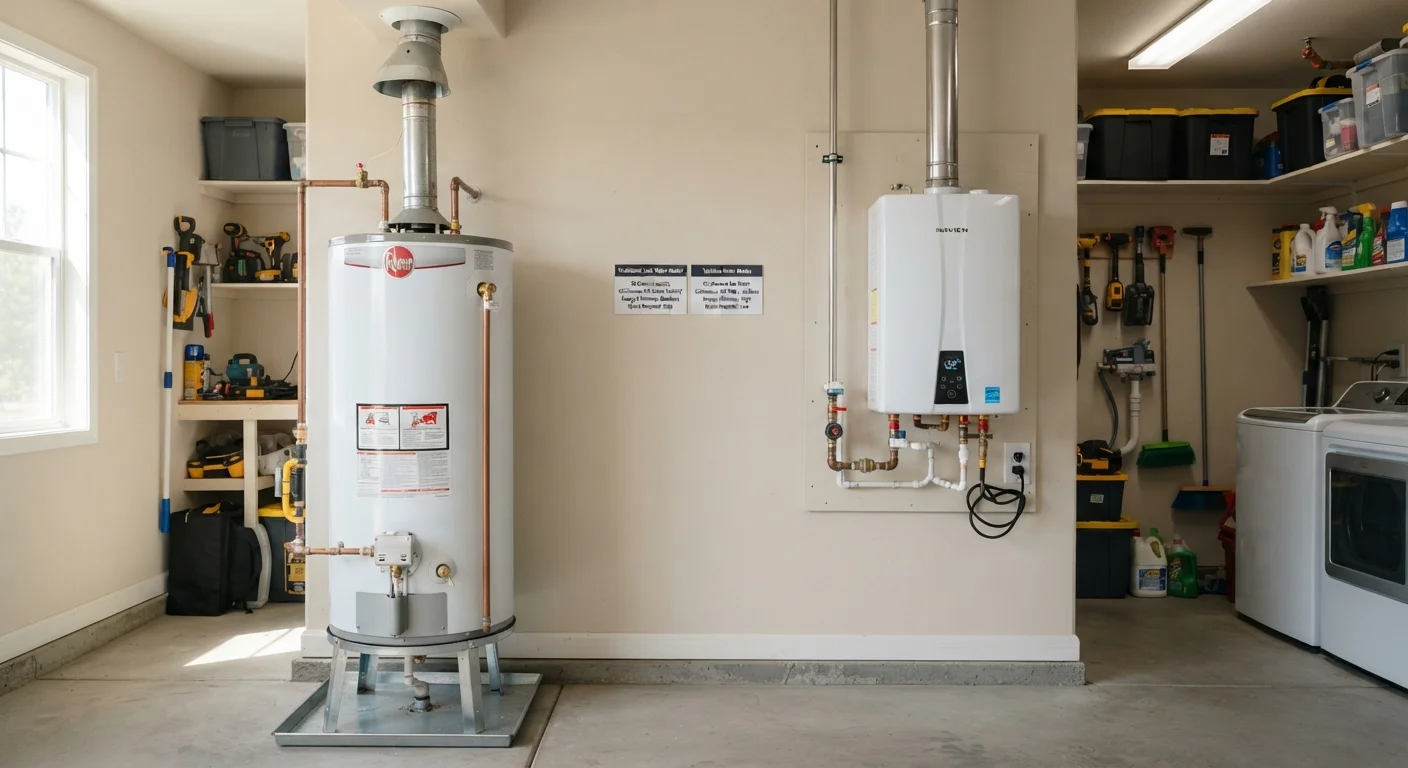
A tank water heater stores a large volume of water — typically 40 to 80 gallons — and continuously heats it to a set temperature. That constant heating cycle means minerals in your water supply gradually settle to the bottom of the tank, forming sediment. Over time, sediment insulates the heating element from the water, forcing the unit to work harder and driving up energy costs.
A tankless water heater (also called an on-demand unit) heats water only when a tap is opened, running cold water through a heat exchanger. Because there's no standing water, sediment buildup works differently — instead of accumulating at the bottom of a tank, mineral scale coats the heat exchanger's internal passages. In hard-water regions, this scaling can restrict flow and reduce heating efficiency faster than many owners expect.
Understanding this distinction shapes every maintenance task you'll perform. For a broader look at what new homeowners should be tracking, see our first-year homeownership maintenance guide.
Tank Water Heater Maintenance: What the Routine Looks Like
The core annual task for tank units is flushing sediment. Connect a garden hose to the drain valve at the base of the tank, turn off the cold-water inlet, and allow the tank to drain until the water runs clear. This typically takes 15–30 minutes. Skipping this step for multiple years can cause the valve to seize, making a future flush difficult.
Every one to three years — depending on your water hardness — you should also inspect and replace the anode rod. This sacrificial metal rod attracts corrosive minerals, protecting the tank lining. A depleted anode rod is one of the most common reasons tanks rust from the inside out. Replacement is a DIY-approachable task but requires the right socket size and some confidence working around a pressurized system.
Additionally, test the temperature and pressure (T&P) relief valve annually. Lift the lever briefly to confirm water flows freely and the valve reseats properly. If it drips afterward or feels stuck, have a licensed plumber replace it — this is a critical safety component. Understanding your home's water pressure can also help you catch problems before they stress your water heater.
Check Your Water Hardness First
Before deciding how often to schedule maintenance, test your water hardness — inexpensive test strips are widely available at hardware stores. Hard water (above 7 grains per gallon) means you should flush a tank heater and descale a tankless unit more frequently than the standard annual recommendation. Your municipal water utility may also publish hardness data online, which is a good free starting point.
Tankless Water Heater Maintenance: Different Tasks, Similar Frequency
Tankless units don't need flushing in the traditional sense, but they do require descaling — typically once a year, or every six months if you have hard water (above 7 grains per gallon). This involves circulating a food-grade descaling solution (commonly white vinegar or a manufacturer-approved flush kit) through the heat exchanger using a small pump and hoses connected to the service ports. Most manufacturers include instructions in the owner's manual, and the process takes roughly 45–60 minutes.
Tankless units also have inlet screen filters on the cold-water supply line that catch debris. These should be rinsed every six months and are easy to access without special tools. Gas-powered tankless heaters have venting systems that should be visually inspected annually for blockages, corrosion, or disconnected sections — particularly important after severe weather.
Because tankless systems are more electronically sophisticated, error codes are common when something is off. Keep your owner's manual accessible; most codes point to specific components rather than a vague system failure.
| Tank Water Heater | Tankless Water Heater | |
|---|---|---|
| Primary maintenance task | Annual sediment flush | Annual descaling of heat exchanger |
| Anode rod inspection | Every 1–3 years | Not applicable |
| Filter cleaning | Not typically required | Inlet screen every 6 months |
| T&P valve testing | Annually | Annually (where applicable) |
| Hard-water sensitivity | Moderate (sediment at bottom) | High (scale in heat exchanger) |
| Typical lifespan (maintained) | 8–12 years | 15–20 years |
| DIY-friendly maintenance | Mostly yes | Mostly yes, with right kit |
Lifespan, Cost of Neglect, and When to Call a Professional
A well-maintained tank heater typically lasts 8 to 12 years. A neglected one — with years of sediment and a failed anode rod — may fail in five or six. Tankless heaters, when properly descaled and cared for, can reliably last 15 to 20 years. The math on deferred maintenance is rarely favorable. Our article on home maintenance myths covers why skipping routine tasks often costs more than it saves.
Both systems have tasks that go beyond DIY territory. Any work involving gas lines, venting, or electrical connections should be handled by a licensed plumber or HVAC technician. Permits and inspections may also be required when replacing a unit — check your local building codes before starting any replacement project.
8–12 yrs
Average lifespan of a maintained tank heater
The U.S. Department of Energy notes that regular flushing and anode rod replacement are key to reaching the upper end of this range.
Up to 20 yrs
Potential lifespan of a maintained tankless unit
Manufacturers generally cite 20 years as an achievable lifespan when descaling and filter maintenance are performed consistently.
If you notice discolored water, rumbling sounds from a tank unit, fluctuating temperatures from a tankless unit, or visible corrosion anywhere, treat these as signals to contact a professional rather than waiting for the next scheduled maintenance window.