Why Flooring Choice Matters More Than Most Upgrades
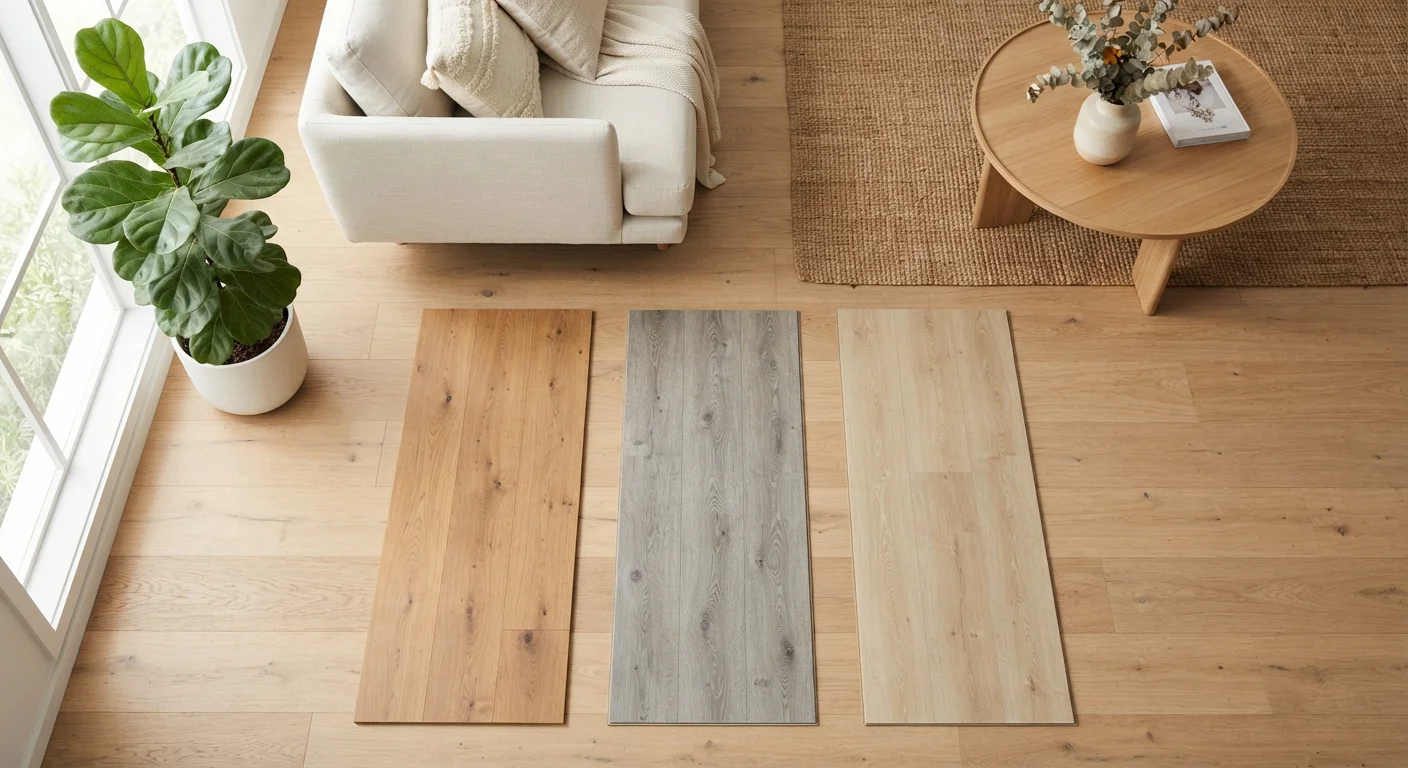
Flooring is one of the few home improvements that affects every single room you live in - underfoot comfort, acoustics, humidity management, and how a space photographs when you eventually sell. Yet the differences between laminate, vinyl plank, and hardwood are often poorly understood, leading buyers to choose based on looks alone and regret it later when a plank buckles or a finish scratches beyond repair.
This guide breaks down how each material actually performs in real living conditions, not just showroom ones. If you're already thinking about tackling this as a DIY project, our guide to first-time home improvement projects covers the prep and safety habits worth knowing before you start.
How the Three Flooring Types Compare
The table below cuts through the marketing language and compares laminate, vinyl plank, and solid or engineered hardwood across the criteria that matter most for everyday living.
| Laminate | Vinyl Plank (LVP) | Hardwood | |
|---|---|---|---|
| Waterproof | No - moisture causes swelling | Yes - fully waterproof core | No - highly moisture sensitive |
| Typical lifespan | 15-25 years | 20-30 years | 50-100 years (solid) |
| Refinishable | No | No | Yes (solid); limited (engineered) |
| Installed cost range | $3-$7 per sq ft | $4-$8 per sq ft | $8-$20+ per sq ft |
| DIY friendliness | Moderate - click-lock | Easy - flexible, forgiving | Difficult - specialized tools |
| Feel underfoot | Slightly hollow sound | Softer, quieter | Solid, premium feel |
| Best room fit | Living rooms, bedrooms | Kitchens, baths, basements | Living rooms, bedrooms |
| Resale value impact | Low to moderate | Moderate | High |
A few clarifications on the table: "Waterproof" means the core material itself won't swell or delaminate from sustained water exposure - vinyl plank qualifies, while laminate and hardwood do not. Cost ranges represent installed averages and vary significantly by region, material grade, and labor rates.
Durability and Longevity: What to Realistically Expect
Solid hardwood, when properly maintained and periodically refinished, can last 50 to 100 years - it's genuinely a generational material. Engineered hardwood (a plywood core with a real wood veneer) offers similar aesthetics with better dimensional stability but can typically only be refinished one to three times depending on veneer thickness.
Laminate uses a photographic layer beneath a clear wear layer, meaning scratches and deep gouges can't be sanded out. Quality laminate has an AC rating from AC1 to AC5; AC3 or higher is recommended for residential high-traffic areas. Vinyl plank (also called LVP) is highly resistant to dents and scratches and won't swell from spills - its wear layer thickness, measured in mils, determines how long it holds up under foot traffic.
Check the Wear Layer Before You Buy
For vinyl plank, aim for a wear layer of at least 12 mil for residential spaces with pets or children - thinner options wear through faster in high-traffic zones. For laminate, look for AC3 or AC4 ratings on the packaging, which indicates suitability for moderate to heavy household use. Don't rely on price alone as a proxy for durability.
Moisture, Subfloors, and Where Each Floor Belongs
Moisture is the single biggest variable in floor selection. Solid hardwood should never be installed below grade (basements) and needs acclimation time in your home before installation. Laminate, despite its wood-like look, is equally vulnerable - prolonged water contact causes the fiberboard core to swell and warp irreparably.
Vinyl plank's waterproof core makes it the clear choice for bathrooms, kitchens, laundry rooms, and any below-grade space. Its flexibility also makes it more forgiving over slightly uneven subfloors, though significant dips or humps still need to be leveled first regardless of which flooring you choose.
For homeowners thinking about moisture-prone rooms as part of a broader refresh, our bathroom update guide covers what changes make the biggest visual impact.
Installation Difficulty and Ongoing Maintenance
All three flooring types are available in floating-floor formats (click-lock planks that don't require adhesive or nails), which makes them accessible to confident DIYers. However, hardwood installations - especially nail-down or glue-down solid wood - require more specialized tools and skill. Mistakes in hardwood installation are also more expensive to correct.
Maintenance differs just as much as installation. Hardwood needs occasional refinishing and reacts to humidity swings, so a humidifier in winter and an air conditioner in summer help preserve it. Laminate and vinyl plank need little beyond regular sweeping and a damp mop - no waxing, no refinishing. Since flooring is just one element of home upkeep, folding floor care into your seasonal routines makes sense; our seasonal home maintenance walkthrough is a good place to build that habit.