Why Targeted Changes Outperform Full Remodels
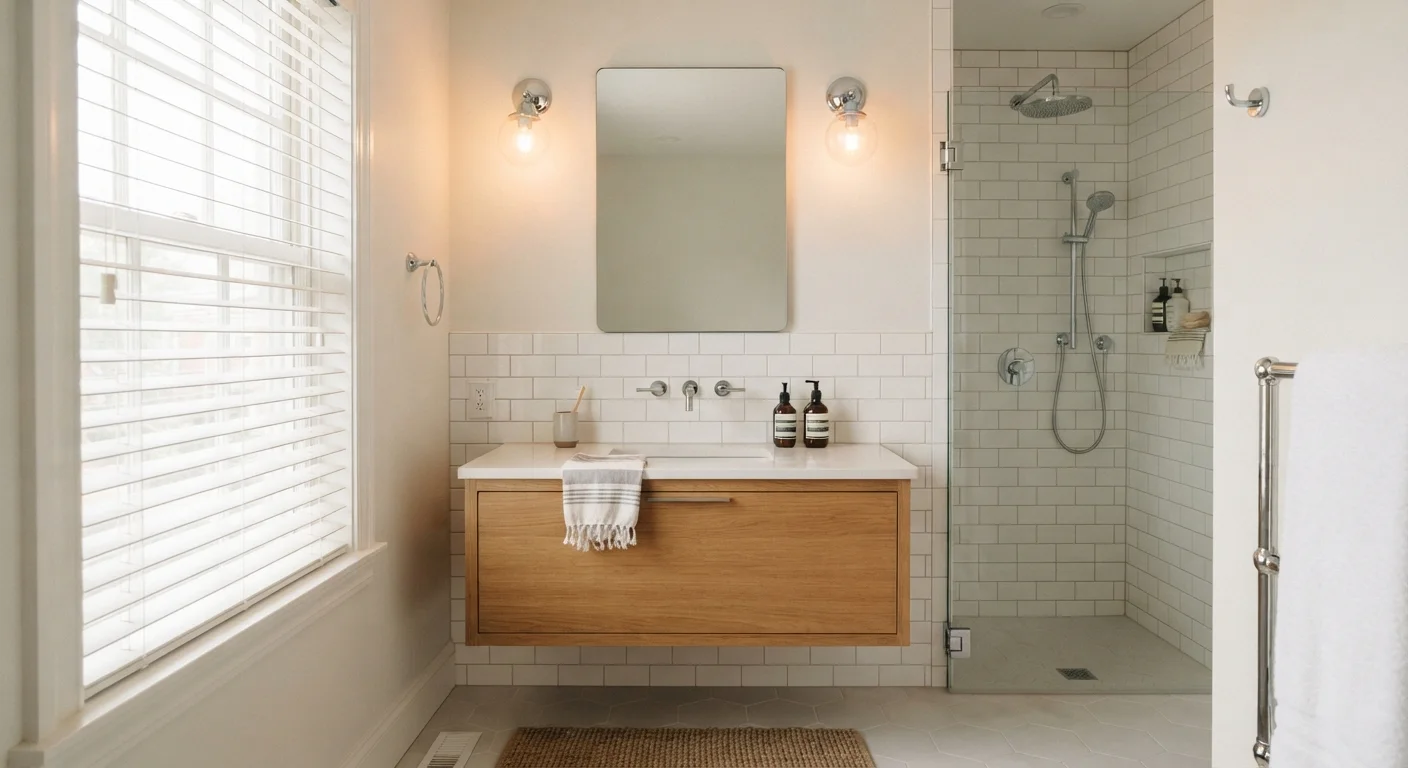
A full bathroom remodel is a major investment - in money, time, and disruption. But most bathrooms that feel tired aren't structurally broken. They're dated in the details: a foggy mirror, dim bulb, dingy grout line, or mismatched faucet handle. Addressing those specifics delivers a far better return on effort than gutting the room.
The upgrades below are organized by impact. Some require a little elbow grease, some just a screwdriver, and a few cost almost nothing. Renters should always confirm changes with their landlord before making any alterations - and for helpful deposit-safe ideas, see our guide to renter-friendly upgrades that leave no trace.
Replace or refinish the vanity hardware
Cabinet pulls, drawer knobs, and towel bar hardware are the jewelry of a bathroom. When they're brass-toned and tarnished in a room that has moved on aesthetically, they anchor the space in the past. Swapping them for a consistent finish - matte black, brushed nickel, or polished chrome - is a low-cost change that reads as a full design decision.
Most pulls and knobs are held by a single bolt and take under ten minutes each to replace. Towel bars require wall anchors if you're not hitting a stud, so use the right anchor for your wall type to ensure they hold safely.
Consistent hardware finish creates the impression of a deliberately designed room, not a replaced part.
Upgrade the lighting fixture and bulb temperature
Bathroom lighting is frequently an afterthought, and it shows. A single overhead fixture with a cool-white bulb flattens shadows, washes out color, and makes the room feel clinical. Replacing a dated bar light with a better-proportioned fixture - and switching to a warm-white bulb in the 2700K-3000K range - changes how the entire room reads.
If you can't replace the fixture (renters, take note), swapping the bulbs alone makes a meaningful difference. Look for bulbs with a high Color Rendering Index (CRI of 90+) so colors in the room appear true and flattering.
Important: Any work involving the electrical box itself - rewiring, adding circuits - requires a licensed electrician. Fixture swaps at the existing junction box are generally straightforward, but if you're uncertain, consult a professional.
Bulb color temperature alone can shift a bathroom from harsh and clinical to warm and welcoming.
Clean or re-grout the tile
Grout discolors gradually, so it's easy to stop noticing how dark it's gotten. But visitors do notice - and dirty or crumbling grout is one of the strongest signals that a bathroom is neglected, even when the tile itself is in perfect condition.
Start with a dedicated grout cleaner and a stiff brush before assuming re-grouting is necessary. If cleaning doesn't restore the color, or if the grout is cracking and pulling away from the tile, re-grouting is the next step. Our detailed guide on grout cleaning and re-grouting explains how to tell the difference and which fix applies to your situation.
Restored grout can make ten-year-old tile look freshly installed.
Swap the faucet and showerhead
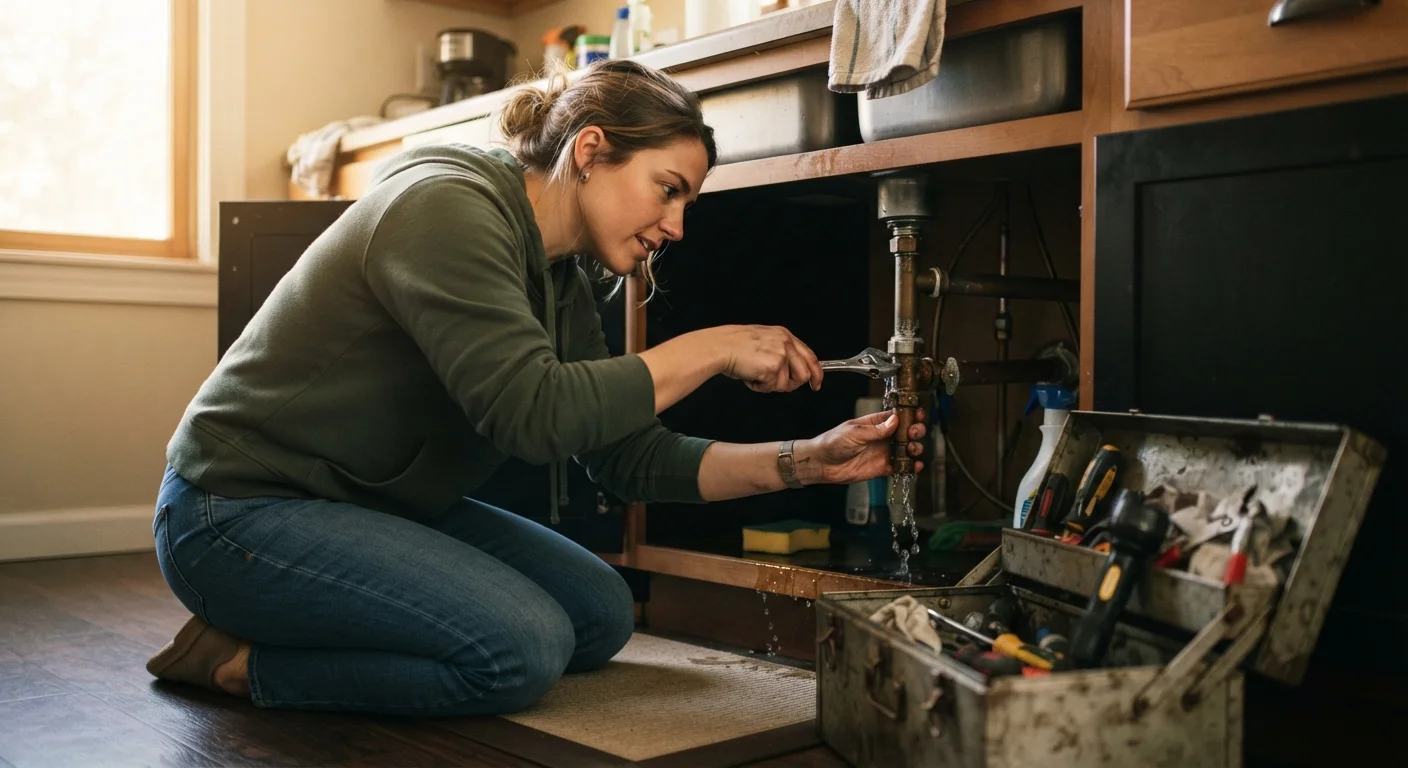
A builder-grade faucet with mineral deposits and a loose handle doesn't just look bad - it undermines confidence in the whole room. Replacing a bathroom sink faucet is a plumbing task most handy homeowners can manage with basic tools and a shutoff valve beneath the sink. When in doubt, a plumber can complete the job quickly and affordably.
Showerhead replacement is even simpler: unscrew the old one, wrap the threads with plumber's tape, and hand-tighten the new one. Choosing a finish that matches your other hardware ties the room together visually and is one of the most cost-efficient upgrades available.
Note: Any plumbing work that involves cutting into supply lines or drain systems should be handled by a licensed plumber.
Matching your faucet finish to your hardware finish is one of the cheapest ways to look intentional.
Add or replace the mirror
The mirror is the focal point of most bathrooms, and yet builder mirrors - frameless rectangles adhered directly to drywall - are among the most visually inert design choices in a home. Adding a frame kit (available at most home improvement stores) or replacing the mirror entirely with a framed version scaled to the vanity width transforms the whole wall.
Renters who can't remove an existing mirror can layer a freestanding or leaning mirror nearby, or use a framed mirror hung with removable adhesive strips rated for the appropriate weight. Just verify the weight capacity before hanging anything heavy.
A properly scaled, framed mirror anchors the vanity wall and doubles the room's perceived polish.
Paint the walls - or add removable wallpaper
Color has an outsized effect in small rooms. A fresh coat of paint in a considered color - soft greens, warm whites, dusty blues - can make a bathroom feel like a spa or a considered retreat rather than a utility room. Bathrooms need moisture-resistant paint, typically labeled for kitchen and bath use, to hold up against humidity over time.
For renters, removable peel-and-stick wallpaper has improved dramatically in quality and variety. Applied carefully on clean, smooth walls, it can add texture and pattern without damaging the surface. Our guide to painting a room the right way covers prep, primer, and technique so the finish actually lasts.
Moisture-resistant paint in a considered color costs relatively little but changes the entire atmosphere of the room.
Refresh textiles and accessories with intention
Towels, bath mats, a soap dispenser, a small plant, and a coordinated waste bin - individually minor, collectively powerful. When these items share a color family or a material language (natural fibers, matte ceramics, warm wood), the bathroom reads as curated rather than assembled by accident.
Replace towels that have thinned, pilled, or faded. Roll or fold them consistently. A single live plant tolerant of humidity - pothos, snake plant, or air plants - adds life without demanding much maintenance. These changes cost little but do significant work in how the room feels day to day.
Coordinated textiles and a single living plant add more warmth than almost any fixture upgrade.
Pulling It All Together
The most effective bathroom refreshes share a common logic: they address what the eye actually notices - light, color, texture, and detail - rather than what's structurally present. You don't need to replace the tub to make the room feel new.
Start with one change at a time
It's tempting to tackle everything at once, but making one change - say, the lighting - lets you see its full effect before adding the next. This approach also prevents budget creep and helps you identify which upgrades actually matter most in your specific space. A bathroom with great light and clean grout often needs less than you think.
If you're new to hands-on home projects, our article on taking on a home improvement project you've never done before covers the research, prep, and safety habits that make the difference between a successful DIY job and an expensive mistake.