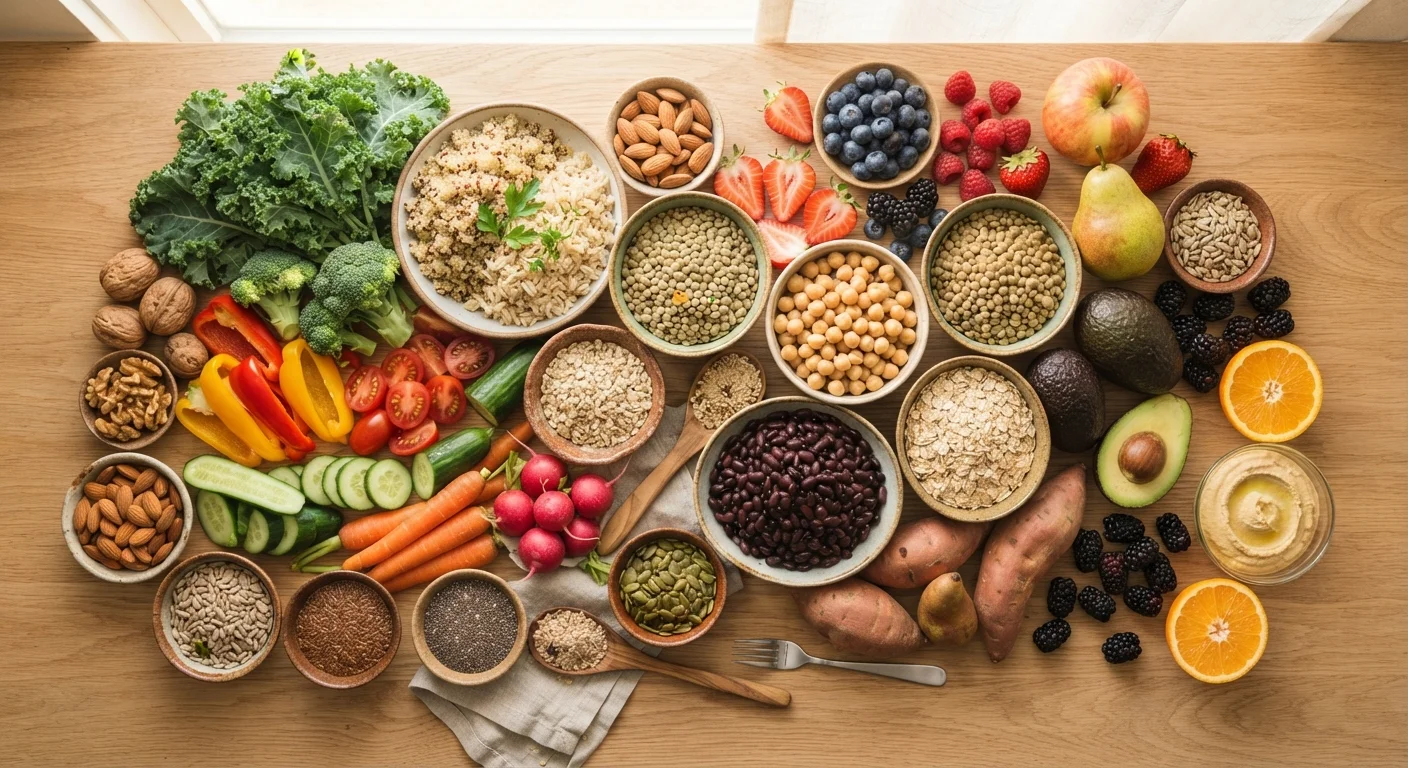

What Are Micronutrients - and Why Do They Matter?
Unlike macronutrients like carbs, proteins, and fats, micronutrients don't provide calories - but they're absolutely essential to keeping every system in your body running. The term covers vitamins and minerals: compounds your body needs in relatively small amounts yet cannot make on its own (or not in sufficient quantities), so you have to get them through food.
Falling short of key micronutrients doesn't always cause obvious symptoms right away, which is part of what makes them easy to overlook. Over time, though, gaps can affect energy, immunity, bone strength, mood, and much more. This reference guide breaks down the essentials in plain language so you can recognize what each one does and where to find it in everyday foods.
| Total essential vitamins | 13 (NIH Office of Dietary Supplements) |
| Fat-soluble vitamins | A, D, E, K |
| Water-soluble vitamins | C and eight B vitamins |
| Vitamin most commonly low in plant-based diets | Vitamin B12 (Academy of Nutrition and Dietetics) |
| Most abundant mineral in the human body | Calcium (NIH Office of Dietary Supplements) |
| Enzymatic reactions involving magnesium | 300+ (NIH Office of Dietary Supplements) |
Essential Vitamins: Functions and Food Sources
Vitamins are divided into two groups based on how your body stores them:
- Fat-soluble vitamins (A, D, E, K) are stored in body fat and the liver, so they accumulate over time.
- Water-soluble vitamins (C and the eight B vitamins) are not stored in large amounts; excess is generally excreted, meaning you need a fairly consistent dietary supply.
Micronutrient
A vitamin or mineral required by the body in small amounts to support normal physiological functions. Unlike macronutrients, micronutrients do not supply energy (calories).
Fat-soluble vitamin
Vitamins (A, D, E, K) that dissolve in fat and are stored in the body's fatty tissues and liver. Because they accumulate, very high intakes over time can potentially reach problematic levels.
Water-soluble vitamin
Vitamins (C and the B vitamins) that dissolve in water and are not stored in large amounts. They need to be replenished regularly through diet, and excess is typically excreted in urine.
Trace mineral
A mineral the body needs in very small (trace) quantities - such as iron, zinc, or iodine. Despite the tiny amounts required, deficiencies can have significant health consequences.
Heme iron
A form of iron found in animal-based foods (meat, poultry, seafood) that the body absorbs more efficiently than the non-heme iron found in plant foods.
Antioxidant
A compound that helps neutralize unstable molecules called free radicals, which can damage cells. Vitamins C and E are well-known dietary antioxidants.
Fat-Soluble Highlights
- Vitamin A
- Supports vision (especially in low light), immune function, and skin cell turnover. Found in liver, dairy, eggs, and as beta-carotene in orange and dark-green vegetables.
- Vitamin D
- Helps the body absorb calcium, supports bone density, and plays a role in immune regulation. Fatty fish, egg yolks, and fortified foods provide dietary D; skin synthesis from sunlight is another source, though many people still fall short - especially in northern latitudes or with limited sun exposure.
- Vitamin E
- An antioxidant that helps protect cells from oxidative stress. Nuts, seeds, and vegetable oils are rich sources.
- Vitamin K
- Essential for blood clotting and bone metabolism. Leafy greens (kale, spinach, collards) are the most concentrated sources.
Water-Soluble Highlights
- Vitamin C
- Supports immune defense, collagen synthesis, and iron absorption from plant foods. Citrus, bell peppers, strawberries, and broccoli are excellent sources.
- B Vitamins (as a group)
- The eight B vitamins - including B1 (thiamine), B2 (riboflavin), B3 (niacin), B6, B9 (folate), and B12 - collectively support energy metabolism, red blood cell formation, and nervous system health. Whole grains, legumes, meat, dairy, and leafy greens supply most of them. Note: B12 is found almost exclusively in animal products, making it a key consideration for people following plant-based diets.
Key Minerals: What They Do and Where to Find Them
Minerals are inorganic elements absorbed from soil and water through plant and animal foods. Some are needed in larger amounts (sometimes called major minerals), while others - trace minerals - are required in tiny quantities but are no less critical.
42%
US adults estimated to be vitamin D insufficient
A analysis published in Nutrition Research estimated that roughly 42% of U.S. adults had insufficient vitamin D levels based on serum data.
~10 mg
Daily iron RDA for adult men (18-50)
According to the NIH Office of Dietary Supplements; the RDA is higher for premenopausal women at 18 mg/day due to menstrual losses.
1 in 3
People globally affected by micronutrient deficiency
The WHO has referred to micronutrient deficiency as 'hidden hunger,' affecting an estimated one-third of the world's population.
Major Minerals
- Calcium
- The most abundant mineral in the body, fundamental to bone and tooth structure, muscle contraction, and nerve signaling. Dairy products, fortified plant milks, tofu made with calcium sulfate, and leafy greens like bok choy are reliable sources.
- Magnesium
- Involved in over 300 enzymatic reactions, including energy production and muscle function. Nuts, seeds, whole grains, and legumes provide good amounts.
- Potassium
- Helps regulate fluid balance, blood pressure, and muscle contractions. Bananas, potatoes, beans, and yogurt are well-known sources.
Important Trace Minerals
- Iron
- Core to hemoglobin, the protein in red blood cells that carries oxygen. Red meat and shellfish supply heme iron, which is absorbed efficiently. Legumes, tofu, and fortified cereals supply non-heme iron, absorbed less readily - pairing them with vitamin C-rich foods boosts absorption.
- Zinc
- Supports immune function, wound healing, and DNA synthesis. Oysters, beef, pumpkin seeds, and legumes are solid sources.
- Iodine
- Required for thyroid hormone production, which governs metabolism and development. Iodized salt and seafood are the primary dietary sources in the US.
For a fuller picture of how these nutrients fit into everyday eating, see the comprehensive nutrition fundamentals guide. You can also learn how to spot micronutrient information on packaging in our nutrition label decoder.
If budget is a concern, eating well on a tight budget offers evidence-based strategies for meeting your nutrient needs affordably.
Should You Take a Multivitamin?
For most healthy adults eating a reasonably varied diet, a daily multivitamin is not automatically necessary - and it won't compensate for an overall poor diet pattern. That said, certain groups (people who are pregnant or planning pregnancy, older adults, those on restrictive diets, or people with specific health conditions) may have higher needs or absorption challenges. A registered dietitian or physician can assess your individual situation and determine whether supplementation makes sense for you.
This article is for general informational and educational purposes only and is not a substitute for professional medical or dietary advice. If you have concerns about your nutrient status or are considering supplementation, please consult a qualified healthcare provider or registered dietitian.