Why Nutrition Fundamentals Matter
Nutrition information is everywhere - and much of it is contradictory, oversimplified, or quietly designed to sell something. For young adults navigating busy lives, sorting credible science from noise can feel exhausting. The good news: the core principles of nutrition are far more stable than trending diets suggest.
Understanding how food works in your body isn't about achieving dietary perfection. It's about making informed choices most of the time - choices that support energy, mood, long-term health, and a relationship with food that's actually sustainable. This guide walks you through the fundamentals without the jargon overload.
This Is General Education, Not Medical Advice
The information in this article is intended for general health literacy and does not constitute personalized medical or dietary advice. Individual nutritional needs vary based on age, health status, activity level, and other factors. Please consult a qualified healthcare professional or registered dietitian for guidance tailored to your situation.
The Major Food Groups Explained
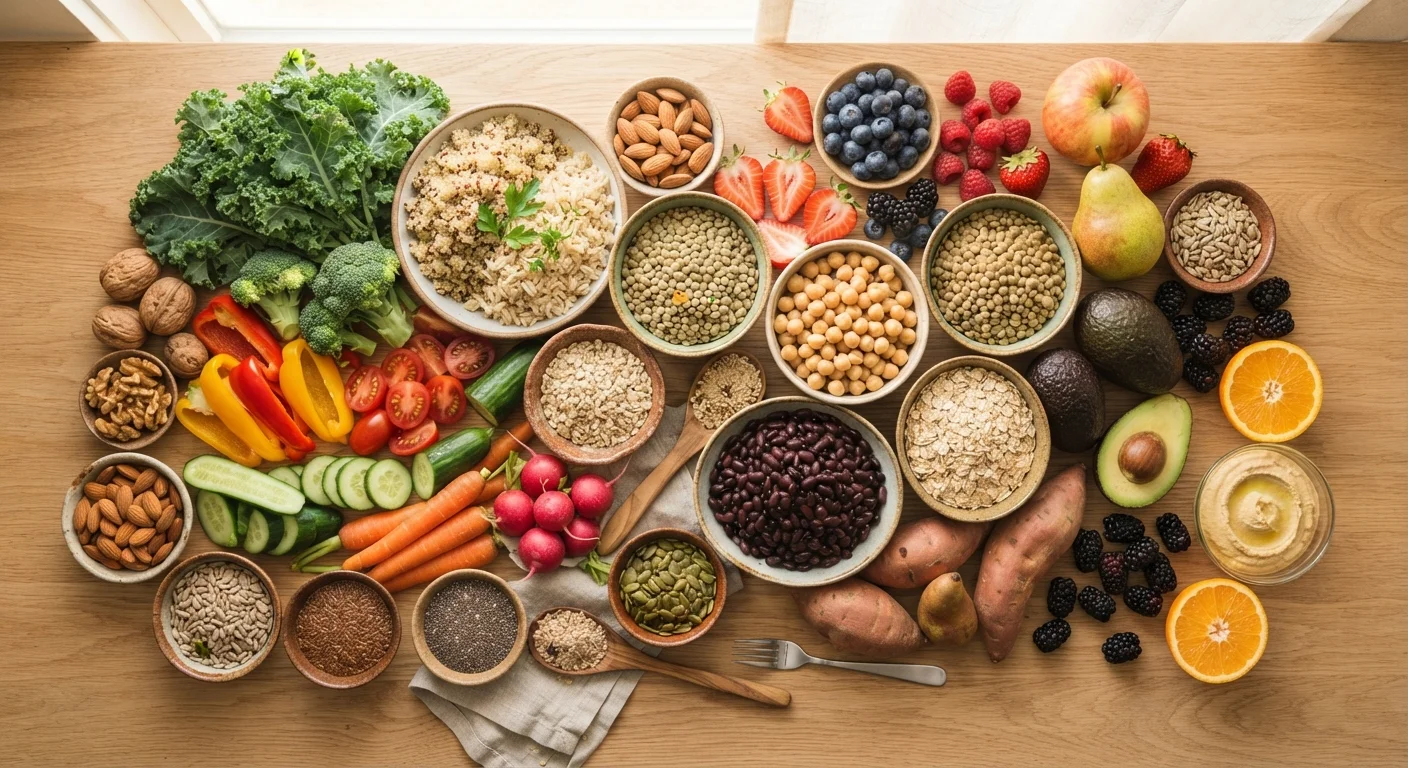
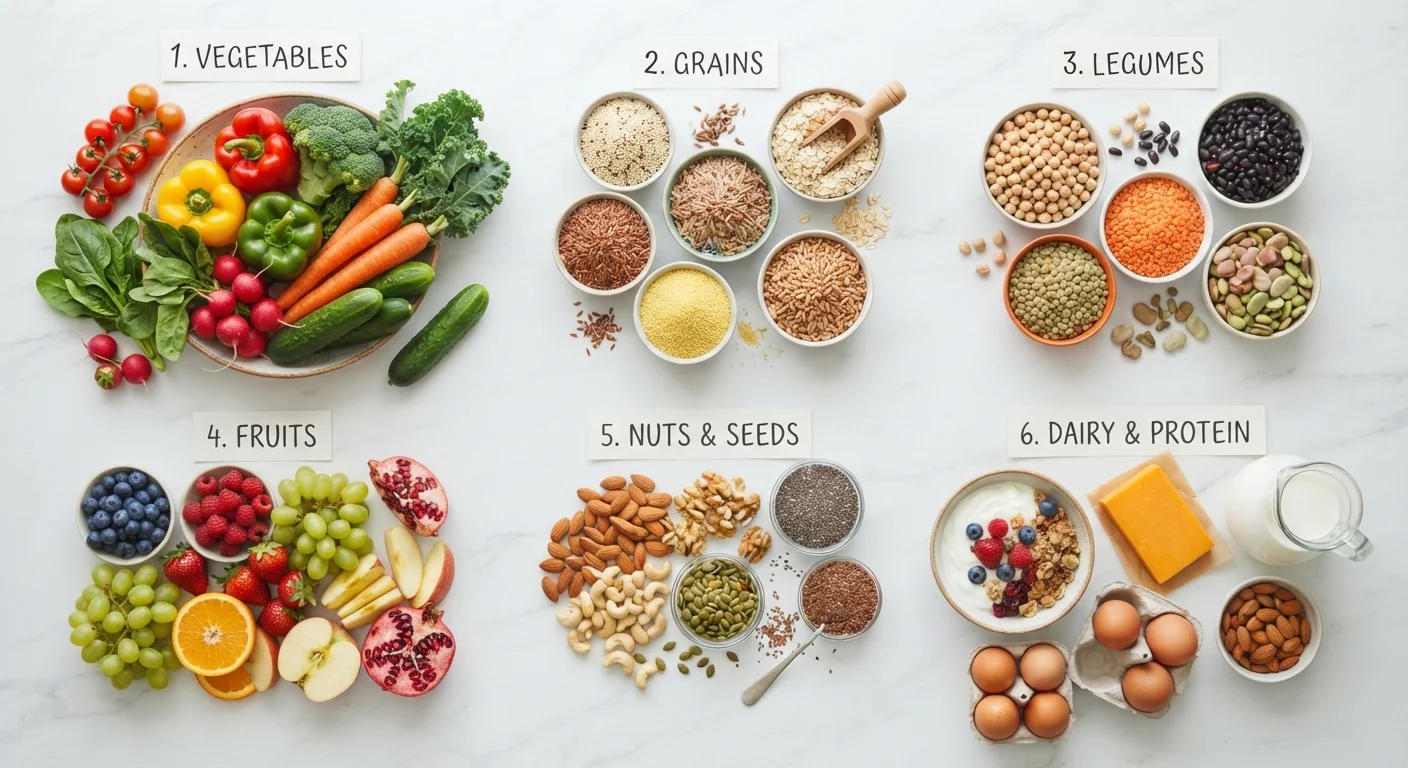
Most nutrition frameworks - including the USDA's MyPlate model - organize food into five major groups: vegetables, fruits, grains, protein foods, and dairy (or calcium-rich alternatives). Each group contributes a distinct set of nutrients.
- Vegetables and fruits supply fiber, vitamins, minerals, and phytonutrients (plant compounds with protective roles in the body).
- Grains - especially whole grains like oats, brown rice, and whole wheat - provide carbohydrates for energy plus B vitamins and fiber.
- Protein foods include meat, poultry, seafood, eggs, legumes, nuts, and seeds. They support tissue repair, immune function, and enzyme production.
- Dairy and fortified alternatives are primary sources of calcium and vitamin D in many diets.
No group is inherently superior or dispensable for most people. The pattern across groups - variety, color, and minimally processed choices - matters more than any single food.
90%
Adults not meeting vegetable intake recommendations
According to CDC data, roughly 90% of Americans fall short of daily vegetable intake guidelines.
4 kcal/g
Energy provided per gram of carbohydrate or protein
Both carbohydrates and protein supply 4 kilocalories per gram, while fat supplies 9 kcal/g, per USDA nutrient data.
13
Essential vitamins the human body requires
The NIH identifies 13 essential vitamins - fat-soluble (A, D, E, K) and water-soluble (C and the B-complex group).
Macronutrients: Carbs, Protein, and Fat
Macronutrients (often called "macros") are the three nutrients your body requires in large amounts because they provide energy, measured in kilocalories (kcal).
- Carbohydrates
- Your body's preferred fuel source, especially for the brain. They break down into glucose. Fiber - a type of carbohydrate the body can't fully digest - supports gut health and helps regulate blood sugar. Found in grains, legumes, fruits, and vegetables.
- Protein
- Built from amino acids, proteins are structural and functional - they make up muscle tissue, enzymes, hormones, and immune cells. Nine amino acids are considered "essential" because the body cannot synthesize them; they must come from food.
- Fat
- Essential for absorbing fat-soluble vitamins (A, D, E, K), making hormones, and protecting organs. Unsaturated fats (found in nuts, avocados, olive oil, and fatty fish) are generally associated with better cardiovascular outcomes than trans fats, which health authorities recommend minimizing.
Build meals around a vegetable base first, then add your protein and carbohydrate sources - this naturally nudges variety without strict calorie tracking.
Research consistently links higher vegetable variety (not just quantity) with better micronutrient profiles and reduced chronic disease risk.
When reading a nutrition label, check the ingredients list before the numbers - if the first few ingredients are refined sugars or partially hydrogenated oils, the macro breakdown is less relevant.
Food quality factors like fiber content and phytonutrients don't always appear prominently on labels but significantly affect how your body processes a food.
Micronutrients: Vitamins and Minerals
Where macronutrients provide energy, micronutrients enable the biochemical processes that keep you functioning. They're needed in smaller amounts but are no less critical.
Vitamins fall into two categories:
- Fat-soluble (A, D, E, K): Stored in body fat and liver; can accumulate to excess if over-supplemented.
- Water-soluble (C and the eight B vitamins): Not stored in significant amounts; excess is typically excreted in urine, so regular dietary intake matters.
Minerals like calcium, iron, magnesium, potassium, and zinc play roles ranging from bone structure to oxygen transport to nerve signaling. Eating a wide variety of whole foods across all food groups is the most reliable way to meet micronutrient needs for most healthy adults.
How Your Body Digests and Uses Food
Digestion is the process of breaking food down into molecules small enough for cells to absorb and use. It begins the moment you start chewing - enzymes in saliva start breaking down carbohydrates before food even reaches your stomach.
- Stomach: Acid and enzymes break down proteins and continue carbohydrate digestion. Food becomes a semi-liquid called chyme.
- Small intestine: The primary site of nutrient absorption. Enzymes from the pancreas and bile from the liver further break down fats, proteins, and carbs. Nutrients cross the intestinal wall into the bloodstream.
- Large intestine: Water is absorbed; gut bacteria ferment remaining fiber, producing short-chain fatty acids that support colon health.
This entire process means that what you eat and how intact a food's cellular structure is (i.e., how processed it is) both influence how efficiently nutrients are absorbed. Pair your nutrition knowledge with movement for full benefit - see our Fitness & Movement hub for practical exercise strategies.
“You don't have to eat perfectly to be healthy. What you do most of the time matters far more than what you do occasionally.”
— Dariush Mozaffarian, Dean of the Friedman School of Nutrition Science and Policy, Tufts University
Food Quality and Reading Labels
Two meals can have identical macronutrient totals yet differ substantially in nutritional value. Food quality refers to factors like fiber content, micronutrient density, degree of processing, and the presence of additives - none of which are fully captured by macro counts alone.
When reading a Nutrition Facts label:
- Check serving size first - all values on the label apply to that amount, not the whole package.
- Look at % Daily Value (%DV): 5% or less is generally considered low; 20% or more is high for any given nutrient.
- Prioritize foods higher in fiber, vitamins, and minerals and lower in added sugars and sodium.
Nutrition Labels Can Be Misleading
Terms like 'natural,' 'low-fat,' or 'high-protein' on packaging are marketing descriptors, not regulated health claims in the same way. Always cross-reference with the full ingredient list and the Nutrition Facts panel. When in doubt, whole foods with few or no labels are generally the most transparent choice.
Building Sustainable Eating Habits
Nutrition science is clear on one thing: consistency over time matters far more than any short-term dietary intervention. Habits built gradually - around foods you actually enjoy and can access - are the ones that stick.
Practical strategies supported by behavioral research include:
- Meal prepping basics: Having cooked grains, washed vegetables, or portioned proteins ready reduces the friction of choosing whole foods when time is tight.
- Eating mindfully: Slowing down and paying attention to hunger and fullness cues - rather than eating on autopilot - is associated with better dietary satisfaction and reduced overeating.
- Flexibility over rigidity: Allowing yourself to enjoy a wide range of foods without guilt tends to produce more stable dietary patterns than strict rules that lead to cycles of restriction.
Start With One Small Swap
Rather than overhauling your entire diet, try replacing one ultra-processed snack per day with a whole-food alternative. Research on habit formation suggests small, consistent changes are far more durable than dramatic dietary overhauls. Over weeks, these micro-changes compound into meaningful shifts.
Avoid Eliminating Entire Food Groups
Cutting out whole categories of food (like all fats or all carbohydrates) without medical supervision can lead to nutrient deficiencies over time. If you have a specific health condition that warrants a restricted diet, work with a registered dietitian or your healthcare provider - not a social media trend.
This article is for general informational and educational purposes only and does not constitute medical or dietary advice. Always consult a qualified healthcare professional or registered dietitian before making significant changes to your diet, especially if you have a health condition.