Why Young Adults Are Coming Up Short
Fiber deficiency isn't dramatic - there's no obvious symptom that sends you to a doctor. That's exactly why it flies under the radar for so many people in their 20s and 30s. Ultra-processed foods, which make up more than half of the average American's caloric intake according to research published in BMJ Open, are almost entirely stripped of fiber during manufacturing. Convenience foods, fast food staples, and refined-grain products like white bread and instant noodles are quick and accessible - but they don't move the fiber needle.
The result? National nutrition data consistently shows that fewer than 10% of Americans meet recommended fiber intakes. For young adults navigating packed schedules, tight budgets, and competing nutrition claims online, it's one of the easiest nutritional gaps to accumulate quietly.
<10%
Americans meeting daily fiber recommendations
According to data from the Dietary Guidelines for Americans Advisory Committee, fiber is classified as a 'nutrient of public health concern.'
15-16g
Average daily fiber intake for US adults
This represents roughly half the recommended intake of 25g for women and 38g for men per day per the Dietary Guidelines for Americans.
19%
Reduced type 2 diabetes risk with high fiber intake
A meta-analysis published in the journal Lancet found that people with the highest dietary fiber consumption had a significantly lower risk of type 2 diabetes compared to those with the lowest intake.
What Fiber Actually Does in Your Body
Think of fiber as a multitasking workhorse for your digestive system and beyond. Here's what the science supports:
- Gut health: Soluble fiber feeds beneficial gut bacteria (a process called fermentation), which produce short-chain fatty acids that nourish the colon lining and support immune function. A diverse, fiber-rich diet is consistently linked to greater gut microbiome diversity.
- Blood sugar regulation: Soluble fiber slows the absorption of glucose, blunting sharp spikes in blood sugar after meals. This is particularly relevant for reducing long-term risk of type 2 diabetes, according to guidance from the American Diabetes Association.
- Cardiovascular support: Soluble fiber can bind to bile acids in the gut, prompting the liver to pull more LDL cholesterol from the bloodstream to make new bile - a mechanism that contributes to lower cholesterol levels.
- Digestive regularity: Insoluble fiber adds bulk to stool and speeds transit time, helping prevent constipation.
How well fiber performs these roles also depends on staying well hydrated. Fluid intake and nutrition are closely connected - water helps fiber move efficiently through the digestive tract.
Practical Ways to Eat More Fiber Without Overhauling Your Diet
You don't need to adopt a strict meal plan to meaningfully increase your fiber intake. Small, consistent swaps tend to stick better than wholesale diet changes.
Swap refined grains for whole grains
Choosing whole-wheat bread over white, or oats over instant refined cereal, can add several grams of fiber to a single meal without changing much else about how you eat.
Add legumes to meals you already make
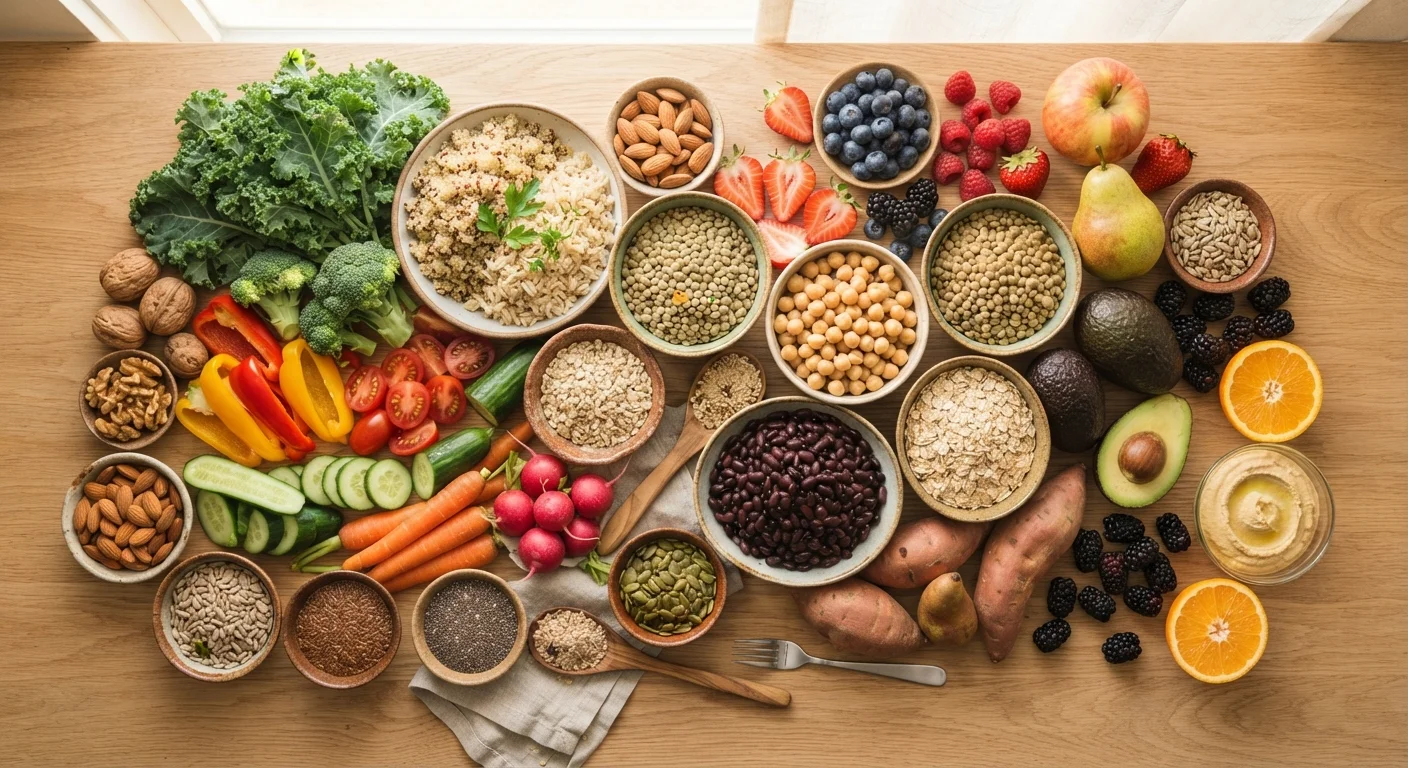
Canned or dried beans, lentils, and chickpeas are among the most fiber-dense foods available and are also relatively inexpensive. Stirring black beans into scrambled eggs or adding lentils to pasta sauce are low-effort upgrades.
Keep the skins on fruits and vegetables
Much of the fiber in produce sits right beneath the skin. Eating an apple rather than drinking apple juice, or leaving the peel on a potato, preserves fiber that processing removes.
Pace yourself
Doubling fiber intake overnight is a reliable way to trigger bloating and discomfort. Increasing gradually over several weeks gives gut bacteria time to adjust.
Start Low, Go Slow With Fiber
If you're currently eating a low-fiber diet, aim to add no more than 3-5 extra grams per week rather than making large changes all at once. This gives your gut microbiome time to adapt and significantly reduces the risk of bloating or gas. Pairing increased fiber with adequate water intake - generally aiming to keep urine a pale yellow - makes the transition more comfortable.
This article is for general informational purposes only and does not constitute medical or nutritional advice. For guidance tailored to your individual health needs, consult a registered dietitian or qualified healthcare professional.