Why Visual Portioning Works Better Than Math for Most People
Calorie counting can be a useful clinical tool, but research suggests it's difficult to sustain long-term and prone to significant error - studies have found people routinely underestimate their intake by 20-40%, even with careful tracking. For most people, a food-group-based, visual approach is more practical, less stressful, and easier to maintain across diverse eating situations.
The foundation of this method comes from established frameworks like the USDA's MyPlate model, which was developed to communicate evidence-based dietary guidelines in an accessible, actionable format. Rather than assigning numbers to food, it asks a simpler question: what's on my plate, and in what proportion?
If you'd like a broader grounding in nutrition fundamentals before diving into portioning, our article understanding nutrition from food groups to how your body uses them is a helpful starting point.
A standard dinner plate (9-10 inches)
Provides a visual boundary for portion distribution without requiring any measuring.
MyPlate visual guide
The USDA's free, evidence-based framework for dividing plate space across food groups.
Your hand
A portable, always-available tool for estimating portion sizes of different food types.
Small prep bowls or containers
Helps with visualizing portions when building meals at home.
Once you have your tools in mind, the steps below walk you through building a balanced plate from the ground up.
What you will need
Step-by-Step: Building Your Balanced Plate
This Is General Information, Not Medical Advice
The guidance in this article is intended for general educational purposes only and is not a substitute for personalized nutrition advice from a registered dietitian or healthcare provider. Individual needs vary based on age, health status, activity level, and medical history. If you have a chronic condition, food allergy, or specific health goal, please consult a qualified professional before making significant dietary changes.
Start with the MyPlate framework as your visual anchor
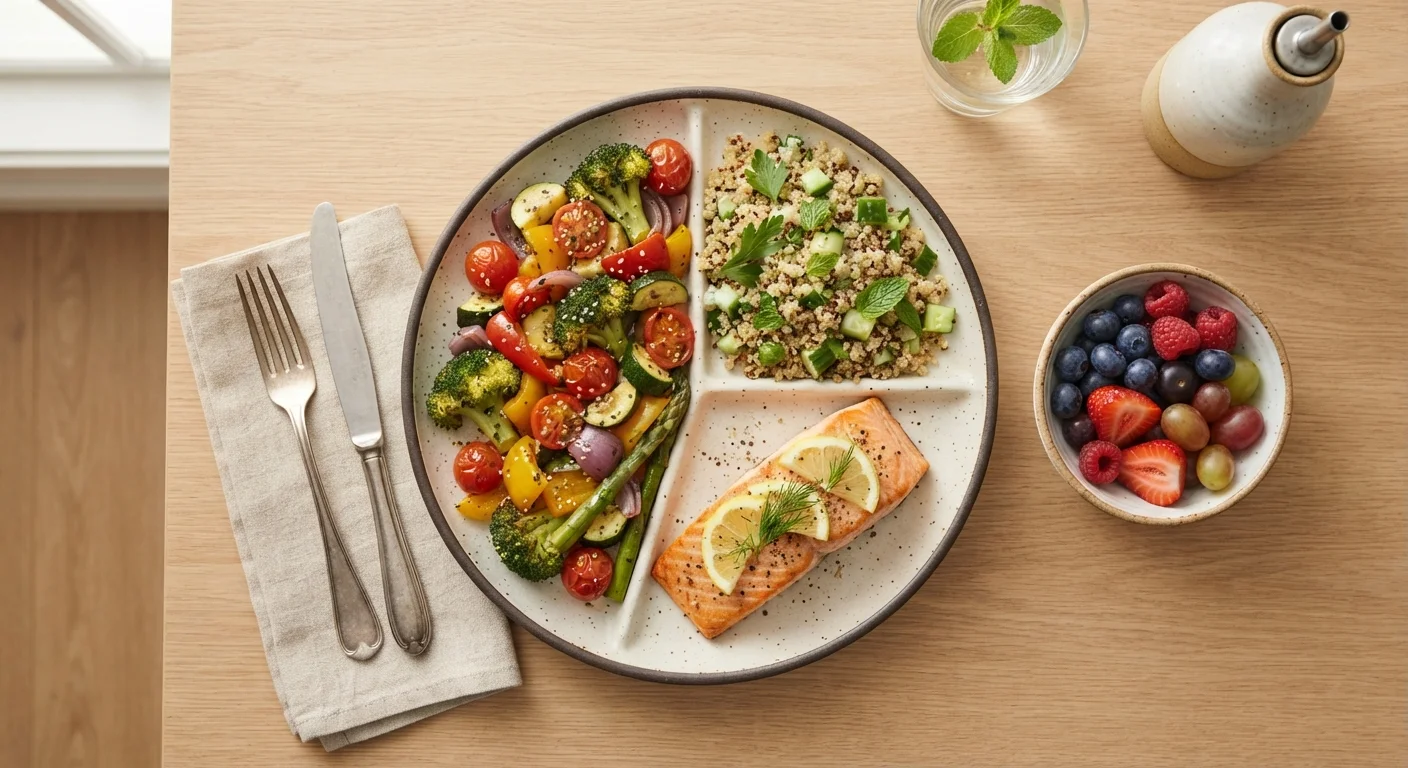
The USDA's MyPlate model divides a standard dinner plate into four sections: roughly half for fruits and vegetables, one quarter for grains (ideally whole grains), and one quarter for protein. A small side portion represents dairy or a calcium-rich alternative like fortified soy milk.
You don't need to hit these proportions exactly at every meal. Think of it as a general target across the day rather than a rigid per-meal formula. If breakfast skews toward grains, aim for more vegetables at lunch to balance things out.
Fill half your plate with non-starchy vegetables and fruit
Vegetables and fruit are rich in fiber, vitamins, minerals, and water - all of which support satiety and overall health. Non-starchy vegetables (leafy greens, broccoli, peppers, zucchini, tomatoes) are especially versatile because they add volume without dramatically shifting your plate's balance.
Fruit counts too, though it's naturally higher in sugar than most vegetables. Whole fruit - as opposed to juice - retains fiber that slows digestion and supports stable energy levels.
Dedicate a quarter of your plate to whole grains or starchy vegetables
Whole grains like brown rice, oats, quinoa, farro, and whole-wheat bread contain more fiber and micronutrients than their refined counterparts. Starchy vegetables - sweet potatoes, corn, peas, and winter squash - can fill this section just as effectively.
If you're newer to whole grains, try blending them with refined versions at first (e.g., half white rice, half brown) and gradually shifting the ratio. This approach eases the taste transition without requiring dramatic overnight changes.
Fill the remaining quarter with a protein source
Protein supports muscle repair, immune function, and feelings of fullness. Good sources include legumes (beans, lentils, chickpeas), eggs, tofu, tempeh, fish, poultry, and lean red meat. The best choice depends on your dietary preferences and needs - there's no single right answer.
For a deeper look at how plant-based and omnivorous protein sources compare nutritionally, see our comparison of plant-based and omnivorous diets.
Add healthy fats in small, mindful amounts
Fats often get left off visual plate guides, but they're essential for absorbing fat-soluble vitamins (A, D, E, and K) and supporting brain health. The key is choosing mostly unsaturated sources - olive oil, avocado, nuts, and seeds - and keeping quantities modest since fats are calorie-dense.
A thumb-sized amount of oil for cooking, a small handful of nuts as a topping, or a few slices of avocado are practical, sustainable ways to include fats without overshooting.
Tune into hunger and fullness cues as your ongoing guide
Visual plate-building sets a strong structural foundation, but your internal signals are the real long-term guide. Eating slowly - aiming for roughly 20 minutes per meal, since that's approximately how long it takes satiety signals to reach the brain - gives your body time to register fullness before you overshoot it.
Pause midway through a meal and check in: are you still hungry, comfortably satisfied, or starting to feel overfull? Over time, this habit builds intuitive awareness that works even when you're eating away from home or ordering takeout.
Your Hand Is Always With You
Hand-based portioning scales roughly with your body size, making it a surprisingly practical tool. A cupped palm works for grains or starches, a flat palm for protein, a fist for vegetables, and a thumb for fats like nut butter or oils. No measuring cups needed.
After a week or two of practicing this approach at home, these proportions tend to become second nature. The goal isn't perfection at every meal - it's building a reliable default that nudges your overall eating pattern in a health-supportive direction.
For practical help translating these principles into a weekly grocery routine, check out our guide on weekly grocery habits that support consistent healthy eating.
Avoid Rigid Rules Around Food
Balanced eating is a flexible, sustainable practice - not a strict set of rules. If you notice anxiety around meals, guilt after eating, or signs of disordered eating, please reach out to a healthcare professional. The National Eating Disorders Association (NEDA) helpline is one resource available in the US.
This article is for general informational and educational purposes only and does not constitute medical or nutritional advice. Please consult a registered dietitian or qualified healthcare provider for guidance tailored to your individual health needs.