What's Actually Happening Inside an Aging Battery
Your car battery works by converting chemical energy into electrical energy through a reaction between lead plates and sulfuric acid electrolyte. Every time you start the engine, the battery discharges; every time you drive, the alternator recharges it. This cycle is normal - but it's not without cost.
With each charge-discharge cycle, the lead plates inside gradually corrode and lose surface area. A process called sulfation - where lead sulfate crystals build up on the plates - slowly reduces the battery's ability to accept and release a charge. Over hundreds of cycles, capacity shrinks, and eventually the battery can no longer reliably deliver the current needed to start the engine.
Heat accelerates every part of this process. High under-hood temperatures increase the rate of internal corrosion and electrolyte evaporation, which is why batteries in warmer climates often fail sooner than in colder ones. Cold weather doesn't degrade the battery as fast, but it does reduce the battery's ability to deliver power in the short term - which is why a marginal battery often reveals itself on a cold winter morning.
Cold Cranking Amps Explained
Cold cranking amps (CCA) is the rating that describes how much current a battery can deliver for 30 seconds at 0°F while maintaining a minimum voltage. It's the most relevant spec for starting performance. As a battery ages, its effective CCA drops below its rated value, which is why testing matters more than checking the sticker.
Habits That Shorten Battery Life
Battery wear isn't always about age alone. How you use and store your vehicle plays a significant role. Short trips - those under 15 to 20 minutes - are a common culprit. Your alternator needs time and load to fully recharge the battery after a cold start. If most of your driving is brief urban trips, the battery may be operating in a chronic state of partial charge, which accelerates sulfation.
Leaving electronics running with the engine off - phone chargers, interior lights, or even a radio - draws down the battery without replenishment. A single deep discharge event can permanently reduce capacity. Similarly, a battery that sits unused for weeks, such as in a stored vehicle, will self-discharge and may suffer damage if allowed to drop too low.
Vibration is a less obvious factor. A battery that isn't properly secured in its tray will shake, which can damage internal plates over time. Checking that the battery hold-down clamp is tight is a simple step that's easy to overlook. For more on maintenance habits that cost drivers money over time, see common car ownership mistakes.
Extend Battery Life With Simple Habits
If your driving is mostly short trips, consider taking a longer highway drive once a week to give the alternator time to fully recharge the battery. Turning off all accessories before shutting the engine down also reduces drain. If you store a vehicle seasonally, a trickle charger (also called a battery maintainer) can prevent damaging self-discharge.
Warning Signs Your Battery Is Failing
Battery failure rarely happens without warning - the signs are just easy to dismiss or attribute to something else. Here's what to watch for:
- Slow or labored cranking: If the engine turns over sluggishly when you start the car, especially when the vehicle is warm, the battery may lack the cold cranking amps (CCA) it once had.
- Dim headlights or interior lights: Electrical systems drawing more power than the battery can supply will show up as reduced brightness, particularly at idle.
- Frequent need for jump-starts: Needing a jump more than once in a season is a clear signal, not a fluke.
- Battery warning light: This light can indicate a charging system problem, not always the battery itself, but it warrants prompt attention. Learn what dashboard warning lights mean to better understand urgency.
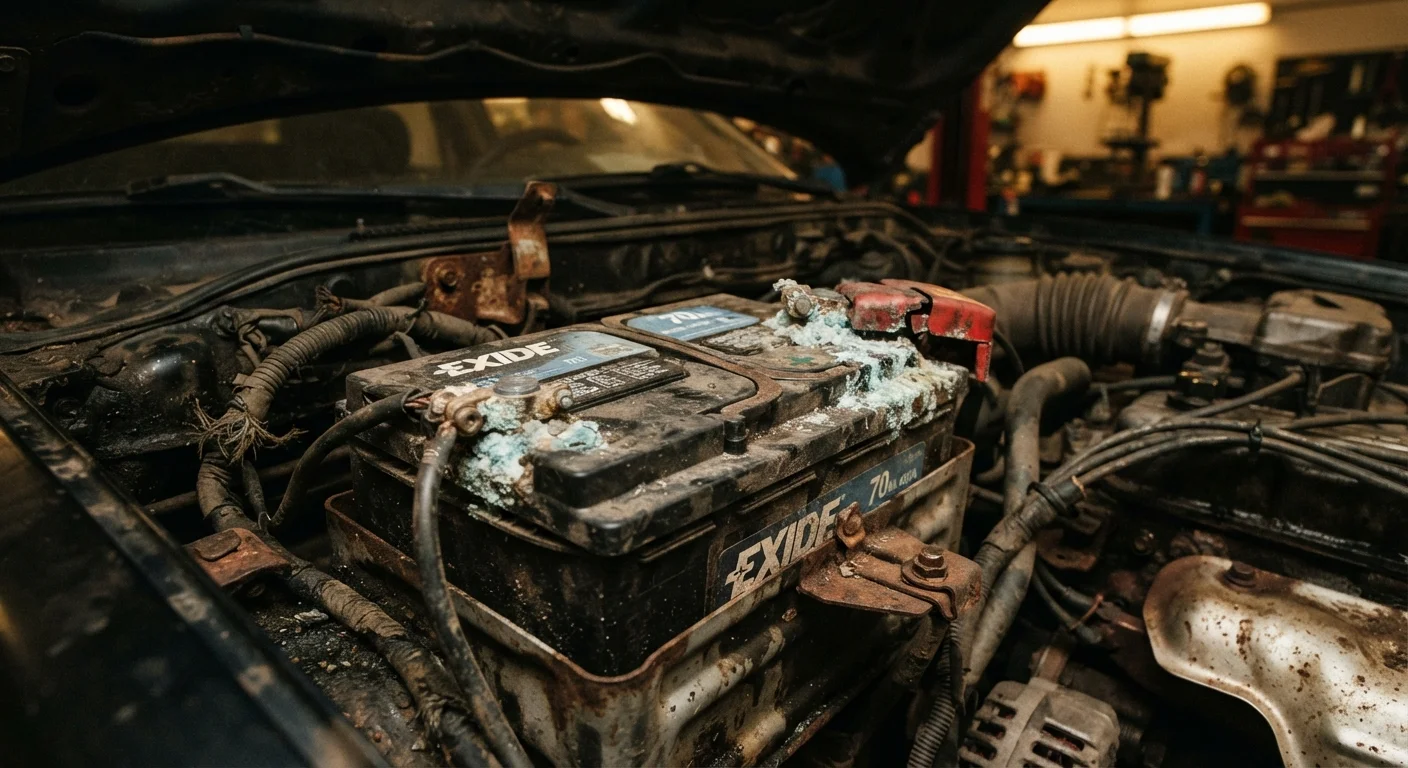
- Swelling or corrosion: A bloated battery case or heavy white/blue buildup around terminals are physical signs of stress or age.
3-5 years
Typical car battery lifespan
According to AAA, most conventional lead-acid batteries last between 3 and 5 years, with climate and usage habits affecting where in that range a battery lands.
~1 in 5
Vehicles with weak or failing batteries
AAA's vehicle research has found that a significant share of cars tested during roadside battery checks show batteries in need of replacement, many of which drivers were unaware of.
50%+
Increase in discharge rate in heat above 77°F
Battery chemistry reacts more aggressively at elevated temperatures, with internal degradation rates rising substantially in climates where under-hood temperatures regularly exceed 100°F.
How Battery Testing Actually Works
A resting voltage check with a multimeter tells you if the battery is severely discharged, but it doesn't reveal much about overall health. A fully charged lead-acid battery should read around 12.6 volts at rest - but a battery showing 12.5 volts could still fail under load.
A load test is more meaningful. It applies a controlled current draw - typically half the battery's CCA rating - and measures how well the battery sustains voltage under that stress. A healthy battery will maintain voltage above a minimum threshold; a weak one will drop sharply. This test can be performed at many shops and auto parts stores, often at no cost.
Some newer testers use conductance testing, which measures the battery's internal resistance electronically without needing a full charge first. These are fast and reasonably accurate for detecting degraded batteries. If your battery is approaching or past the 3-year mark, an annual test is a practical safeguard, especially before winter or a long road trip. Seasonal preparation matters - seasonal vehicle maintenance is a good framework for timing these checks.
This article is for general informational purposes. For safety-related repairs or if you're unsure about working around your vehicle's electrical system, consult a qualified mechanic.