The Color Code: Urgency at a Glance
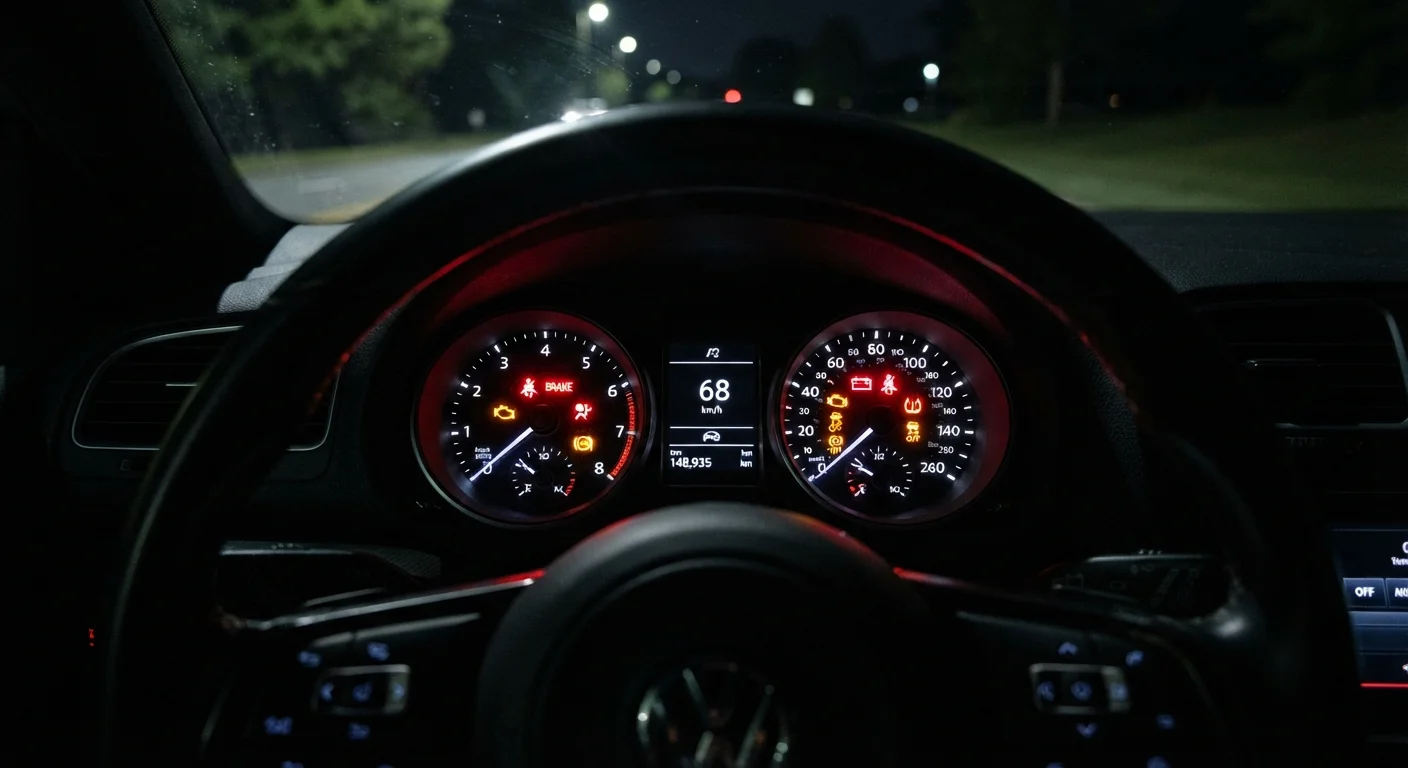
Before decoding individual symbols, understand that your dashboard uses a universal color system to signal how urgently you need to act.
| Red light meaning | Stop or pull over - serious issue |
| Amber/yellow light meaning | Service needed - schedule soon |
| Green/blue light meaning | Informational - system active |
| Flashing check engine | More urgent than steady - avoid long trips |
| TPMS pressure reference | Driver's door jamb sticker (not tire sidewall) |
| Best diagnostic resource | Your vehicle's owner's manual |
Red lights demand immediate attention. They typically indicate a serious safety issue - low oil pressure, overheating engine, brake system failure - that can cause significant damage or create a hazard if ignored even briefly. Pull over safely as soon as possible when a red warning appears.
Amber or yellow lights signal a caution: something needs service, but you usually have time to schedule a visit rather than stopping roadside. Examples include the check engine light, low tire pressure, or a traction control alert.
Blue and green lights are informational - your high beams are on, a turn signal is active, cruise control is engaged. No action required beyond awareness.
This hierarchy matters because not every lit symbol is an emergency. Reacting to an amber light as if it were red wastes money; ignoring a red light as if it were amber can destroy an engine.
The Most Common Warning Lights Decoded
TPMS
Tire Pressure Monitoring System - a sensor-based system that alerts you when one or more tires drops significantly below the recommended inflation level. It does not replace manual pressure checks.
OBD-II
On-Board Diagnostics, second generation - a standardized port found in most vehicles sold in the U.S. after 1996 that allows technicians (and handheld scanners) to read fault codes stored by the car's computer.
Catalytic Converter
An emissions control device in the exhaust system that converts harmful combustion byproducts into less harmful gases. Engine misfires can cause raw fuel to burn inside it, causing damage.
Alternator
A generator driven by the engine that recharges the battery and powers the car's electrical systems while the engine is running. A failing alternator causes the battery warning light to illuminate.
Check Engine (Amber Engine Silhouette)
Possibly the most misunderstood light on any dashboard. When steady, it means the onboard diagnostic system has detected an emissions, sensor, or engine performance issue. This can range from a loose gas cap to a failing catalytic converter. A flashing check engine light is more serious - it often indicates an active engine misfire that can damage the catalytic converter. Have it scanned at a shop soon; a flashing light warrants skipping long trips.
Oil Pressure (Red Oil Can)
This is a stop now light. Low oil pressure means your engine components aren't being lubricated, and metal-on-metal contact can cause irreversible damage within minutes. Pull over safely, shut off the engine, and check the oil level. Running low is fixable; running dry is catastrophic. For a deeper look at engine fluids, see Car Fluids 101.
Battery (Red Battery Symbol)
Your charging system isn't keeping the battery powered. This could be a failing alternator, a dying battery, or a loose connection. The car may keep running briefly on battery reserve, but you shouldn't count on it. Get to a shop quickly - don't turn the engine off until you're somewhere safe. Learn more about what triggers this in How a Car Battery Actually Ages.
Tire Pressure (TPMS - Amber Exclamation Inside a U-Shape)
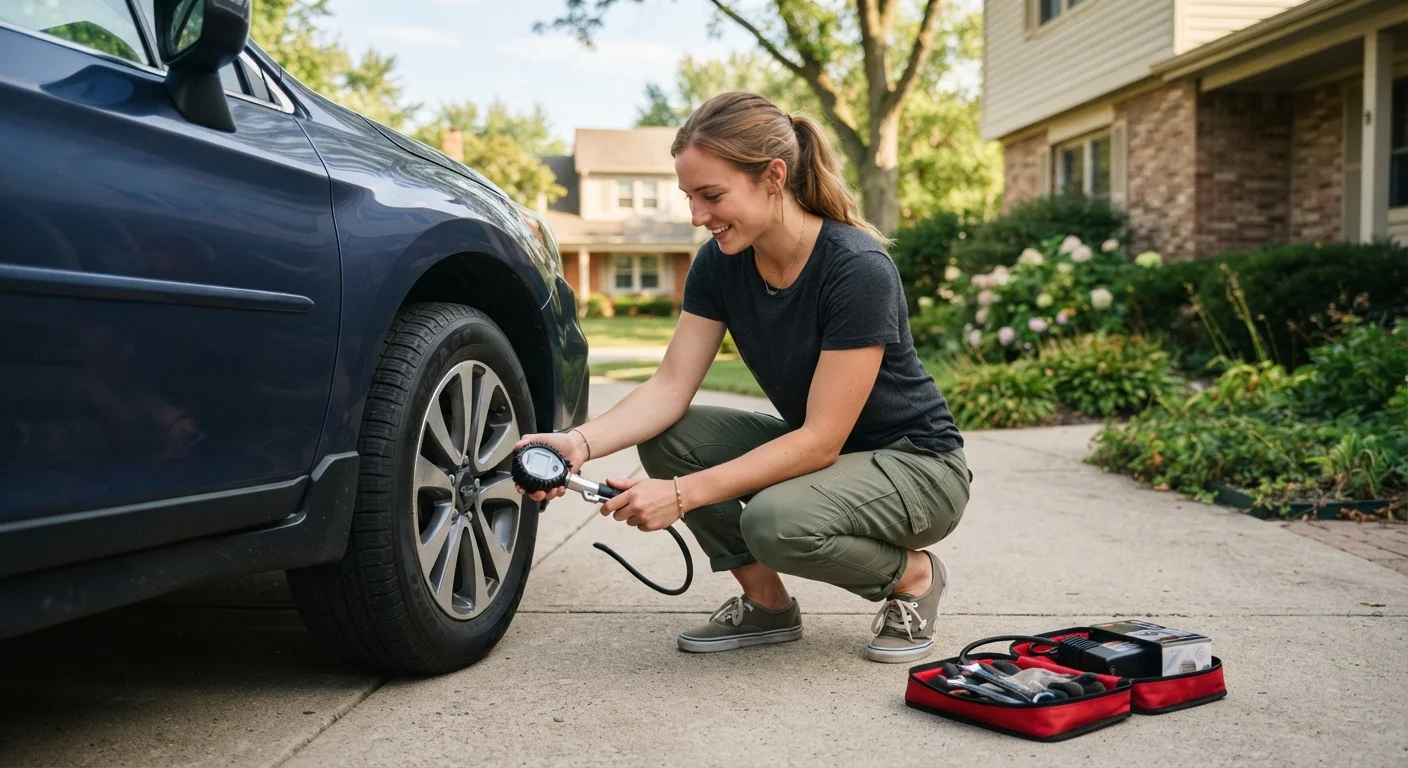
One or more tires is significantly under- or over-inflated. Check all four tires with a gauge and inflate to the pressure listed on the sticker inside your driver's door jamb - not the number on the tire sidewall. The light should reset once pressure is correct; if it stays on, your TPMS sensor may need service.
Temperature (Red Thermometer in Waves)
Your engine is overheating. Turn off the A/C, turn the heater to max (it pulls heat away from the engine), and pull over safely as soon as possible. Do not open the radiator cap when the engine is hot. An overheated engine can warp cylinder heads - an expensive repair.
Brake System (Red BRAKE or Exclamation)
This could mean the parking brake is engaged, brake fluid is low, or there's a fault in the brake system itself. Confirm the parking brake is fully released first. If the light stays on, do not drive the vehicle until the brakes have been inspected by a qualified mechanic.
When to Wait vs. When to Stop Immediately
Get a Free Code Scan Before Paying for Diagnosis
Many auto parts retailers offer free OBD-II code scans. Reading the fault code before visiting a shop gives you baseline information and makes it harder to be overcharged for unnecessary diagnostics. Note that a code points to a system, not always a specific part - further inspection is often still needed to pinpoint the root cause.
A practical framework: any red warning light that appears while driving should be treated as pull over and assess unless it's clearly informational (like a door-ajar indicator on some vehicles). Amber lights generally allow you to drive home or to a shop - but not to defer service indefinitely.
Keep a written or phone note of when a warning light appeared, what driving conditions were like, and whether it stays on or comes and goes. This context helps a mechanic diagnose the issue faster and helps you avoid unnecessary upsells. Improving your overall situational awareness behind the wheel - including how you read road conditions and driver behavior around you - is covered in Reading the Road.
Your owner's manual remains the definitive reference for your specific vehicle's warning symbols - some manufacturers use non-standard icons that a generic guide won't cover. Download a digital copy from the manufacturer's website if you don't have the physical book.
~80%
Check engine lights linked to emission-related faults
According to repair data compiled by automotive diagnostic organizations, the majority of check engine codes relate to emissions systems rather than immediate mechanical failures.
25%
Vehicles on U.S. roads with at least one underinflated tire
The National Highway Traffic Safety Administration has estimated that roughly one in four vehicles has at least one significantly underinflated tire at any given time.