
Why Indoor Rabbit Spaces Need More Thought Than You Might Expect
Rabbits are often underestimated as pets. Many people picture a small cage in a corner — but domestic rabbits are active, intelligent animals that need several hours of free movement every day and benefit from a permanent, roam-friendly home environment. The House Rabbit Society and many rabbit-experienced veterinarians recommend giving rabbits access to a large, rabbit-proofed living space rather than restricting them to small enclosures.
Indoor living offers real advantages: your rabbit stays protected from predators, temperature extremes, and the health risks of outdoor environments. But the average home is not set up with rabbits in mind. Cords, toxic plants, slippery floors, and accessible small gaps create a hazardous environment for an animal that chews, burrows, and squeezes into tight spaces by instinct.
This guide walks you through creating a genuinely safe and enriching indoor space — one your rabbit can thrive in long-term. If you're just starting out, it's worth also reading our broader rabbit care guide for first-time owners alongside this one.
What you will need
Tools and Materials You'll Need
Before you start, gather the right materials. Trying to rabbit-proof with whatever is on hand often leaves gaps — literally. The items below cover the essentials for a safe, functional space.
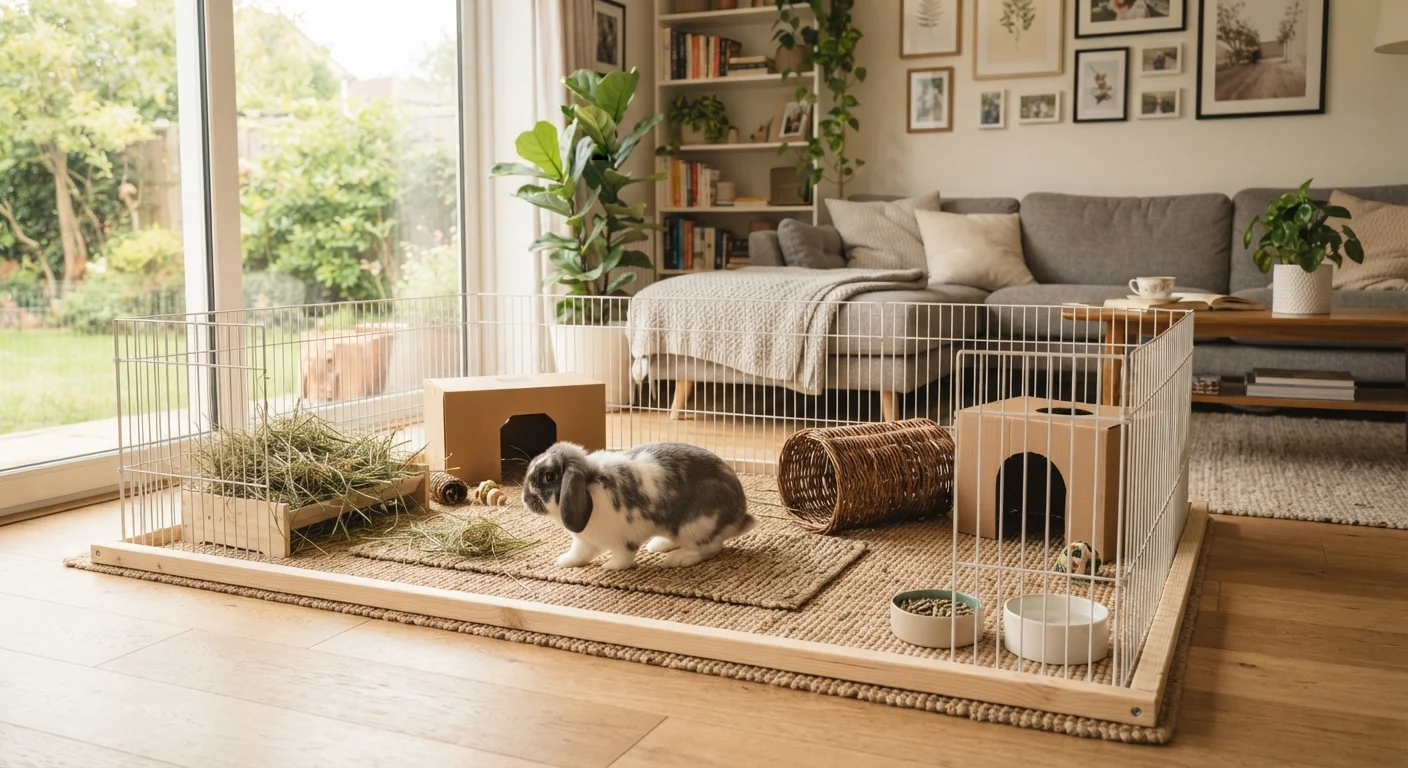
Exercise pen or pet playpen
Creates a defined, expandable roaming zone that keeps your rabbit safely contained without full room confinement.
Cord covers or cable management sleeves
Protects electrical wires from chewing — the single most critical rabbit-proofing tool.
Rubber-backed area rugs or yoga mats
Provides traction on slippery hard floors, which can cause joint stress and injury in rabbits.
Large litter box with low entry
Establishes a consistent bathroom area that rabbits will naturally gravitate toward.
Hay rack or hay feeder
Keeps unlimited hay accessible and tidy — hay should make up the majority of a rabbit's diet.
Baby gates or room dividers
Blocks off rooms or hazardous areas like kitchens and bathrooms without permanent modification.
Cardboard boxes and tunnels
Inexpensive enrichment items that double as safe chew material and hiding spaces.
If you've ever set up a space for a cat, the approach shares some similarities — though rabbits present a distinct set of hazards. Our cat-safe apartment guide covers a useful comparison perspective if you share your home with both species.
Think Like Your Rabbit
Get down to floor level before your rabbit does. Crawl through the space and look for gaps behind appliances, dangling cords, or chewable baseboards you might miss from standing height. This simple step catches hazards that are easy to overlook.
Step-by-Step: Setting Up Your Rabbit's Indoor Space
Follow these steps in order — particularly the cord safety and hazard-removal steps — before allowing your rabbit into any new area.
Electrical Cords Are a Serious Danger
Rabbits chew instinctively and cannot distinguish a power cord from a toy. Chewing a live electrical wire can cause electrocution and fires. Before allowing any free-roaming time, secure or fully conceal every cord in your rabbit's accessible area using cord covers, cable management boxes, or furniture placement.
Choose and Clear Your Rabbit's Primary Space
Select a room or section of a room where your rabbit will spend most of its time. Avoid kitchens (cleaning chemicals, hot surfaces) and bathrooms (standing water, small spaces). A living room or spare bedroom typically works well. Clear the floor of clutter and remove any loose small objects — rabbits will chew and potentially ingest them.
Secure or Remove All Electrical Cords
Bundle and route cords along walls using cable management sleeves or rigid cord covers. Unplug and store any cords that aren't in regular use. Use furniture or cable boxes to block access to power strips. This step must be completed before your rabbit enters the space — do not skip it.
Add Floor Coverage for Traction
Hardwood, laminate, and tile floors are slippery and can stress a rabbit's hocks (ankle joints) over time. Lay rubber-backed rugs, yoga mats, or interlocking foam tiles over the primary roaming area. Ensure the edges are secured or tucked so your rabbit cannot chew or burrow underneath them easily.
Set Up a Base Station with Essentials
Place your rabbit's main habitat or enclosure in one corner of the space as a home base — this is where they sleep, eat, and retreat. Inside or directly adjacent, include a large litter box filled with paper-based bedding topped with hay, a hay rack stocked with unlimited timothy or orchard grass hay, a ceramic or stainless-steel water bowl, and a small hide or enclosed sleeping space.
Block Off Gaps and Hazardous Areas
Rabbits squeeze into surprisingly small spaces and can become trapped or injured behind appliances, under heavy furniture, or inside wall cavities. Use foam pipe insulation, cardboard, or commercial gap blockers to seal spaces under sofas, behind bookshelves, and around radiators. Install baby gates to prevent access to off-limit rooms.
Remove or Relocate Toxic Houseplants
Survey the entire room for plants and move any you cannot immediately identify as rabbit-safe to rooms your rabbit won't access. Common toxic plants include pothos, philodendron, aloe, ivy, and any bulb-based plants. Consult a veterinarian or a reputable animal poison resource if you're unsure about a specific species.
Introduce Enrichment and Supervised Roaming
Once the space is safe, add cardboard boxes with cut-out doors, paper bags, tunnels, and safe wooden chew toys. Let your rabbit explore the area under supervision initially to observe how they interact with the environment. Gradually extend free-roaming time as you build confidence in the setup's safety.
Ongoing Safety: Reassess as Your Rabbit Explores
Rabbit-proofing isn't a one-time project. As your rabbit grows more comfortable and adventurous, they'll find new spots to explore and new things to chew. Do a monthly walk-through of their space to check for newly exposed cords, displaced rugs, or worn-through cord covers.
Not All Plants Are Rabbit-Safe
Many common houseplants — including pothos, aloe vera, and lilies — are toxic to rabbits. Remove any plants from areas your rabbit can access, and research any new plant before bringing it into your home. When in doubt, keep plants elevated and completely out of reach.
Watch your rabbit's behavior closely in the first few weeks — where they nap, which corners they gravitate toward, and what they attempt to chew — and adjust the space accordingly. A well-designed indoor space should feel like a partnership between your rabbit's instincts and your home's practical constraints. Investing time upfront makes daily life safer and more enjoyable for both of you.
This article provides general pet care information and is not a substitute for advice from a qualified veterinarian. If you have concerns about your rabbit's health or behavior, consult a rabbit-experienced vet.