
What Rabbits Actually Need (Before You Bring One Home)
Rabbits are often underestimated. They're marketed as low-maintenance starter pets, but the reality is more nuanced — and more rewarding. Rabbits are intelligent, social animals with specific dietary, environmental, and emotional needs that differ meaningfully from dogs or cats. Understanding this before day one sets you up for success.
Unlike the experience of bringing a dog home for the first time, rabbit care involves some less-obvious essentials: finding a specialized vet, sourcing fresh hay in bulk, and learning to read a prey animal's subtle body language. None of this is beyond a committed beginner — it just requires going in informed.
GI Stasis
A potentially life-threatening condition where a rabbit's digestive system slows or stops moving. It requires immediate veterinary attention.
Binky
A spontaneous jump-and-twist movement rabbits perform when they're happy and feeling safe — a reliable sign of good welfare.
Hay-based diet
A feeding approach centered on unlimited grass hay, which provides the fiber rabbits need for healthy digestion and dental wear.
Bonded pair
Two rabbits that have been carefully introduced and now live together companionably, providing each other with social stimulation.
Exotic-animal vet
A veterinarian with specialized training in species beyond dogs and cats, including rabbits, guinea pigs, and birds.
Setting Up the Right Living Space
Your rabbit's enclosure is their safe base, and size matters enormously. Many cages sold in pet stores are too small. Look for housing that allows your rabbit to take at least three full hops in a row and stand completely upright on their hind legs without their ears touching the ceiling.
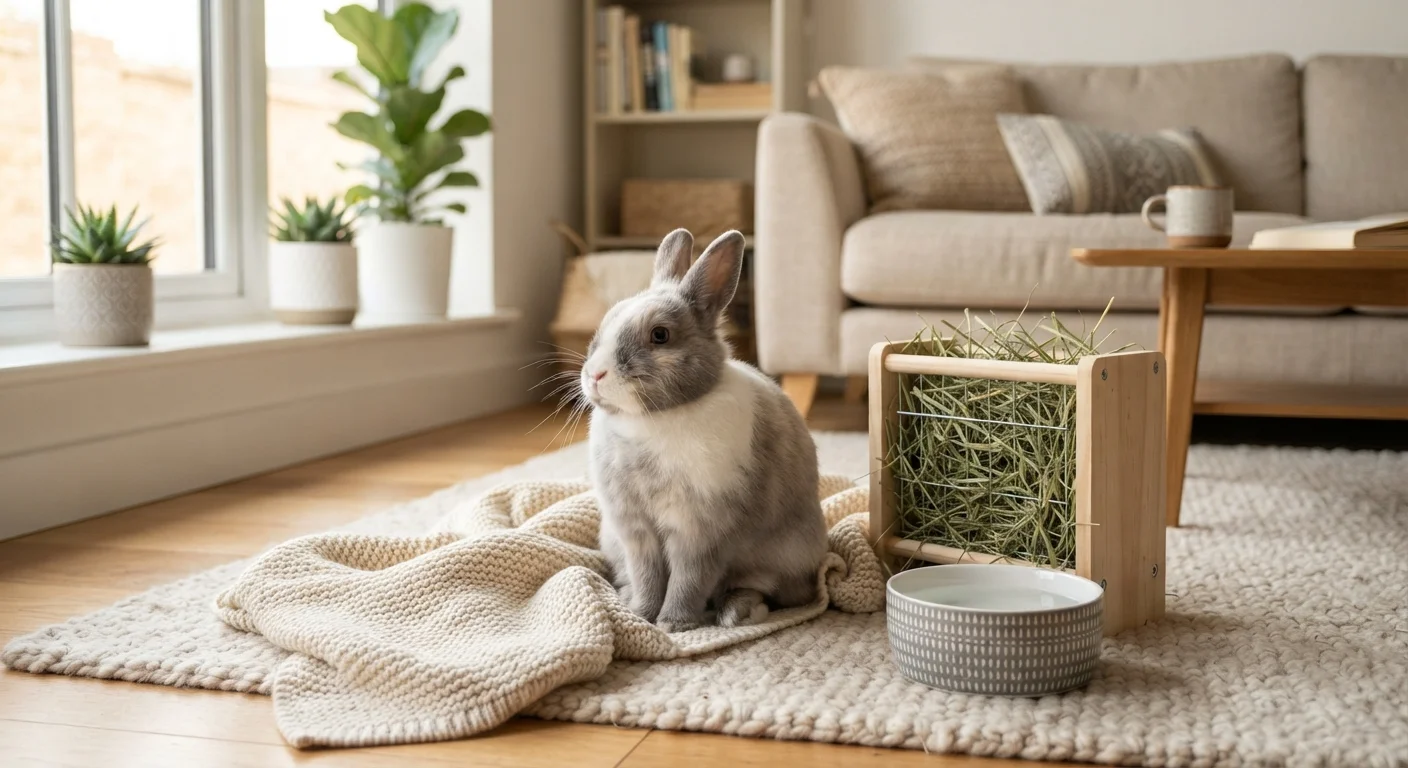
A playpen-style enclosure, a large dog crate, or a bunny-proofed room section all work well. Equip the space with:
- A hay rack or hay pile — always stocked
- A heavy, tip-resistant water bowl or bottle
- A litter box in a corner (use paper-based litter)
- A hiding spot or covered area for security
- Untreated wooden chews or cardboard for enrichment
Temperature is also critical. Rabbits are sensitive to heat; indoor temperatures above 80°F can cause heat stress. Keep their area away from direct sunlight, drafts, and household hazards like exposed electrical cords, which rabbits will chew.
Rabbit-Proof Before You Let Them Roam
Before giving your rabbit free-roam time outside their enclosure, do a floor-level sweep for hazards. Tuck electrical cords into cord covers or behind furniture, remove houseplants (many are toxic to rabbits), and block off spaces where a rabbit could get stuck. A few minutes of prep prevents most accidents.
Feeding Your Rabbit a Balanced Diet
Nutrition is one of the most important — and most misunderstood — areas of rabbit care. The core of every rabbit's diet should be unlimited timothy hay (or other grass hays like orchard grass). Hay keeps their digestive system moving and wears down continuously growing teeth. It should make up roughly 80% of their daily intake.
Supplement hay with:
- Leafy greens: Romaine lettuce, cilantro, parsley, and kale in rotation. Introduce new greens slowly to avoid digestive upset.
- Pellets: A small, measured amount of plain timothy-based pellets daily — not mixes with seeds or dried fruit.
- Treats: Small pieces of fresh fruit (like apple or blueberry) occasionally and sparingly, due to sugar content.
Foods to avoid include iceberg lettuce, potatoes, corn, bread, and any sugary processed snacks. Fresh water should always be available and refreshed daily.
Avoid Sudden Diet Changes
Rabbits have sensitive digestive systems that can be disrupted by abrupt changes in food. Introduce new vegetables gradually over several days, and if you switch pellet brands, blend the old and new together over a week or two. Digestive upset in rabbits can escalate to serious conditions quickly.
Socialization, Handling, and Behavior
Rabbits are prey animals by instinct, which means being picked up can feel threatening to them — even by someone they trust. Building a bond takes patience. Spend time at floor level with your rabbit rather than reaching in from above. Let them come to you, sniff your hand, and explore at their own pace.
When you do need to pick up your rabbit, support their hindquarters fully. A rabbit that feels unsupported may kick hard enough to injure their own spine — a serious and unfortunately common accident.
Many rabbits thrive with a bonded companion. If you plan to house two rabbits together, have them spayed or neutered first and introduce them gradually on neutral territory. Solo rabbits still need substantial daily interaction to stay mentally healthy.
Understanding body language also helps. A flopped-over rabbit is relaxed and happy. Thumping signals alarm. Tooth grinding can indicate pain. Learning these signals early helps you catch problems before they escalate — a good parallel to the awareness described in what new cat owners commonly get wrong in the first month.
Veterinary Care and Health Basics
Rabbits are considered exotic animals in veterinary medicine, which means not every clinic is equipped to treat them. Seek out a vet with documented experience in rabbit or small-mammal care before you bring your rabbit home. What to look for in a small-animal veterinarian is a useful starting point for understanding what qualifications and questions matter most.
Schedule a baseline wellness exam within the first two weeks. At that visit, discuss:
- Spaying or neutering (strongly recommended for health and behavioral reasons)
- Signs of GI stasis — a life-threatening slowdown of the digestive system
- Parasite prevention and dental health monitoring
- Vaccinations, if recommended in your region
Signs that warrant immediate veterinary attention include not eating or drinking, no droppings for 12+ hours, labored breathing, a hunched posture, or a head tilt. Rabbits can decline rapidly when ill, so acting quickly matters.
This article provides general educational information about rabbit care and is not a substitute for professional veterinary advice. Always consult a qualified exotic-animal veterinarian for guidance specific to your rabbit's health and needs.
Spaying and Neutering Has Real Health Benefits
Unspayed female rabbits have a significantly elevated risk of reproductive cancers, according to veterinary literature. Neutering males reduces territorial behaviors and the risk of certain health issues as well. Discuss timing with your exotic-animal vet, as the appropriate age can vary by rabbit size and health status.