Why Quarantine Is Non-Negotiable for Fish Keepers
New fish — even healthy-looking ones from a reputable store — can carry parasites, bacteria, or viruses that are invisible to the naked eye. Common culprits like ich and velvet have life stages that remain dormant or microscopic for days before causing visible harm. Once introduced to a main tank, these pathogens can spread rapidly to every fish you already have.
A quarantine tank acts as a controlled buffer zone. It gives you time to observe, catch problems early, and treat a single fish in isolation rather than medicating an entire established ecosystem. It also protects the beneficial bacteria colony in your main tank — treatments applied to a display tank can disrupt the biological filter and crash water quality. Whether you keep a community freshwater setup or a more complex marine environment (see our guide to freshwater vs. saltwater tank setups for context), this principle applies equally.
Seed Your Filter for Faster Cycling
Speed up the quarantine tank's nitrogen cycle by adding a small piece of established filter media — like a sponge or ceramic ring — from your main tank. This introduces beneficial bacteria immediately and helps keep ammonia levels in check. For a deeper look at why this works, see our guide to the nitrogen cycle.
What You Need and How to Do It
Quarantining fish does not require an elaborate or expensive setup. The goal is a stable, clean, low-stress environment where you can monitor one or a small group of fish closely. Before you begin, review the prerequisites below and gather your equipment.
What you will need
Small aquarium (10–20 gallons)
Houses new fish during the quarantine period, kept separate from the main tank.
Sponge filter
Provides gentle filtration and beneficial bacteria without sucking in small or weak fish.
Adjustable aquarium heater
Maintains a stable water temperature appropriate for the species being quarantined.
Thermometer
Monitors water temperature daily to ensure it stays within the correct range.
Water test kit
Tracks ammonia, nitrite, nitrate, and pH levels throughout the quarantine period.
Dedicated net and bucket
Used exclusively for the quarantine tank to prevent cross-contamination.
PVC pipe or small decoration
Gives fish a hiding spot to reduce stress during the adjustment period.
Set Up a Dedicated Quarantine Tank
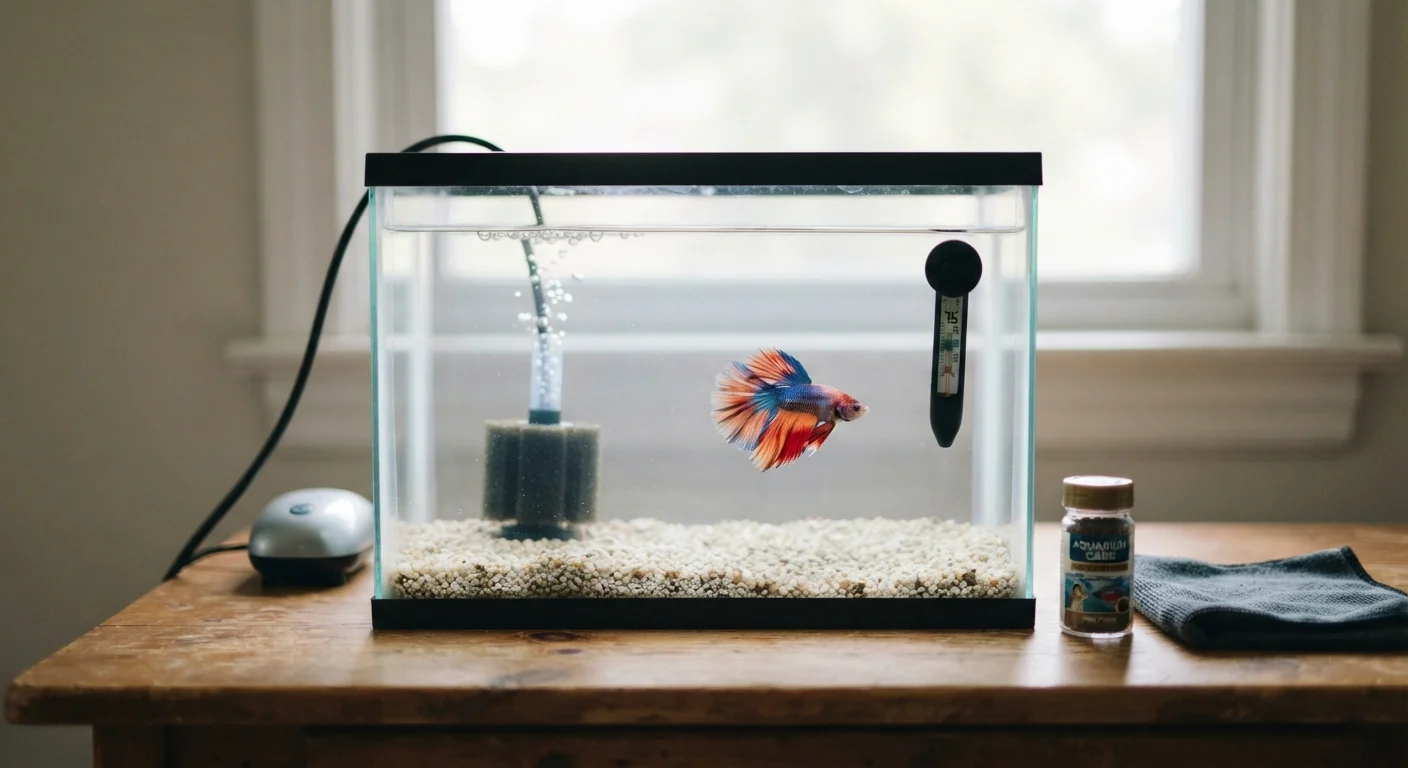
A 10- to 20-gallon tank is sufficient for most home aquarium fish. Fill it with dechlorinated water matched to the temperature and pH of your main tank. Add a sponge filter, heater, thermometer, and one or two simple hides — a section of PVC pipe works well. Avoid substrate and decorations that are hard to disinfect; bare-bottom tanks are much easier to clean and monitor.
Cycle or Partially Cycle the Quarantine Tank
Ideally, you want some beneficial bacteria in the quarantine tank before fish arrive. Add a piece of established filter media from your main tank — a squeeze from a used filter sponge releases millions of helpful bacteria into the new water. If you cannot seed the tank in advance, plan to test water parameters daily and perform small water changes to keep ammonia below 0.25 ppm.
Acclimate New Fish to the Quarantine Tank
Float the bag or container your new fish arrived in on the surface of the quarantine tank for 15–20 minutes to equalize temperature. Then slowly add small amounts of quarantine tank water to the bag over another 15–20 minutes. Use a net to transfer the fish — do not pour the transport water into your tank, as it may carry pathogens from the store or breeder.
Observe Fish Daily for the Full Quarantine Period
Keep fish in quarantine for a minimum of two weeks; four weeks is the standard recommendation for most common diseases like ich (Ichthyophthirius multifiliis), which can remain dormant before symptoms appear. Each day, look for: clamped fins, labored breathing, loss of appetite, white spots, unusual swimming behavior, or visible lesions. Record any changes — even small ones — so you can track progression accurately.
Test Water Parameters Regularly
Test ammonia, nitrite, nitrate, and pH at least every other day. In a new or minimally cycled quarantine tank, ammonia can rise quickly with even one small fish. Perform 20–30% water changes as needed to keep levels safe, using water that matches the tank's temperature and has been treated with a water conditioner. Stable water chemistry reduces stress and supports the fish's immune response.
Introduce Fish to the Main Tank Only After a Clear Quarantine
If the fish shows no signs of illness after the full quarantine period and water quality has been stable, it is ready for the main display tank. Acclimate it to the main tank's water conditions using the same gradual process you used on arrival. After transfer, monitor the newcomer and your existing fish for several additional days. Introducing a new fish can shift social dynamics, so watch for signs of stress or aggression.
Shared Equipment Can Spread Disease
Never use the same net, siphon, or bucket between your quarantine tank and your main display tank without disinfecting them first. Even a small amount of water transferred on equipment can introduce pathogens. Keep quarantine equipment completely separate and clearly labeled.
Never Medicate Without a Clear Reason
Prophylactic (precautionary) medication of all new fish is not recommended by most aquatic veterinary guidelines unless a specific disease is suspected or confirmed. Overuse of medication can stress fish, disrupt beneficial bacteria, and contribute to drug resistance. If you observe symptoms during quarantine, consult an aquatic veterinarian or experienced fish health professional before treating.
Once your fish pass quarantine successfully and settle into the main tank, ongoing observation remains important. Fish like bettas have specific ongoing care needs worth understanding — our article on keeping a betta fish healthy covers water quality, feeding, and common pitfalls in detail.
This article is for general informational purposes only and does not constitute veterinary advice. If you observe signs of illness in your fish, consult a veterinarian with experience in aquatic animals.