
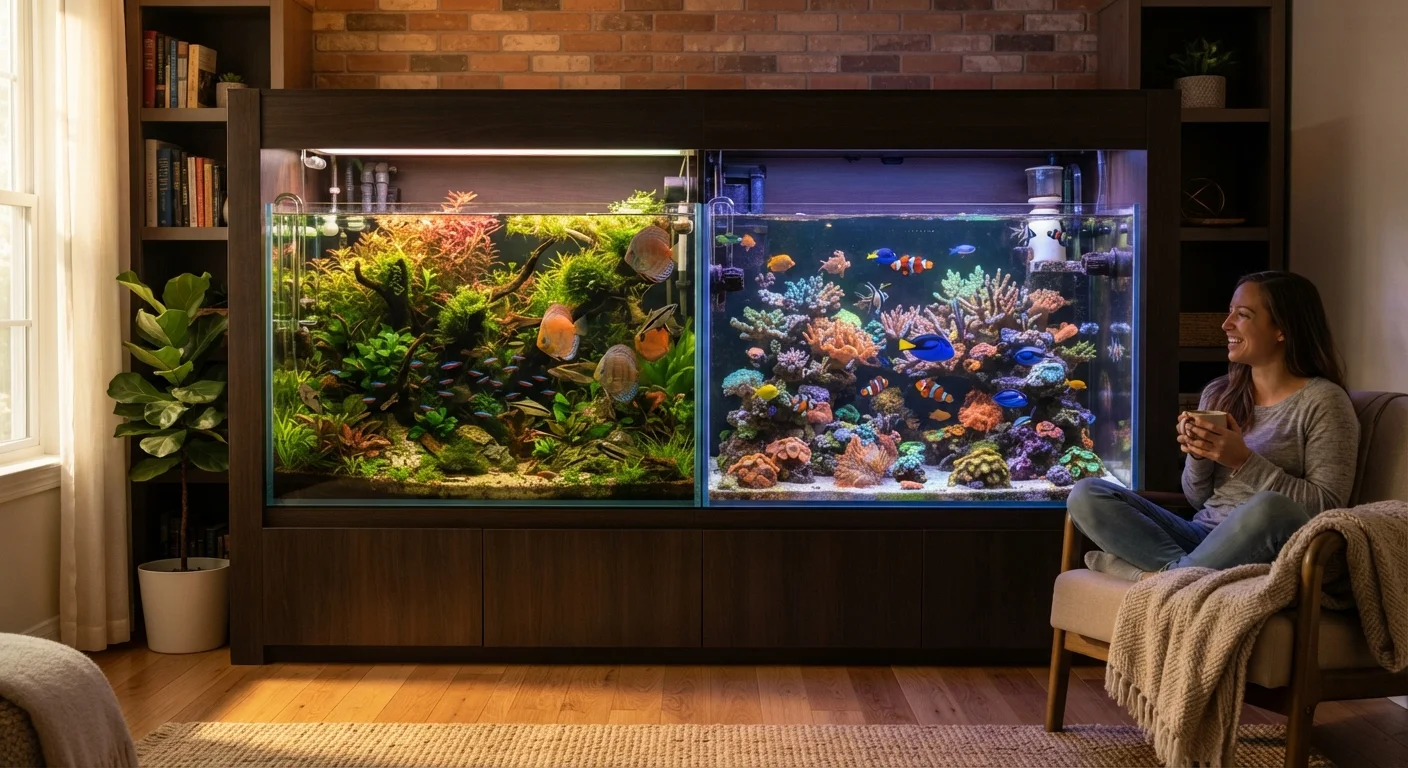
What Each Setup Actually Involves
Choosing between a freshwater and saltwater aquarium isn't just about which fish look cooler — it's about honestly matching a setup to your lifestyle. Both require an understanding of basic water chemistry, and neither is truly "set it and forget it." Before anything else, make sure you understand how the nitrogen cycle works in aquariums, since it's the biological foundation every tank depends on.
Freshwater tanks use dechlorinated tap water and house fish like bettas, tetras, cichlids, and goldfish. The equipment list is straightforward: a tank, filter, heater (for tropical species), and lighting. Water parameters — pH, ammonia, nitrite, nitrate — need regular monitoring, but freshwater systems are more tolerant of minor imbalances.
Saltwater tanks recreate ocean conditions using a precise salt mix to reach a specific gravity (salinity) around 1.025. They typically require additional equipment: a protein skimmer, live rock, a more powerful filtration system, and often specialized lighting for corals. Water changes must use RODI (reverse osmosis deionized) water to prevent unwanted mineral buildup.
| Criterion | Freshwater Tank | Saltwater Tank |
|---|---|---|
| Startup Cost | Lower (~$100–$250) | Higher (~$500–$1,500+) |
| Ongoing Monthly Cost | Low | Moderate to high |
| Equipment Required | Tank, filter, heater, lighting | Tank, skimmer, RODI, live rock, lighting |
| Water Chemistry Complexity | Moderate | High |
| Fish Hardiness | Generally more forgiving | More sensitive to fluctuations |
| Visual Impact | Attractive, especially planted tanks | Exceptional, especially reef setups |
| Beginner Suitability | High | Low to moderate |
| Time Commitment | Moderate | High |
Cost and Complexity: A Realistic Breakdown
Startup costs for a freshwater tank are considerably lower. A basic 20-gallon freshwater setup — tank, filter, heater, substrate, decor, and a few fish — can reasonably come together for under $200. Ongoing costs include water conditioner, fish food, and periodic filter media replacement.
Saltwater setups demand a much larger upfront investment. A modest 30-gallon reef tank with live rock, a protein skimmer, RODI water system, and appropriate lighting can easily run $500–$1,000 or more before a single fish is added. Monthly costs are also higher due to salt mix, RODI filters, and more frequent water testing.
~$500+
Typical saltwater tank startup cost
Industry hobbyist estimates suggest a basic saltwater reef setup runs at least $500 before livestock is added, with advanced systems costing significantly more.
13 million
US households with freshwater fish
According to the American Pet Products Association's National Pet Owners Survey, freshwater fish are among the most common pets in US homes.
Complexity scales with saltwater as well. Parameters like calcium, alkalinity, and magnesium become critical if you plan to keep corals — each requires separate testing and supplementation. Freshwater planted tanks do add their own complexity (CO₂ injection, fertilizers), but remain far more beginner-accessible than a reef system.
Fish Choices and Day-to-Day Care
Freshwater fish offer enormous variety for new owners. Species like guppies, mollies, and danios are resilient and social. For something a little more engaging, bettas are a popular single-fish option — though they have specific space and water quality needs. See our guide on keeping a betta fish healthy for what that actually entails.
Saltwater fish — clownfish, tangs, wrasses, dottybacks — are visually stunning but more sensitive to water quality swings. Many saltwater species also have strict dietary needs and don't tolerate tank mates carelessly. Coral reef inhabitants add another layer: corals are living animals that need stable water chemistry, appropriate flow, and intense, spectrum-specific lighting to survive.
Daily care for freshwater tanks typically means checking that equipment is running and fish are behaving normally, with weekly partial water changes. Saltwater tanks often require daily top-offs (to replace evaporated fresh water and maintain salinity), more frequent parameter testing, and closer observation of livestock health.
Don't Skip the Cycling Period
Whether you choose freshwater or saltwater, never add fish to an uncycled tank. Cycling establishes beneficial bacteria that convert toxic ammonia into safer compounds. This process typically takes 4–8 weeks and is non-negotiable for fish health. Testing water parameters throughout this period is essential.
Before committing to either setup, it's worth running through a readiness checklist to make sure you have the time, space, and supplies in place first.
This article provides general educational information about aquarium types and is not a substitute for guidance from an experienced aquarist, veterinarian specializing in aquatic animals, or your local fish store professional.