
The Real Time Commitment Behind Each Choice
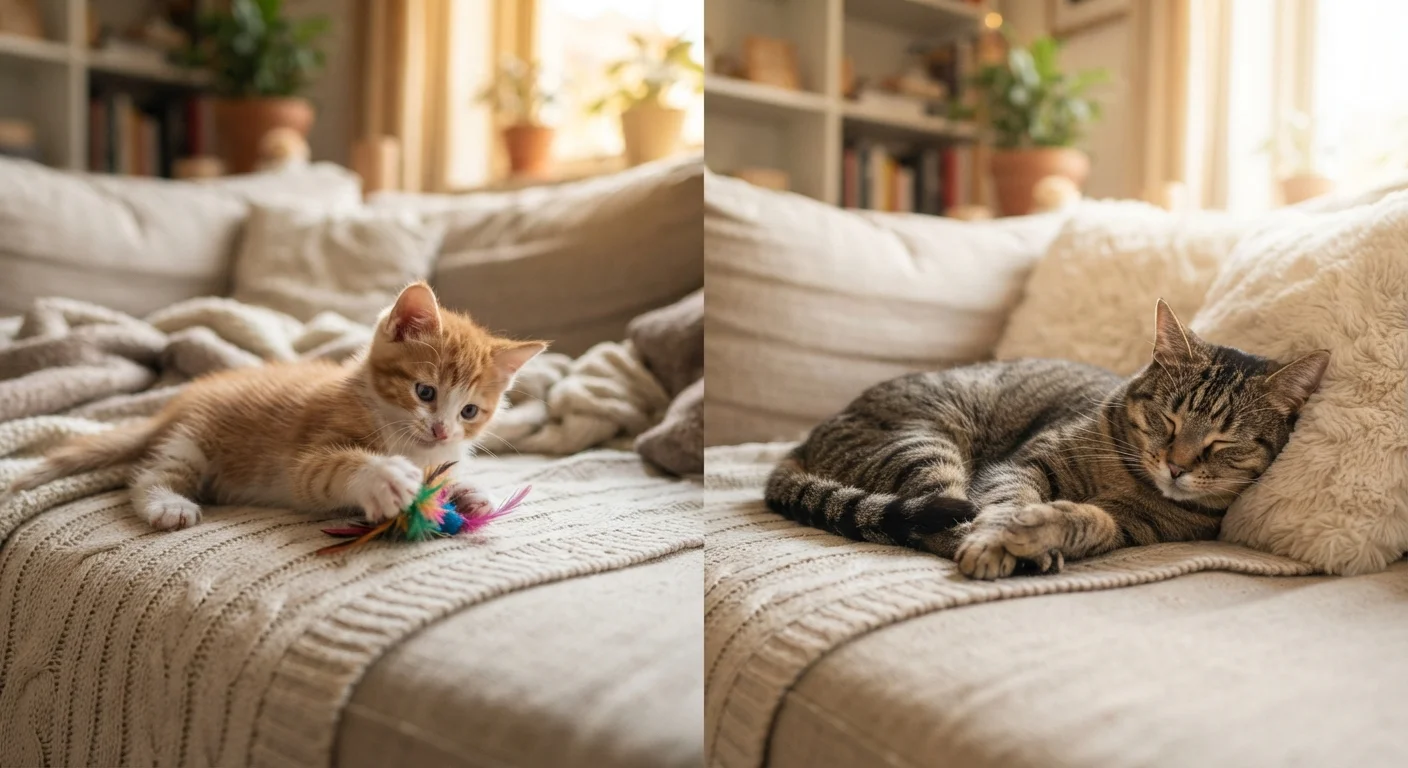
Kittens are undeniably charming, but that charm comes with a serious demand on your attention. During the first several months, kittens need active supervision — they chew cords, knock objects off shelves, and can injure themselves exploring spaces that aren't kitten-proofed. Expect to dedicate meaningful time each day to interactive play, which is essential for healthy development and preventing destructive behavior.
Adult cats, by contrast, are generally self-sufficient for longer stretches. They still need enrichment and connection, but their activity cycles are more predictable. If you work full days or have an unpredictable schedule, an adult cat is typically easier to integrate into your routine. Before you bring anyone home, our guide on what the first 72 hours look like can help you prepare for either age.
| Kitten | Adult Cat | |
|---|---|---|
| Time demand | High — needs constant supervision | Moderate — more self-sufficient |
| Personality predictability | Low — still developing | High — established temperament |
| First-year vet costs | Higher — vaccines, spay/neuter | Often lower — many already done |
| Energy level | Very high, especially 3–12 months | Calmer, more settled |
| Training demands | More intensive, habits forming | May have existing habits (good or bad) |
| Ideal for beginners | With ample time and patience | Generally yes — more forgiving |
Personality: What You Know vs. What You're Shaping
One of the most underappreciated advantages of adopting an adult cat is personality clarity. What you see during a shelter visit is largely what you'll get at home. Shelter staff can tell you whether a cat is shy, social, lap-seeking, or independent — giving you a real chance to find a genuine match for your household.
Kittens are a bit of a personality mystery. Their temperaments develop based on genetics, socialization, and environment — meaning the curious kitten you met may evolve into a more aloof adult, or vice versa. If you have other pets, this uncertainty is especially worth weighing. Our article on adding a second cat discusses how resident pet dynamics can influence which age is the safer introduction.
Ask Shelter Staff for a Personality Assessment
Most shelters conduct basic behavioral assessments and can describe each cat's social tendencies, energy level, and comfort around other animals or children. Don't rely solely on what you observe during a brief visit — ask staff directly what a cat is like day-to-day. This one conversation can save a lot of adjustment stress at home.
Health, Veterinary Costs, and What to Budget For
Kittens require a full sequence of vaccinations in their first year, a spay or neuter procedure, and often at least one unplanned vet visit for minor illness or injury — kittens are accident-prone. Many veterinary practices also recommend parasite prevention and microchipping early on. These costs accumulate quickly.
Adult cats adopted from a reputable shelter are frequently already spayed or neutered, vaccinated, and microchipped. Their first-year veterinary costs are generally lower, though older adults (8+) may develop age-related health conditions to monitor. Whichever age you choose, budgeting for unexpected veterinary expenses is non-negotiable.
~$1,000+
Estimated first-year kitten costs
The ASPCA estimates first-year cat ownership costs can exceed $1,000 when factoring in veterinary care, supplies, and food.
3.2M
Cats entering US shelters annually
According to the ASPCA, approximately 3.2 million cats enter US animal shelters each year, many of them adults awaiting homes.
This article provides general pet care information and is not a substitute for advice from a licensed veterinarian. Consult your vet for guidance specific to your cat's health and needs.
Your Living Space and Lifestyle Matter More Than You Think
Small apartments can work well for cats of any age, but kittens are higher-energy and require more environmental enrichment — climbing structures, interactive toys, and safe spaces to explore. An under-stimulated kitten in a small space will find its own entertainment, often destructively. Our room-by-room walkthrough on setting up a cat-safe apartment is worth reviewing before either age arrives.
Adult cats tend to adapt more gracefully to quieter or smaller environments. If you travel occasionally, work long hours, or live alone, an adult cat's more settled nature is generally a better fit. For context on how lifestyle choices extend beyond age, see our piece on indoor vs. outdoor cat tradeoffs — a decision that intersects closely with which age you adopt.