Why These Three Commands Come First
Sit, stay, and come — often called the foundation trio — give you reliable control in the situations that matter most: keeping your dog safe near traffic, preventing them from bolting out the front door, and calling them back when their nose takes over. Every more complex behavior your dog will ever learn is built on top of these three.
Before you start, it helps to understand what you're working with. Dogs learn by association and consequence: a behavior that produces something good is repeated; one that produces nothing (or something unpleasant) fades. Reward-based training leans on that instinct deliberately. For a deeper look at the research behind this approach, see our article on positive reinforcement vs. correction-based training.
If you're in the early days of dog ownership, bringing a dog home for the first time covers what to set up before training even begins.
What you will need
Step-by-Step: Teaching Sit, Stay, and Come
Work through the steps below in order. Don't move to stay until sit is solid, and don't introduce come at a distance until your dog is reliably staying on cue. Each session should last no more than 5–10 minutes — dogs learn better in short bursts, and ending on a win keeps motivation high.
Teach 'Sit' using lure-and-reward
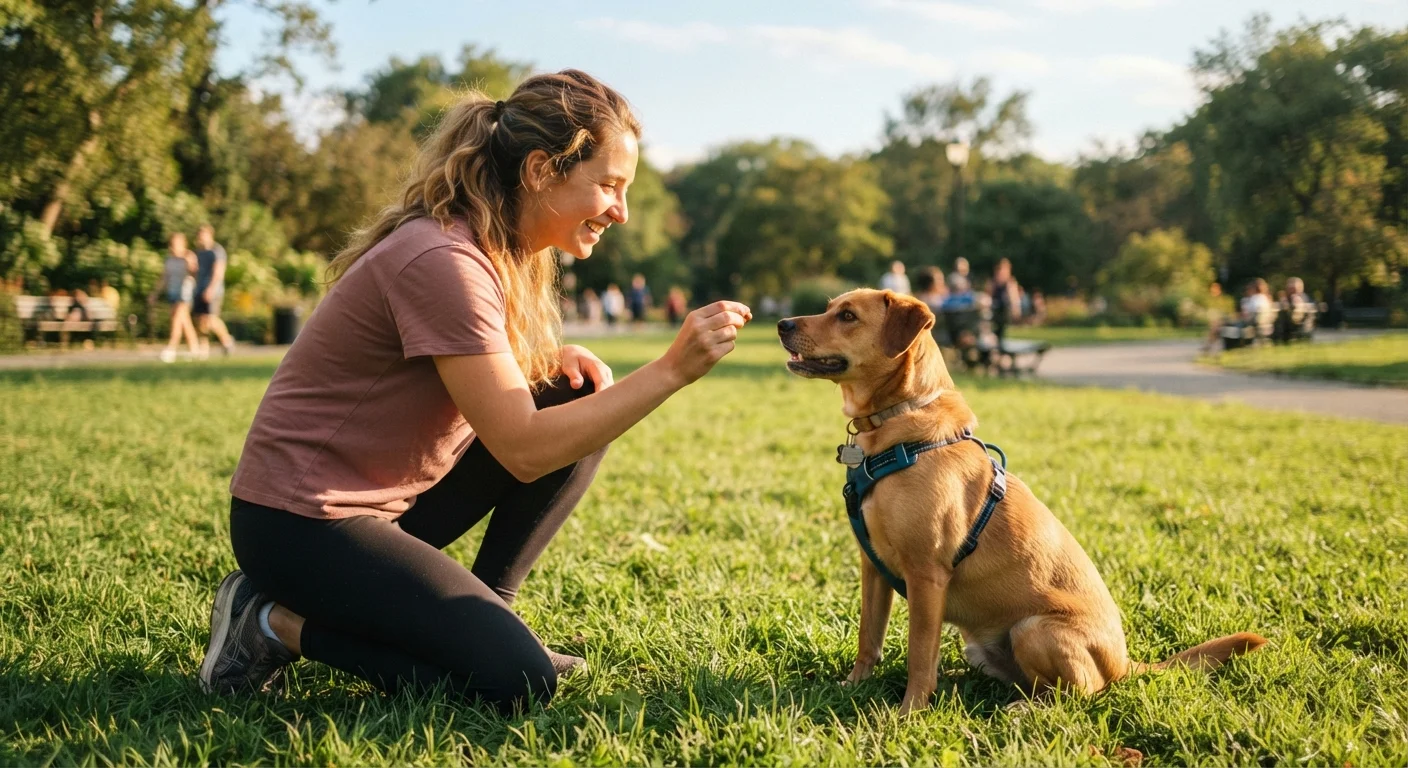
Hold a treat close to your dog's nose, then slowly move your hand upward and slightly back over their head. As their nose follows the treat up, their hindquarters will naturally lower. The moment their bottom touches the floor, say "Sit" once, clearly, and immediately give the treat.
Repeat 5–8 times per session. Once your dog sits reliably with the hand movement, begin fading the lure — use the same hand motion but with no treat in that hand, rewarding from your other hand or pouch after they sit.
Add 'Stay' in small increments
Ask your dog to sit. Once they're seated, hold your open palm toward them (like a stop gesture), say "Stay", and wait just 2–3 seconds. If they hold position, reward them while they're still in place — not after they've moved. That distinction matters: the reward marks the staying, not the releasing.
Gradually increase duration by a few seconds per session. After duration is reliable, start adding very small amounts of distance — one step back, then return and reward. Distance and duration are separate variables; increase one at a time, not both together.
Teach 'Come' on a leash first
With your dog on a 6-foot leash and a few feet away, crouch down to their level, say "Come" in a bright, enthusiastic tone, and gently guide the leash toward you if needed. When your dog reaches you, reward generously — this command should always predict something good. Never call your dog to you for anything they dislike (baths, nail trims, crating) while recall is still in early training.
Once your dog comes reliably on the 6-foot leash, practice in a safely enclosed area with a longer training line (15–30 feet). Only practice off-leash recall in fully fenced areas when you're confident in their response.
Practice in gradually more distracting environments
Once all three commands work reliably indoors, begin practicing in mildly more distracting places: your backyard, a quiet sidewalk, then a park with some foot traffic. Each new environment essentially resets the difficulty — expect your dog to need more repetitions and closer rewards when the surroundings change.
This process, called proofing, is what transforms a behavior that works in your kitchen into one that works when it actually counts. Consistent daily training schedules help reinforce this — our guide to establishing a daily routine your dog can rely on offers a useful framework.
Timing Is the Most Important Skill You'll Develop
The reward must arrive within 1–2 seconds of the correct behavior to be associated with it. If you miss that window, you may accidentally reward the wrong thing — like your dog standing up after a sit. A clicker or a short marker word like 'yes' can bridge the gap while you reach for the treat, making your timing much more precise.
When Training Feels Like It's Not Working
Frustration during training is almost always a signal that something in the setup needs to change — not a sign that your dog is stubborn or untrainable. The most common culprits are sessions that run too long, environments with too much distraction, treats that aren't motivating enough, or cue words that have been repeated so many times the dog has learned to ignore them (called "poisoning the cue").
If your dog stops responding mid-session, pause, give a command they already know well, reward it, and end there. Returning tomorrow with a fresh start almost always produces better results than pushing through.
Never Train When You're Irritated
Dogs are highly sensitive to their handler's emotional state and body language. Training while frustrated often results in harsher cues, slower rewards, and sessions that end negatively — which can cause your dog to associate training with stress. If you feel impatient, end the session, take a break, and return when you're calm. Consistency and positivity matter more than frequency.
Reading your dog's body language also helps you gauge when they're engaged versus overwhelmed. Our guide on how dogs communicate through body language explains what to watch for. Once these commands are solid, mental stimulation exercises outlined in keeping a dog mentally stimulated indoors can keep your dog sharp on low-energy days.