
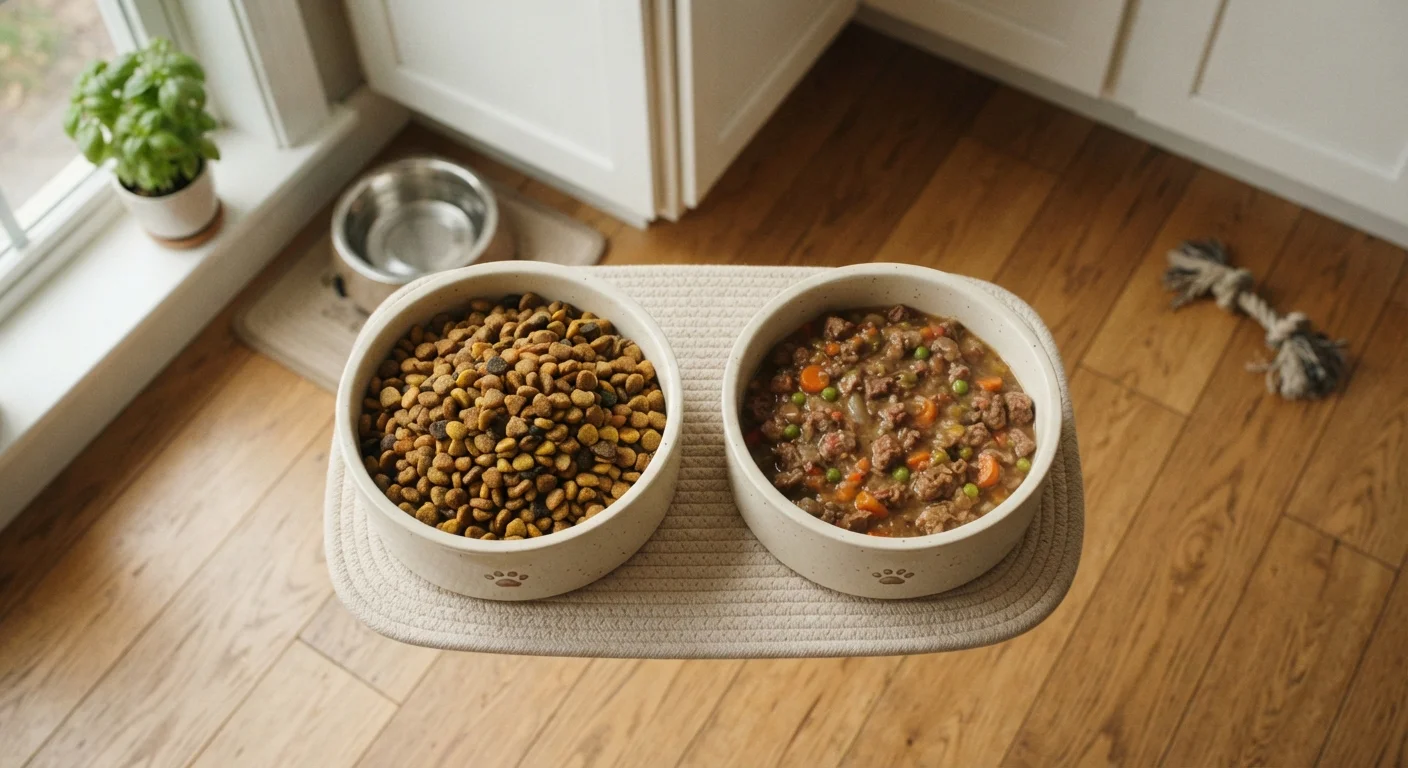
What's Actually in Each Format
Dry kibble and wet food can both provide complete, balanced nutrition — but they're manufactured very differently, and those differences affect far more than texture.
Dry kibble is made by combining ingredients (proteins, grains or legumes, fats, vitamins) into a dough, then extruding and baking it into small pieces. The process removes most moisture, leaving kibble at roughly 6–10% water content. This makes it shelf-stable, calorie-dense, and easy to store.
Wet food typically contains whole or chunked protein sources in a gravy or broth base, sealed in cans or pouches. Moisture content usually falls between 70–82%, which is much closer to the water content found in whole animal prey. That extra water volume means wet food is less calorie-dense per ounce — so dogs tend to eat larger volumes for the same caloric intake.
Both formats can meet Association of American Feed Control Officials (AAFCO) standards for complete nutrition, but not all products do. Always look for an AAFCO nutritional adequacy statement on the packaging. For a broader look at what common food claims actually mean, see our article on dog food myths that keep circulating online.
| Criterion | Dry Kibble | Wet Food |
|---|---|---|
| Moisture content | 6–10% | 70–82% |
| Cost per meal | Lower | Higher |
| Shelf life (opened) | Several weeks | 2–3 days refrigerated |
| Caloric density | Higher per ounce | Lower per ounce |
| Dental benefit | Minimal to moderate | None |
| Palatability | Moderate | High |
| Hydration support | Low | High |
| Portability | Easy | Less convenient |
Nutrition, Hydration, and Dental Health
From a purely nutritional standpoint, both formats can be appropriate for most healthy adult dogs when the product is properly formulated. The meaningful differences show up in three specific areas.
Hydration
Dogs fed exclusively dry food rely almost entirely on their water bowl for hydration. Dogs who don't drink enough water — which is common — can be quietly underhydrated. Wet food provides a built-in hydration boost, which is why veterinarians often recommend it for dogs with kidney disease, urinary tract issues, or low water drive. This doesn't mean kibble-fed dogs are always dehydrated, but it's worth monitoring your dog's water intake regardless of diet.
Dental Health
The idea that kibble mechanically cleans teeth is partially supported by evidence, but it's often overstated. Most kibble simply shatters on contact rather than scrubbing the tooth surface. Specialized dental kibble formulas — designed to encourage more chewing contact — do show better results in studies. Wet food, by contrast, offers no mechanical cleaning benefit. Regardless of food type, the Veterinary Oral Health Council (VOHC) recommends regular tooth brushing as the gold standard for canine dental hygiene.
Caloric Density
Because wet food contains so much water, it's easy to accidentally underfeed or overfeed if you're not accounting for calorie content rather than just volume. Check the caloric content (usually listed as kcal/can or kcal/kg) and follow your vet's guidance on appropriate portions for your dog's weight and life stage.
~75%
Average moisture content in wet dog food
Compared to roughly 8% in dry kibble, according to general AAFCO nutritional profiles for commercial dog foods.
2–3×
Typical cost difference per calorie
Wet food generally costs two to three times more per calorie than dry kibble of similar nutritional quality.
Cost, Storage, and Everyday Practicality
For many first-time dog owners, the practical realities of daily feeding matter just as much as nutritional details.
Cost: Wet food typically costs two to three times more per calorie than a comparable-quality dry food. For a large-breed dog, that gap adds up quickly over weeks and months. Kibble is the more economical choice for most households, particularly when feeding larger dogs.
Storage: Unopened dry kibble can last months in a cool, dry space. Once opened, it stays fresh in an airtight container for several weeks. Wet food, once opened, must be refrigerated and used within 2–3 days. This matters if you travel with your dog or need to plan ahead — see our guide on building a daily feeding routine for practical scheduling tips.
Palatability: Wet food tends to be more aromatic and appealing to dogs, making it useful for picky eaters, dogs recovering from illness, or senior dogs with reduced appetite. If your dog refuses kibble, adding a small spoonful of wet food as a topper — rather than switching entirely — is a common and cost-effective solution.
When to Ask Your Vet About Diet
If your dog has a health condition — such as kidney disease, diabetes, food allergies, or obesity — dietary format can directly affect management. Your veterinarian is the right person to guide format and calorie decisions in those cases. This article provides general education, not personalized medical advice.
The decision doesn't have to be either/or. Many owners and veterinarians find that combining both formats — a measured kibble base with occasional wet food — balances nutrition, budget, and mealtime satisfaction effectively.